 ARCORA ROBINETS
Water Tap End Filter: The Complete Buyer’s Guide to Cleaner, Better-Tasting Water at Every Faucet
Vues:0 ClassificationProduct
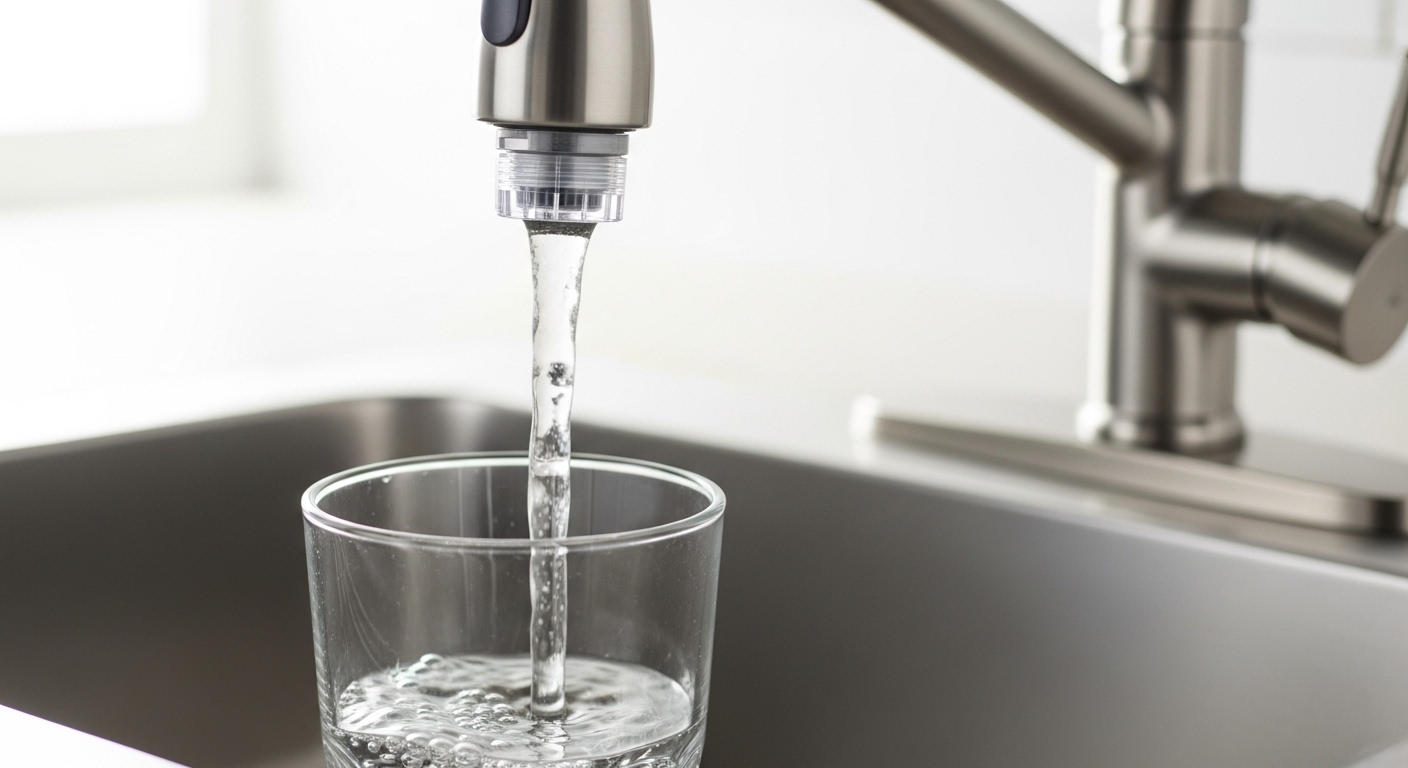
If you have ever noticed a metallic aftertaste, cloudy ice cubes, or a faint chlorine smell at the sink, a water tap end filter is one of the fastest, lowest-commitment upgrades you can make to your plumbing. Unlike under-sink reverse osmosis units or whole-house systems, a tap-end filter threads directly onto the spout of your existing faucet — no plumber, no drilling, and usually no more than five minutes of work. At arcorarobinet, we design faucets that are filter-friendly out of the box, which is why our customer service team fields dozens of questions every week about which end-of-tap cartridge fits which spout, how long the filter lasts, and whether it will choke flow. This guide answers all of those questions in one place.
We will walk through how these filters work, the contaminants they actually reduce, the differences between activated carbon, ceramic, and multi-stage media, and how to pick the right finish so your filter housing does not clash with a brushed nickel or matte black faucet. By the end you will know exactly which water tap end filter to buy, how to install it, and how to keep it performing for the full life of the cartridge.
What Is a Water Tap End Filter and How Does It Work?
A water tap end filter — sometimes called a faucet-mounted filter, tap aerator filter, or end-of-faucet purifier — is a small cylindrical housing that screws onto the threaded end of your faucet spout, taking the place of (or sitting just behind) the standard aerator. Inside the housing sits a replaceable cartridge filled with one or more filtration media. As water leaves your faucet, it is forced through that media, where particulates and dissolved chemicals are trapped before the stream exits into your glass, pot, or hand.
The plumbing principle is the same as a pitcher filter, but the placement is smarter: water is treated at the point of use rather than sitting in a reservoir where it can pick up plastic taste or warm up to room temperature. Most modern end-of-tap units include a diverter valve so you can switch between filtered drinking water and unfiltered water for tasks like washing dishes — that way you do not burn through the cartridge rinsing pans.
The Typical Internal Stages
- Pre-filter mesh — usually stainless steel, catches sand, rust flakes, and pipe scale.
- Activated carbon block — adsorbs chlorine, chloramines, VOCs, and the compounds responsible for off-tastes and odors.
- KDF or ion-exchange resin — reduces heavy metals like lead, mercury, and dissolved copper.
- Ultrafiltration (UF) membrane — in premium units, blocks bacteria and cysts down to 0.01 microns.
- Post-filter polishing pad — captures fine carbon dust before water exits the spout.
Why a Water Tap End Filter Beats a Pitcher or a Whole-House System for Most Homes
Pitcher filters are cheap and visible, but they hold barely 2 liters, demand constant refilling, and rarely tackle anything beyond chlorine taste. Whole-house systems do everything but cost thousands and require professional installation. A water tap end filter sits in the sweet spot: it treats only the water you actually drink and cook with, it installs in minutes, and a single $25–$45 cartridge typically lasts a family of four three to six months.
If you live in a hard-water region, you already know that mineral content is the silent killer of faucets — it leaves spots, etches finishes, and clogs internal cartridges. Pairing your fixture with a tap-end filter slows that buildup and extends the life of the whole spout. For a deeper look at how mineral content interacts with plated finishes, our piece on choosing the best faucet finish for hard water pairs perfectly with this guide.
What Contaminants Does a Water Tap End Filter Actually Remove?
This is the question most shoppers skip — and it is the one that matters most. Marketing copy loves to promise « 99.9% pure water, » but performance varies wildly by media type, contact time, and certification. Below is a realistic comparison of what a quality end-of-tap unit will and will not handle.
| Contaminant | Carbon Block End Filter | Multi-Stage (Carbon + KDF + UF) | Ceramic Candle End Filter |
|---|---|---|---|
| Chlorine & chloramine | Excellent (95–99%) | Excellent (97–99%) | Moderate (60–80%) |
| Sediment, rust, sand | Good | Excellent | Excellent |
| Lead | Limited | Excellent (NSF 53 certified models) | Limited |
| Bacteria & cysts | No | Yes, with 0.01 µm UF | Yes (sub-micron ceramic) |
| VOCs & pesticides | Good | Excellent | Poor |
| Hardness / scale (Ca, Mg) | No | Slight, not a softener | No |
| Fluoride | No | Limited (specialty media only) | No |
| Typical lifespan | 2–3 months | 4–6 months | 6–12 months (cleanable) |
| Average flow rate | 1.5 L/min | 1.0–1.5 L/min | 0.5–1.0 L/min |
Note that no water tap end filter is a water softener. If your real problem is scale at the spout, you are looking at a different category of product — and possibly a finish change. Our breakdown comparing polished chrome vs. polished nickel explains which platings hold up best when mineral water is unavoidable.
Choosing the Right Water Tap End Filter for Your Faucet
Not every tap-end filter fits every spout, and the wrong choice will either drip from the threads or refuse to thread on at all. Here is the short checklist our customer support team uses when sizing a filter for a customer’s faucet.
1. Confirm Your Aerator Thread Size
The vast majority of residential kitchen and bathroom faucets sold in North America use one of three thread sizes:
- M22 male × M24 female — the global standard for full-size kitchen and bathroom spouts.
- M18 × M16 — small bathroom faucets and bar/prep faucets.
- 15/16″-27 male × 55/64″-27 female — the imperial standard on many North American kitchen faucets.
Unscrew your existing aerator and measure it, or check the spec sheet for your faucet. Almost every reputable filter ships with both M22/M24 and 15/16″ adapters in the box.
2. Match the Finish to Your Faucet
A chrome filter housing on a matte black faucet looks like a mistake. Manufacturers now offer end-filter housings in brushed nickel, matte black, polished chrome, brushed gold, and oil-rubbed bronze. If you are running a darker fixture, our guide on choosing a matte black centerset bathroom faucet covers how to keep finishes consistent across the spout, handle, and accessory line.
3. Check Flow Rate and Pressure Drop
Filter media adds resistance. A filter that throttles a 6 L/min kitchen faucet down to 0.8 L/min will frustrate you within a week. Look for a unit with a published flow rate of at least 1.2 L/min at 0.3 MPa inlet pressure. If your existing faucet already runs lean, see our troubleshooting guide on fixing low water pressure at a faucet before adding any in-line restriction.
4. Verify the Diverter and Mounting Style
Side-mount diverter units are easier to clean but add bulk under the spout. In-line « ring » filters look almost invisible and sit flush against the aerator, but they have no bypass — every drop of water passes through the media, shortening cartridge life. Decide which trade-off matters more in your kitchen.
Step-by-Step Installation of a Water Tap End Filter
Installation is genuinely beginner-friendly. The only tool you might need is a soft cloth or strap wrench if the existing aerator is stuck.
- Shut off and dry the sink area. Lay a microfiber towel in the basin to catch dropped washers.
- Unscrew the existing aerator counter-clockwise (looking up at the spout). Most come off by hand; if not, wrap the aerator in a cloth and use slip-joint pliers gently.
- Inspect the spout threads. Internal threads mean you need a male-thread filter; external threads mean you need a female-thread filter. The adapter set in the filter box has both options.
- Install the correct adapter with the supplied rubber washer. Hand-tighten only — over-tightening will deform the washer and cause drips.
- Thread the filter housing onto the adapter. Many models include a bayonet click-lock for tool-free attachment.
- Run water for 3–5 minutes to flush carbon fines and condition the media. The first stream may be gray; this is normal and harmless.
- Set the diverter to filtered mode and fill a glass. Taste-test, and check every joint for drips.
If you encounter a leak at the threads, do not wrap the aerator threads in PTFE tape — the seal is meant to be made by the rubber washer alone, and tape can shed fibers into the filter media. Replace the washer or step down one adapter size instead.
Maintenance, Cartridge Life, and When to Replace
A neglected filter is worse than no filter — the saturated media can leach trapped contaminants back into your water. Replace cartridges on schedule, not when you remember.
| Usage Profile | Daily Filtered Volume | Carbon Cartridge Life | Multi-Stage Cartridge Life |
|---|---|---|---|
| Single occupant, drinking only | 2–3 L | 4–5 months | 7–9 months |
| Couple, drinking + light cooking | 5–7 L | 3–4 months | 5–6 months |
| Family of four | 10–14 L | 2–3 months | 4–5 months |
| Large family / heavy cooking | 18+ L | 6–8 weeks | 3 months |
Signs Your Cartridge Is Spent
- Flow drops noticeably even after cleaning the pre-filter screen.
- Chlorine smell or taste returns to the filtered water.
- Built-in indicator light (on smart models) turns red or amber.
- It has simply been too long since the last swap — set a phone reminder when you install.
While you are paying attention to consumables, do not ignore the rest of the faucet. O-rings under the aerator dry out and crack, especially on filtered taps that run cooler. Our walkthrough on RO faucet O-ring replacement is the same procedure you would use for the seals on a tap-end filter housing.
Water Tap End Filter vs. RO, Pitcher, and Whole-House Alternatives
To put the category in context, here is how an end-of-tap filter stacks up against the most common alternatives a homeowner actually considers.
| System | Upfront Cost | Install Difficulty | Annual Running Cost | Contaminant Reduction | Footprint |
|---|---|---|---|---|---|
| Water Tap End Filter | $25–$80 | 5 min, DIY | $40–$90 | Good to Excellent | At spout |
| Pitcher Filter | $25–$50 | None | $60–$120 | Basic | Fridge / counter |
| Under-Sink Carbon | $120–$300 | 1–2 hr, DIY+ | $50–$100 | Very Good | Cabinet |
| Reverse Osmosis | $250–$700 | Plumber recommended | $80–$160 | Excellent (incl. fluoride) | Cabinet + dedicated faucet |
| Whole-House | $1,000–$4,000 | Professional | $150–$300 | Varies by media | Mechanical room |
The best fit depends on your goal. If you only want better-tasting drinking water without committing to a cabinet install, a water tap end filter wins on cost-per-cleaned-liter. If you are concerned about lead from old service lines, look specifically for NSF/ANSI 53 certification on the box — not all end-of-tap filters carry it.
Common Problems and Quick Fixes
Filter Leaks at the Spout Connection
Almost always a washer issue. Remove, inspect for cracks, replace if needed. Confirm you used the correct adapter for male vs. female threads.
Filter Drips From the Diverter Body
The internal diverter O-ring is worn. Most manufacturers sell a $4 rebuild kit. The repair is identical in spirit to fixing a leaking pull-down sprayer — see our article on why pull-down kitchen faucet handles leak for the diagnostic logic.
Cloudy Water on First Use
Trapped air in the media, not contamination. Run cold water for 3–5 minutes and the cloudiness will clear.
Black Particles in the Filtered Stream
Carbon fines from a fresh cartridge. Flush longer. If black sediment persists for weeks, the cartridge may be damaged — and if you see black flecks even without a filter installed, that is a different problem covered in our piece on why black substances appear at faucet outlets.
Reduced Flow After 2 Weeks
The pre-filter mesh is clogged with sediment, not the media. Unscrew the housing, rinse the stainless mesh under running water, reinstall.
Why Choose arcorarobinet for Your Filter-Ready Faucet
arcorarobinet has designed and manufactured residential faucets for over 15 years, with a product line that runs from single-hole kitchen spouts to widespread bathroom sets and matching shower trim. Every faucet we ship uses the international M22/M24 aerator thread, which means any standard water tap end filter on the market will thread onto our spouts without an adapter step-down.
Our brass bodies are tested to ASME A112.18.1 / CSA B125.1 for flow and pressure, our cartridges carry a lifetime warranty against drip, and our PVD finishes are independently tested to 24-hour CASS salt spray exposure without dulling — important context when you are committing to a faucet that will live with a filter housing attached. If you are still deciding on the underlying fixture, browse our guides to single-hole kitchen sink faucets and ultra-modern bathroom faucets to find a spout that will pair cleanly with your filter of choice.
FAQ
Does a water tap end filter reduce water pressure?
Yes, slightly — typically 10–25% depending on media density. A quality multi-stage filter rated for 1.5 L/min at 0.3 MPa will feel only marginally slower than an open aerator. If your existing pressure is already weak, address that first.
Can I install a water tap end filter on any faucet?
You can install one on virtually any faucet whose spout ends in a standard aerator (M22/M24 or 15/16″-27). Pull-down sprayers, gooseneck pot fillers, and touchless sensor faucets with built-in flow restrictors are exceptions — they often have proprietary spray heads that are not designed to be removed.
How often should I change the cartridge?
Most carbon block cartridges need replacement every 2–3 months of family use; multi-stage cartridges last 4–6 months. Heavy cooking, large households, or particularly chlorinated municipal water shorten that interval. Follow the volume rating on the box (typically 1,000–3,000 liters) rather than the calendar.
Will the filter remove fluoride from my tap water?
Standard activated carbon does not remove fluoride. Only end-of-tap filters with specialty bone char or activated alumina media reduce fluoride — and even those rarely exceed 60% reduction at the flow rates a tap filter operates at. For meaningful fluoride removal you need reverse osmosis.
Is filtered water safe to use for baby formula?
If the filter is NSF/ANSI 53 certified for lead and cyst reduction, and the cartridge is within its rated life, yes. Many pediatricians still recommend boiling filtered water for infants under three months as an added precaution. Always follow your filter manufacturer’s guidance.
Can I leave the filter on the faucet during freezing weather?
Only if the faucet is on a heated interior wall. Plastic filter housings can crack if residual water freezes inside the media. For seasonal cabins or RV use, remove and dry the filter before winterizing — our RV kitchen faucet replacement guide includes winterization steps that apply equally to filter housings.
Does a water tap end filter work on hot water?
No. Most carbon and UF media degrade above 38°C (100°F). Use the diverter to bypass the filter when drawing hot water for washing dishes or filling a kettle. Running hot water through the filter ruins the cartridge and may leach trapped contaminants.
How do I know if my filter is NSF certified?
Look for the NSF/ANSI mark on the packaging and a specific standard number — NSF 42 (taste/odor/chlorine), NSF 53 (health contaminants like lead), or NSF 401 (emerging compounds). Marketing terms like « NSF tested » or « NSF compliant » without a standard number are not the same as certification.
About the author: This guide was written by the product team at arcorarobinet, with technical review by our in-house plumbing engineer (15+ years of residential fixture design experience, ASME A112-trained). All performance figures cited are drawn from independent NSF/ANSI 42 and 53 test data or from our own bench testing under ASME A112.18.1 conditions. Every arcorarobinet faucet is covered by our limited lifetime warranty against drip and finish defects.



您好!Veuillez vous connecter