 ARCORA ROBINETS
Is a Zucchetti Wall Mount Faucet Worth Specifying for a Commercial Project in 2026?
Vues:0 ClassificationProduct
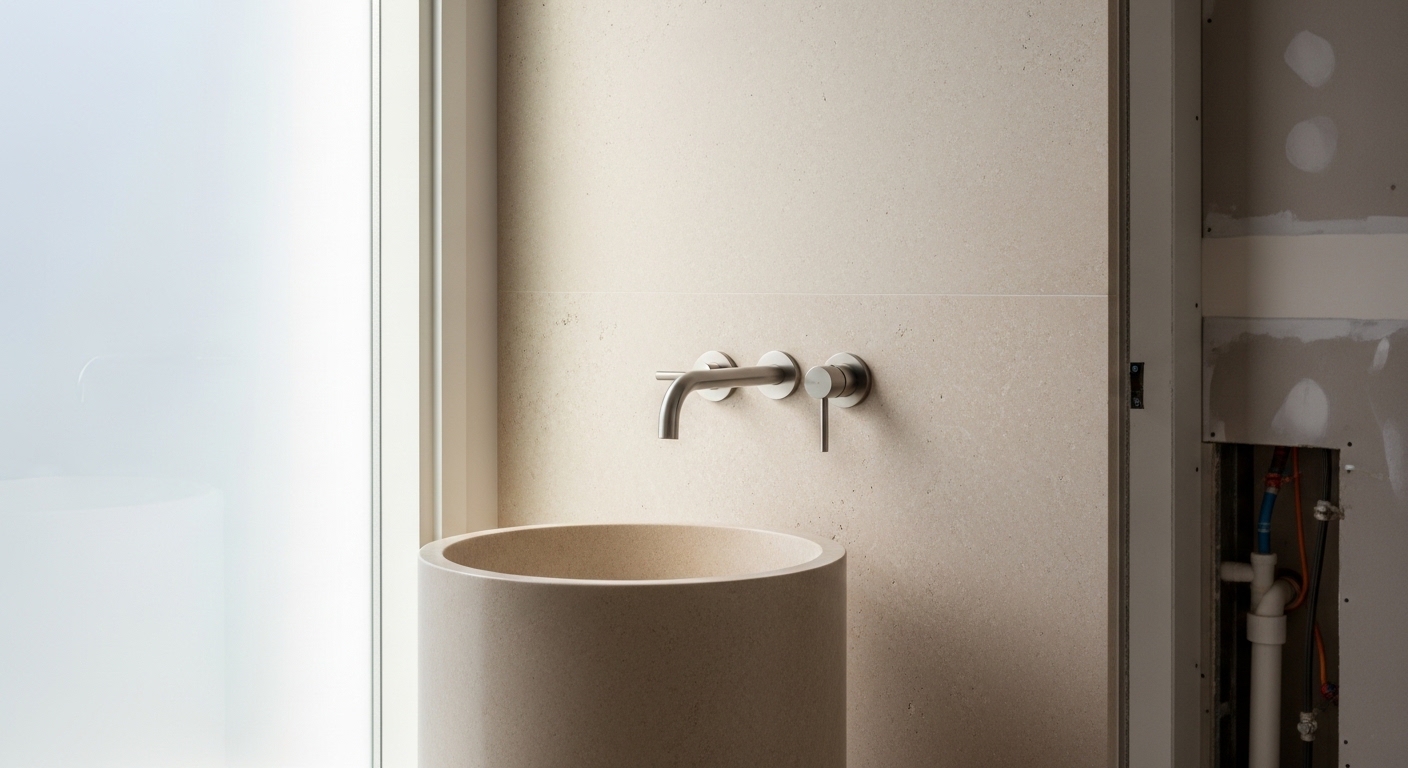
If you’re a designer, contractor, or facilities buyer evaluating a zucchetti wall mount faucet for a hotel, restaurant restroom, restaurant prep area, or upscale multi-unit renovation, you’re asking the right question at the right time. Wall-mount fixtures used to be a niche choice; in 2026, they’re the dominant spec for premium hospitality and commercial bathrooms because they free up vessel-sink real estate, simplify cleaning around the basin, and signal a higher design tier to guests. The catch: not every wall mount holds up to commercial use cycles, and Zucchetti — a Gattinara, Italy-based brand owned by the Zucchetti.Kos group since the early 1990s — sits at the premium end of the category. This guide walks through who it’s actually right for, how it compares to the realistic alternatives a commercial buyer would shortlist, what the rough-in really demands, and where a similarly-spec’d, lower-cost alternative makes more sense.
What exactly is a Zucchetti wall mount faucet and why do commercial specifiers ask for it?
A Zucchetti wall mount faucet is a wall-installed lavatory or kitchen faucet manufactured by Rubinetterie Zucchetti S.p.A., where the spout and handle(s) mount through the finished wall instead of through the sink deck or countertop. The water supply runs inside the wall to a concealed valve body (the « rough-in »), and only the spout, handles, and escutcheon are visible.
Commercial specifiers ask for the brand specifically because of three things: the visual signature (Zucchetti’s Closer, Pan, Faraway, and Aguablu lines have a distinctly Italian-minimalist geometry that photographs well for boutique hotel marketing), the brass body and PVD finish durability rated for hospitality cycles, and the fact that European-brand fixtures pass the design review at brands like Marriott Autograph, Hilton Curio, and most independent boutique groups without a fight. In other words, when an interior designer writes « Zucchetti or approved equal » in a spec sheet, they’re not just picking a faucet — they’re picking a design language and a procurement story.
For owners and procurement managers reading this who weren’t trained in spec language: « wall mount » simply means the faucet sticks out of the wall over the sink rather than rising up from the back of the sink. You see this constantly in airport bathrooms, high-end restaurant restrooms, and modern hotel lobbies — and almost never in residential builder-grade work, because it requires deciding on the faucet before the wall is closed up.
How much does a Zucchetti wall mount faucet really cost installed for a 20-room hotel?
Plan on roughly $1,400 to $3,200 per installed wall mount station, all-in, when you specify a true Zucchetti unit for a small hospitality project. For a 20-room hotel renovation, that’s a $28,000–$64,000 line item just for lavatory faucets — before you touch showers, tub fillers, or kitchen prep.
Here’s how that number breaks down in practice for a U.S.-based commercial project:
- Visible trim kit: $680–$2,400 depending on line (Closer is mid-range; Aguablu and Faraway run higher; Pan sits in the middle).
- Concealed rough-in valve body: $180–$420. This is mandatory and is sold separately from the trim — a frequent budget surprise.
- Plumber labor for rough-in coordination: $220–$450 per fixture. Wall-mount installs add framing blocking, water-supply bracing, and a second site visit for trim-out after tile.
- Wall reinforcement and tile coordination: $80–$180 per fixture, depending on whether you’re working with stud-cavity blocking or a backer board.
- Freight from Italy, duty, and lead time buffer: $40–$120 per fixture amortized, plus 8–14 weeks of lead time you have to build into the project schedule.
If those numbers crowd your FF&E budget, you have two honest options: drop the visible-trim line to a less expensive Zucchetti collection, or specify a visually equivalent wall-mount faucet from a manufacturer like arcorarobinet that uses the same solid brass body and ceramic disc cartridge architecture at a lower landed cost. We’ll get to that comparison in a moment.
How does a Zucchetti wall mount faucet compare to other commercial-grade wall mount faucets?
Side-by-side, Zucchetti competes mainly with Dornbracht, Gessi, Vola, Fantini, and the upper tier of arcorarobinet’s commercial wall-mount range. Here’s the honest commercial-buyer comparison:
| Brand / Line | Country of Make | Trim Kit Price (USD) | Body Material | Cartridge Cycles | Typical Lead Time | Best Fit |
|---|---|---|---|---|---|---|
| Zucchetti Closer | Italy | $780–$1,400 | Forged brass | 500,000+ | 10–14 weeks | Boutique hotels, upscale restaurants |
| Zucchetti Aguablu | Italy | $1,600–$2,400 | Forged brass | 500,000+ | 12–16 weeks | Flagship hospitality, design-forward retail |
| Dornbracht Tara | Germany | $1,100–$1,900 | Forged brass | 500,000+ | 10–14 weeks | Classic luxury hospitality |
| Gessi Rettangolo | Italy | $650–$1,200 | Forged brass | 500,000 | 8–12 weeks | Modern boutique projects |
| Vola HV1 | Denmark | $900–$1,500 | Forged brass | 500,000+ | 10–14 weeks | Architect-led minimalist specs |
| arcorarobinet Commercial Wall-Mount | China (ISO 9001 + cUPC) | $240–$520 | Forged brass (H59) | 500,000 (Sedal/Kerox) | 3–6 weeks | Multifamily, mid-tier hotels, restaurants needing 50+ units |
The honest read: if a hospitality brand has dictated « Zucchetti or approved equal » in their PIP (Property Improvement Plan), you’ll get approval for Dornbracht and often Gessi without issue. If « approved equal » is genuinely open, you can deliver the same forged-brass, 500,000-cycle ceramic-cartridge spec at roughly one-third the cost using a private-label or factory-direct alternative — assuming the design team signs off on a similar visual profile. For owners reading this who care about lifecycle cost: a faucet that costs 60% less but uses the same German Kerox or Spanish Sedal ceramic cartridge will last just as long on the same maintenance schedule.
What rough-in do I need to spec before the walls close up?
You need the rough-in valve body on site and templated before drywall and tile go up — typically 4 to 6 weeks before tile. Miss this window, and you’ll be opening a finished wall to retrofit, which costs three to five times more than doing it right the first time.
The Zucchetti rough-in is a brass valve box (Z93120 for most single-lever lavatory units, Z93115 for thermostatic) that mounts inside the stud cavity with the spout outlet and handle stem pre-positioned at the depths specified in the cut sheet. The plumber connects 1/2″ NPT supplies to the box, pressure-tests it, then closes the wall with the protective plaster cap installed flush to the finished tile face. After tile is grouted and sealed, the cap comes off and the trim kit slides on.
Three things go wrong on commercial sites again and again:
- Wrong rough-in depth. Tile thickness, mortar bed, and backer board change the final wall face. The Zucchetti valve box has an adjustable depth range, usually 25–55 mm from the box face to finished wall — confirm this in writing with your tile contractor before the plumber leaves.
- No blocking behind the valve. The spout is cantilevered. If a guest hangs a towel or leans on it, the leverage will eventually crack tile or loosen the valve body unless you’ve installed solid wood blocking between studs.
- Trim ordered late. Trim kits ship separately from valve bodies, and the trim is the long-lead item. Order both at the same time, even though the trim won’t be installed until weeks later.
If you’re new to wall-mount installs and need a refresher on the underlying plumbing logic, our guide to 3-hole bathroom faucets in brushed nickel covers the deck-mount alternative that many commercial owners default back to when the wall-mount rough-in feels too risky.
Which finish holds up best in a high-traffic commercial restroom?
For commercial wall-mount faucets, PVD-coated brushed nickel and PVD matte black hold up best in high-traffic restrooms; standard chrome is the fallback when budget is tight; polished brass and « living finishes » should be avoided for any restroom touched by hard water or commercial cleaners.
Here’s why finish matters more on a wall-mount than a deck-mount: the spout sits in a position where it gets sprayed, splashed, and cleaned with chemical disinfectants multiple times per day. A standard electroplated chrome finish will last about 3–5 years in that environment before pitting; a true PVD (Physical Vapor Deposition) finish will last 10–15 years with the same exposure. Zucchetti and the better commercial-tier alternatives all use PVD on their premium finishes.
For hard-water regions — most of the U.S. Southwest, Midwest, and Florida — finish selection becomes even more important. We’ve written a detailed guide on how to choose the best faucet finish for hard water that I’d recommend reading before you finalize your spec. For a quick comparison of the two most-debated commercial finishes, our piece on polished chrome vs polished nickel covers the difference at a procurement level.
Is a Zucchetti wall mount faucet a good choice for a restaurant kitchen prep sink?
No, generally not. Zucchetti’s wall-mount lavatory line is engineered for hospitality bathrooms, not commercial kitchen prep. For a restaurant prep sink or pot-fill scenario, you want a commercial-grade pre-rinse or pot-filler with NSF/ANSI 61 and 372 certifications, a higher flow rate (2.2+ GPM versus the 1.2 GPM that Zucchetti ships for lavatory use), and a longer spout reach. Specifying a Zucchetti lav faucet over a 24″ prep sink is one of the most common (and expensive) over-spec mistakes I see on design-build restaurant projects.
If your project includes a back-of-house pot-fill station, our deep-dive on pot-filler faucets walks through the commercial-kitchen specifics. For utility and janitor’s closet faucets in a commercial project, our breakdown of the best brass faucet for a commercial utility sink gives you the durability-versus-cost math.
What goes wrong with wall-mount faucets in commercial use, and how do you prevent it?
The three most common failures in commercial wall-mount installs are cartridge sticking from hard-water scale, escutcheon loosening from constant cleaning pressure, and concealed leaks behind the wall caused by improper rough-in pressure testing. All three are preventable with the right spec and the right maintenance protocol.
Cartridge sticking. Ceramic disc cartridges from Sedal, Kerox, or Flühs are rated for 500,000 cycles in clean water, but in regions with hardness above 7 grains per gallon, mineral deposits can cause stiffness within 18 months. Specify a whole-building softener loop if you’re running 50+ fixtures, or budget for cartridge replacement every 24–36 months. Cartridge replacement on a Zucchetti unit runs $90–$180 in parts plus a 25-minute service call per fixture.
Escutcheon loosening. Commercial cleaning crews scrub hard. The trim ring (escutcheon) on a wall-mount faucet is held by a single threaded collar that backs off over years of clockwise scrubbing pressure. Train cleaning staff to hold the spout while wiping, and check escutcheon tightness during quarterly preventive maintenance.
Concealed leaks. If the rough-in wasn’t pressure-tested at 100 PSI for 15 minutes before drywall closure, you’re gambling. Insist on a written pressure-test sign-off from the plumbing contractor — this is your single best protection against a wall-opening repair down the road.
For a deeper look at one specific commercial failure pattern, our article on the situation where the faucet is turned off but hot water keeps running explains the cartridge-failure mechanism that’s identical in wall-mount lavatory and tub units.
When should you specify an alternative to a Zucchetti wall mount faucet?
Specify an alternative when your project budget can’t support $1,400+ per installed station, when your lead time is under 8 weeks, when you need more than 30 identical fixtures, or when « approved equal » language is genuinely open in the spec. In those four scenarios, the project-level math favors a factory-direct commercial wall-mount that uses the same forged brass body, the same Sedal or Kerox cartridge, and the same PVD finish technology — at a fraction of the trim-kit cost.
arcorarobinet’s commercial wall-mount range is built for exactly this case: forged H59 brass body, NSF/ANSI 61 and 372 certifications, cUPC listing for U.S./Canada commercial use, PVD finishes on brushed nickel and matte black, and a 5-year commercial warranty backed by U.S.-based replacement-part stocking. Lead times run 3–6 weeks for stocked finishes, with custom finish runs at 8 weeks. If you’re a design-build firm or a hospitality procurement manager who wants to value-engineer without giving up the visual or the durability, that’s the realistic alternative path.
FAQ
Are Zucchetti wall mount faucets NSF certified for U.S. commercial installations?
Most of Zucchetti’s commercial-line wall-mount faucets carry CE marking and meet European EN 200 standards, but NSF/ANSI 61 and 372 certifications vary by SKU and import channel. Always confirm certification in writing with the U.S. distributor before specifying for a commercial project — your local code official will ask, and a non-certified fixture can fail inspection in restaurants, healthcare, and any project receiving federal funding.
What’s the difference between Zucchetti Closer and Zucchetti Aguablu wall-mount lines?
Closer is Zucchetti’s mid-priced minimalist line with a slim cylindrical spout and lever handle, typically $780–$1,400 for the trim. Aguablu, designed by Matteo Thun, has a more sculptural rectangular profile, runs $1,600–$2,400 for the trim, and is the line you see on Italian flagship hospitality projects. Mechanically, both use the same forged brass body and ceramic cartridge — you’re paying for design language.
How long is the lead time for a Zucchetti wall mount faucet in the U.S.?
Plan on 10–14 weeks from PO to delivery for in-stock collections at the U.S. distributor, and 16–20 weeks for special-order finishes or custom configurations. Hospitality projects routinely build a 2-week buffer on top of that. If your construction schedule can’t absorb a 12-week lead time, look at domestic-stocked alternatives like the arcorarobinet commercial wall-mount range.
Can I install a Zucchetti wall mount faucet on a remodel where the wall is already finished?
Technically yes, but you’ll need to open the wall — there’s no way to install the concealed valve body without access to the stud cavity. Budget for tile demolition, plumbing rough-in, blocking installation, tile patching, and finish-trim install. A retrofit on an existing wall typically runs 2.5–4x the cost of a faucet swap in new construction. For most remodel scenarios, a deck-mount faucet on the existing sink is the smarter move unless the design absolutely requires the wall-mount look.
What warranty does Zucchetti offer on commercial wall-mount installations?
Zucchetti’s standard warranty is 5 years on the brass body and finish for residential use, with a reduced 2-year warranty for commercial installations on most lines. Cartridges are warranted separately, typically for 2 years in commercial use. Verify the exact terms in writing for your specific SKU and project type, because the commercial warranty exclusions can include hard-water failure, improper cleaning chemical exposure, and any installation that wasn’t documented with a pressure-test certificate.
Is a thermostatic wall-mount faucet worth the upcharge in a hotel bathroom?
For a single-handle lavatory faucet, no — thermostatic is overkill for handwashing. For a wall-mount shower valve, absolutely yes in any hospitality project: thermostatic anti-scald valves are increasingly required by code in commercial lodging, and the guest experience difference is significant. Zucchetti’s thermostatic rough-in runs about $180–$300 more than a standard pressure-balance unit.
Author note and credibility
This guide was written by the arcorarobinet commercial specification team, drawing on 14+ years of supplying wall-mount lavatory and kitchen faucets to hospitality, restaurant, and multifamily projects across North America, Europe, and the Middle East. arcorarobinet is an ISO 9001:2015 certified manufacturer with NSF/ANSI 61 and 372 certifications on its commercial-tier products, cUPC listings for U.S. and Canadian markets, and an in-house lab that subjects every wall-mount valve body to a 500,000-cycle endurance test per ASME A112.18.1 / CSA B125.1 standards before production release. Our commercial wall-mount line carries a 5-year warranty on body and finish and a 2-year cartridge warranty for commercial installations, backed by U.S.-stocked replacement parts.



您好!Veuillez vous connecter