 ARCORA ROBINETS
What Are the Real Kitchen Tap Trends 2026 Buyers Should Actually Care About?
Vues:1 ClassificationFaq
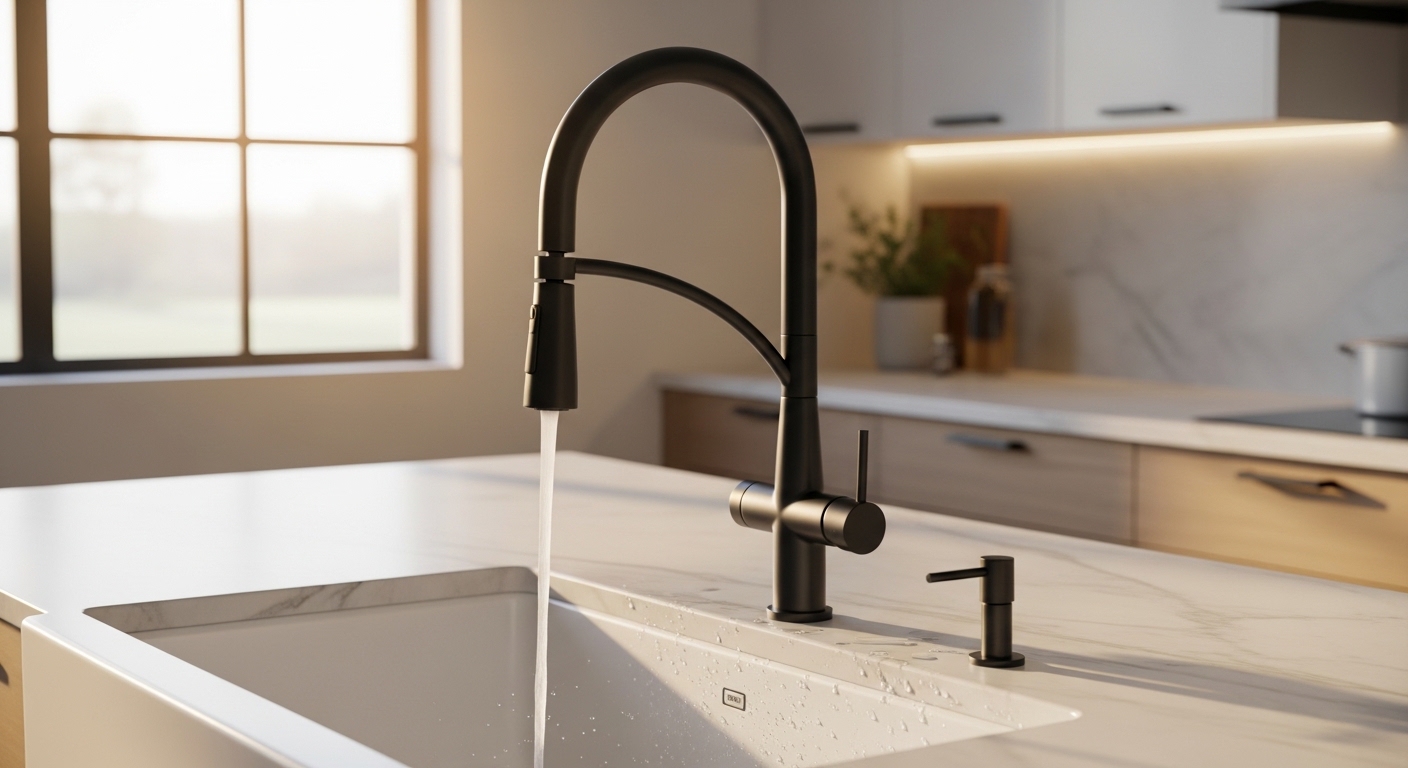
If you’re renovating or just replacing a tired mixer, the kitchen tap trends 2026 that matter are the practical ones: sensor-activated flow, durable PVD finishes in warmer tones, higher-arc pull-down spouts, and integrated water treatment. Below, we answer the exact questions real shoppers are asking this year — what’s actually new, what’s worth paying for, and what’s just marketing — so you can pick a tap you’ll still love in five years.
We sell and test faucets for a living, so we’ll be blunt about where the hype outruns the value. Let’s get into it.
What’s actually new about kitchen taps in 2026 versus 2023?
The short answer: sensors got cheaper and more reliable, finishes shifted from cool chrome to warm metals, and filtration moved from an add-on to a built-in feature. Nothing here is science fiction — it’s a maturing of tech that used to be flaky or expensive.
Three years ago, a touchless kitchen faucet was a $400+ premium product that people complained about — phantom activations, dead batteries, laggy sensors. In 2026, motion and touch activation shows up on sub-$250 taps, and the infrared sensors are far better at ignoring a passing dish towel while still triggering when your hand approaches. That reliability jump is the single most meaningful change.
The second shift is finish. Polished chrome still sells because it’s cheap and hides water spots, but the growth is all in warm and matte tones: matte black, brushed gold, champagne bronze, and gunmetal. These arrive via PVD (physical vapor deposition) coating, which is dramatically more scratch- and tarnish-resistant than the old electroplated finishes that flaked.
The third is water treatment. More 2026 taps ship with a dedicated filtered-water path or a separate filter tap built into the same base, so you’re not bolting a filter housing under the sink as an afterthought. If clean drinking water matters to you, that’s a real convenience — and if you’d rather add filtration to what you have, our guide on whether you really need a faucet water filter walks through the trade-offs.
Are touchless kitchen faucets worth it, or just a gimmick in 2026?
They’re worth it for busy, messy kitchens — and skippable if you cook rarely or hate battery maintenance. That’s the honest split.
The case for touchless is specific and real: raw chicken, sticky dough, muddy garden hands. Waving to start the water means you’re not smearing bacteria or grease on the handle. In a household that cooks daily, that hygiene and cleanup benefit is felt every single day. Most 2026 sensor taps also keep a manual lever, so you set temperature once and use the sensor for on/off.
The case against: they run on batteries (typically 4–6 AA cells lasting roughly a year, or a rechargeable pack), the solenoid valve is one more part that can fail, and cheap sensors still occasionally misfire. If you want the reliability without the electronics headache, a good manual pull-down is still the smarter buy. When a touchless unit does act up, it’s usually the solenoid or battery — our walkthrough on a touchless faucet that stopped working covers the fixes before you assume the whole tap is dead.
Which kitchen tap finish is trending in 2026, and which one hides water spots best?
Matte black and champagne bronze are the trending finishes for 2026, but if hiding water spots and fingerprints is your priority, brushed/satin finishes (brushed nickel, brushed gold, brushed black) beat glossy ones every time.
Here’s the practical reality most showrooms won’t tell you: a finish’s look and its maintenance are two different decisions. Glossy matte black looks stunning on day one and shows every dried water droplet by day two, especially in hard-water areas. Brushed textures scatter light and camouflage the same spotting. So pick your finish for the room, but weight it heavily by your water hardness and how much wiping you’re willing to do.
| Finish | 2026 popularity | Hides spots/prints | Durability | Best for |
|---|---|---|---|---|
| Polished chrome | Steady classic | Excellent | Very high | Budget builds, hard water |
| Brushed / stainless | High | Excellent | Very high | Low-maintenance family kitchens |
| Matte black | Very high (trending) | Poor (glossy) / Good (textured) | High (PVD) | Modern & farmhouse looks |
| Champagne bronze / brushed gold | Very high (trending) | Good | High (PVD) | Warm, transitional kitchens |
| Gunmetal / graphite | Rising | Good | High (PVD) | Industrial & dark-cabinet kitchens |
One buying tip: insist on a PVD-coated finish for any colored or warm-metal tap. PVD bonds the color at a molecular level and resists scratching, corrosion, and UV fading far better than electroplating. Ask the seller directly — reputable brands, including our own line at arcorarobinet, list the coating method in the spec sheet. If a colored faucet is suspiciously cheap and won’t name its coating, assume it’s electroplated and will wear.
Is matte black still in style for kitchen taps, or is it fading?
Matte black is still very much in style for 2026 and shows no sign of fading — it’s shifted from « bold statement » to « safe modern default, » much like stainless did a decade ago.
What is changing is how people use it. The 2026 move is mixing metals on purpose: a matte-black tap with warm brass cabinet pulls, or black hardware against a champagne-bronze pot filler. Designers stopped insisting everything match. If you love black but worry about it dating, choose a slightly textured or « graphite » black rather than a dead-flat glossy one — it reads more timeless and, conveniently, hides spotting better.
What kitchen tap style is best for a family kitchen under $300?
For most families under $300, a single-handle pull-down faucet with a high arc, a magnetic docking sprayhead, and a ceramic disc cartridge is the best value — it covers 90% of real kitchen tasks and lasts for years.
Let’s break down why each of those specs earns its place:
- Single handle: one-hand temperature and flow control, which matters when your other hand is holding a pot. Faster and more intuitive than dual-handle bridge taps for daily use.
- Pull-down (not pull-out) sprayer: the hose retracts vertically into a tall spout, giving you reach into every corner of the sink and easy pot-filling. Pull-out (horizontal) still suits shallow, low-window sinks.
- Magnetic docking: the spray head snaps back firmly instead of drooping over time — one of the most common long-term complaints on cheaper taps is a sprayhead that won’t stay docked.
- Ceramic disc cartridge: the valve that controls water. Ceramic discs resist wear and hard-water grit far better than rubber-and-plastic valves, which is why they’re the drip-prevention gold standard.
That last point is the one buyers underrate. The cartridge is what actually fails and causes drips years down the road, so it’s worth spending on. We dug into which models get this right in our roundup of the best kitchen faucets with ceramic valves — start there if longevity is your top concern.
For genuinely busy family kitchens, a proven single-handle pull-out from a major brand is a safe anchor point; our breakdown of the Moen one-handle pull-out shows what to look for in build quality even if you ultimately buy a different brand.
Pull-down vs. pull-out: which sprayer type is trending and which should I pick?
Pull-down is the trending and more versatile choice for 2026, but pull-out is the right pick if you have a window or low cabinet directly behind the sink.
Pull-down taps have tall, gooseneck spouts, so they need vertical clearance — check the height against any window sill or upper cabinet before you buy. Pull-out taps have shorter spouts and the sprayhead pulls toward you horizontally, which is ideal under a window and for filling pots on the counter beside the sink. Both are mainstream; it’s a fit question, not a quality question.
One trend worth flagging: quick-connect hose fittings. Newer sprayers use tool-free push-fit couplings that make installation and hose replacement far easier than the old screw-and-weight setups. If you’re replacing a tap yourself, that’s a genuine time-saver — we explain how they work in our piece on quick connect pull-out kitchen faucet hoses.
Are boiling-water and filter taps a real 2026 trend, or overpriced?
Instant boiling-water and built-in filter taps are a genuine, growing trend in 2026 — and they’re worth it if you drink lots of tea, coffee, or use hot water constantly, but overpriced for occasional users given the tank, running cost, and maintenance.
An instant-hot tap delivers near-boiling water on demand from a small under-sink tank, saving kettle time and counter space. A 3-in-1 or 4-in-1 tap combines regular hot/cold, filtered cold, and sometimes boiling or sparkling water in one fixture. The appeal is real; so are the caveats:
- Upfront cost: multi-function taps run meaningfully higher than standard mixers once you include the tank and filter.
- Running cost: the tank keeps water hot around the clock, so there’s a small standing energy draw.
- Maintenance: filters need swapping every few months; boiling tanks need descaling in hard-water areas.
- Safety: good ones have child-lock spring handles — worth confirming if you have young kids.
Our take: if you make hot drinks many times a day, the convenience compounds and it’s a fair upgrade. If you’d use it twice a week, a solid pull-down plus a separate under-sink filter is the smarter spend. Either way, budget for filter replacements from day one — that’s an ongoing cost, not a one-time buy, and it’s the same discipline you’d apply when you replace a kitchen faucet filter on a standard setup.
Do smart kitchen taps with voice control actually make sense?
For most people, no — voice and app-connected taps are a niche 2026 novelty, not a must-have, though metered dispensing has narrow appeal.
The pitch is asking your assistant for « two cups of water at 40 degrees. » In practice, most cooks find a lever faster than a voice command, and adding Wi-Fi to a faucet means another thing that can lose connection or need firmware updates. The one legitimately useful smart feature is measured dispensing — handy for baking or filling bottles precisely. If that solves a real problem for you, great; otherwise, save the money and put it toward a better cartridge and finish.
What should I prioritize when buying into a 2026 tap trend?
Prioritize the valve, the finish coating, and the warranty — in that order — over any trend feature. A beautiful, sensor-equipped tap with a cheap cartridge and thin coating is a bad buy; a plain, well-built tap that never drips is a good one.
Here’s the simple decision framework we give customers:
- Match the spout to your space — measure height clearance and reach before falling in love with a gooseneck.
- Pick a ceramic disc cartridge — this is the part that determines whether you’re fixing a drip in three years.
- Choose a PVD finish suited to your water hardness — brushed if you hate spotting, glossy if you’ll wipe it.
- Add trend features only where they solve a daily annoyance — touchless for messy cooks, filtration for bad tap water, boiling tap for heavy tea drinkers.
- Read the warranty and standards — see the E-E-A-T note below.
Get those first three right and the tap will serve you for a decade regardless of which trend it wears.
FAQ
What is the most popular kitchen tap color for 2026?
Matte black remains the single most popular non-metallic choice, with champagne bronze and brushed gold leading the warm-metal surge. Brushed nickel and chrome still outsell everything on pure volume because they’re affordable and hide water spots, but the design momentum is clearly toward warm and matte tones applied over durable PVD coatings.
Are touchless kitchen faucets reliable enough to buy in 2026?
Yes, for most households. Sensor reliability has improved substantially, and phantom activations are far rarer than on early models. The two things to accept are periodic battery changes (roughly yearly) and one extra electronic component — the solenoid valve — that can eventually need replacing. Buy from a brand with a real warranty and stocked spare parts, and it’s a low-risk upgrade.
How long should a good 2026 kitchen tap last?
A quality kitchen faucet with a ceramic disc cartridge and a solid brass body should last 10–15 years, with the cartridge being the most likely part to need a low-cost replacement somewhere in that window. Cheaper zinc-alloy bodies with rubber-seal valves often start dripping within 2–4 years, which is why we push people toward ceramic cartridges and brass or high-grade stainless construction.
Do I need a plumber to install a trendy new pull-down or touchless tap?
Not usually. A standard single-hole pull-down is a confident DIY job with basinsity wrench and a couple of hours; touchless models add a battery box and solenoid but still connect the same way. The main gotchas are old, seized supply lines and corroded mounting nuts. If your existing tap fights you on removal, our guide on removing old taps from a sink without wrecking the plumbing will save you a headache.
Are expensive multi-function (boiling/filter/sparkling) taps worth it for a normal home?
Only if you’ll genuinely use the extra functions daily. For heavy tea and coffee drinkers or families that constantly need hot or filtered water, the convenience justifies the price and ongoing filter cost. For light users, a well-built standard tap plus a separate under-sink filter delivers most of the benefit at a fraction of the cost and complexity.
What’s the difference between PVD and electroplated finishes, and why does it matter for 2026 colors?
PVD (physical vapor deposition) bonds the finish at a molecular level, making it highly resistant to scratches, tarnish, and fading; electroplating is a thinner surface layer that can chip or wear, especially on colored finishes. Since 2026 trends lean heavily on matte black, bronze, and gold, PVD is what keeps those colors looking new — always confirm the coating method before buying a colored tap.
About the author: This guide was written by the arcorarobinet product team, who source, pressure-test, and cycle-test kitchen and bathroom faucets for durability, flow rate, and finish wear before they reach our catalog. We evaluate cartridges through accelerated open/close cycling and inspect finishes for spotting and adhesion.
Brand & standards note: arcorarobinet specializes exclusively in faucets and bathroom fixtures. The taps we recommend are built to recognized plumbing and water-safety standards for lead-free wetted surfaces and low-lead brass, use ceramic disc cartridges rated for long open/close cycle life, and are backed by manufacturer warranties — check each product page for its specific warranty term and compliance certifications before purchase.



您好!Veuillez vous connecter