 ARCORA ROBINETS
Do You Really Need a Faucet Water Filter for Your Bathroom Sink?
Vues:6 ClassificationProduct
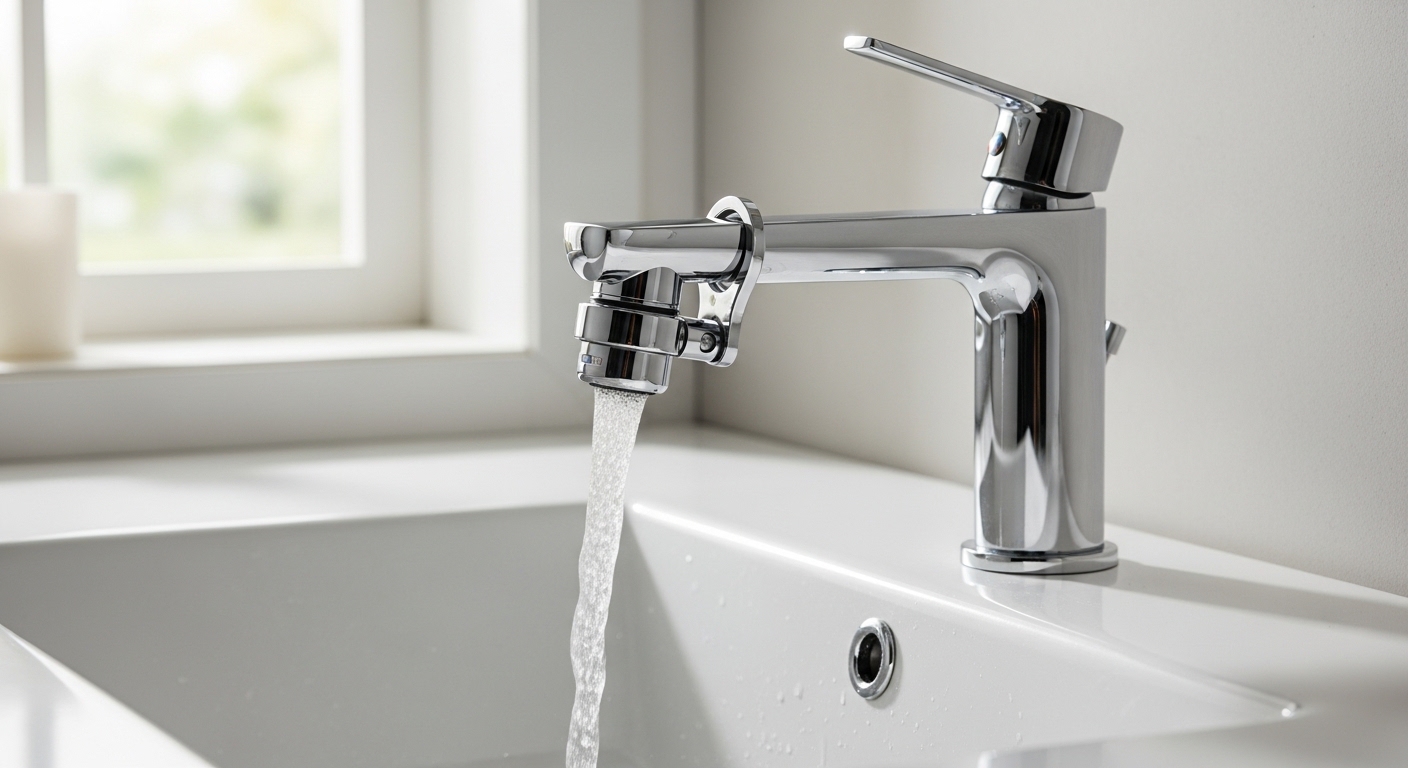
A faucet water filter bathroom setup is simply a compact filter that screws onto (or sits inline with) your bathroom tap’s aerator, treating the water right at the point you use it. People ask about it because bathroom water gets ignored — we obsess over kitchen drinking water but then brush our teeth, rinse a toothbrush, take medication, and fill a glass for a midnight drink with whatever comes out of the bathroom sink. If that water tastes like a swimming pool or leaves chalky spots, a small filter fixes it fast and cheap. Below, I’ll walk you through exactly when it’s worth it, the types that exist, what they actually remove, and how to choose the right one for your sink.
I’ve specified and tested fixtures at arcorarobinet for years, and the bathroom filter question comes up constantly from customers who already filter their kitchen but never thought about the other taps in the house. Let’s clear it up.
What does a bathroom faucet water filter actually remove?
A bathroom faucet water filter mainly removes chlorine, chloramine taste and odor, sediment and rust particles, and — depending on the cartridge — lead, mercury, and some VOCs. It does not soften water (it won’t stop limescale on its own) and it won’t make non-potable water safe to drink.
Most faucet-end filters use an activated carbon block. Carbon is excellent at grabbing the things you can taste and smell — chlorine is the big one — and a good carbon block rated to NSF/ANSI Standard 42 (aesthetic effects) and Standard 53 (health effects) will also reduce lead and cysts. Here’s the honest breakdown of what each type targets:
- Chlorine & chloramine: Removed well by activated carbon. This is the #1 reason people notice better-tasting bathroom water within a day.
- Sediment, rust, sand: Caught by the mechanical pre-filter layer — great if you’re on a well or an older building with iron pipes.
- Lead: Reduced by carbon-block filters specifically certified to NSF 53. Not all cheap filters do this — check the box.
- Hardness (calcium/magnesium): Not meaningfully removed by a standard carbon filter. You need a softener or a scale-inhibiting cartridge for that.
- Bacteria/viruses: Not removed unless it’s a dedicated microfiltration or RO system — a basic faucet filter is not a purifier.
So if your goal is better taste, less chlorine smell when you brush, and fewer rust flecks, a faucet filter nails it. If your real enemy is limescale crusting up the aerator, you’ll want to pair filtration with regular cleaning — our guide on how to clean a faucet head the way real users swear by covers the vinegar-soak method that keeps mineral buildup from clogging both the aerator and the filter.
Is a bathroom faucet filter even worth it, or should I just filter the kitchen?
It’s worth it if you actually consume water at the bathroom sink — brushing teeth, rinsing your mouth, taking pills, filling a cup, or rinsing contact lenses. If the bathroom tap is purely for handwashing, save your money and filter only the kitchen.
Think about how the sink gets used, not just where it is. A primary bathroom where someone with sensitive skin washes their face, or a kids’ bathroom where children fill cups and swallow toothpaste rinse, are strong candidates. A powder room used by guests twice a month is not. The math is friendly either way: a faucet-mount filter runs about $20–$40 up front, and replacement cartridges are roughly $8–$20 every two to three months, so you’re looking at maybe $40–$80 a year for the heaviest-used sink in the house.
One thing people forget: filtering reduces chlorine, which is gentler on skin and hair when you wash your face. It won’t replace a whole-house system, but for the one tap your family puts near their mouth every morning, it’s a low-stakes upgrade.
Faucet-mount vs. tap-end vs. under-sink: which type fits a bathroom sink?
For most bathrooms, a faucet-mount or tap-end filter is the right pick — it’s cheap, tool-free, and screws directly onto the aerator threads. Choose under-sink only if you want filtered water on demand without a bulky unit on the spout, and you have cabinet space and a few minutes for a hose connection.
Here’s how the three common approaches compare for a bathroom application specifically:
| Type | Install | Typical price | Best for | Downside |
|---|---|---|---|---|
| Faucet-mount filter | Screws onto aerator, no tools, ~10 min | $20–$40 | Renters, fast upgrade, switchable filtered/unfiltered | Adds bulk to the spout; needs standard aerator threads |
| Tap-end / inline filter | Threads inline at the spout tip | $15–$35 | Minimalist look, low water-pressure setups | Smaller cartridge, more frequent swaps |
| Under-sink filter | Connects to supply line, may need a drill for a dedicated tap | $60–$200 | Permanent home, no clutter on the spout | Costs more, needs cabinet space and basic plumbing |
| Countertop / pitcher | No install | $25–$45 | No-commitment, deep-rinse jobs | Not at the tap; takes counter space |
For a bathroom, the faucet-mount wins on convenience nine times out of ten. The big compatibility gotcha is thread type: most North American bathroom faucets use a 15/16″-27 male or 55/64″-27 female aerator thread, and the filter has to match. If your faucet has a hidden or non-standard aerator — common on European and designer fixtures — a faucet-mount may not seat properly, and a tap-end adapter or under-sink unit becomes the better route. If you’re picking between styles for taste and travel, our deep dive on the water tap end filter compares cartridge life and flow rate in detail.
How do I install a faucet water filter in the bathroom myself?
You install a bathroom faucet filter by unscrewing the existing aerator, checking the thread direction, and threading the filter on by hand — it takes about ten minutes and needs no tools beyond maybe a cloth for grip. Here’s the reliable order of operations:
- Run the tap and check pressure. Filters cut flow slightly, so know your starting point.
- Unscrew the old aerator by turning it counterclockwise (from your view, looking up at the spout). If it’s stuck with mineral crust, wrap a cloth around it for grip and avoid scratching the finish.
- Identify your thread. Male threads are on the outside of the spout; female threads are inside. Match this to the adapter that came with the filter.
- Seat the rubber washer, then hand-thread the filter or its adapter clockwise. Snug, not gorilla-tight — overtightening cracks plastic housings.
- Run cold water for 5 minutes to flush carbon dust before you drink any. The first water often runs gray; that’s normal and harmless.
- Check for drips at the connection. A slow seep usually means the washer is missing or pinched.
If you hit a leak you can’t seat out, the problem is often a worn washer or a hairline crack in the aerator base — the same culprits behind a dripping tap. Our walkthrough on why a bathroom faucet leaks and how to stop it covers diagnosing connection drips step by step. And if your filter is part of a reverse-osmosis setup at the sink, a recurring drip at the dedicated tap is frequently a perished seal — see RO faucet O-ring replacement for the exact fix.
How often do I replace the cartridge, and what does upkeep cost?
Replace a bathroom faucet filter cartridge every 2–3 months, or roughly every 100–200 gallons, whichever comes first — most cartridges cost $8–$20 each, so annual upkeep runs about $40–$80. Heavy use or sediment-heavy well water shortens that interval.
Don’t go by the calendar alone. The two reliable signs a cartridge is spent are a noticeable drop in flow (carbon clogs as it loads up with particles) and the return of that chlorine taste or smell. Many filters have a built-in indicator or a sticker you date — set a phone reminder if not. Running a cartridge past its life isn’t dangerous, but it stops removing contaminants and can actually harbor bacteria in the saturated carbon, so swapping on schedule matters.
A few habits stretch cartridge life and protect your fixture:
- Use the unfiltered/bypass setting for handwashing and cleaning — only switch to filtered when you’re drinking or brushing. This can double cartridge life.
- Soak the aerator and filter housing in white vinegar every month or two if you have hard water, to dissolve limescale before it chokes flow.
- Run cold, not hot, through the filter. Hot water degrades carbon and can warp plastic housings.
- Flush a few seconds after the tap’s been sitting overnight, especially in older buildings, before drinking.
If your filter is the kitchen-style canister type rather than a faucet-mount, the cartridge swap is a slightly bigger job — our guide on how to replace a kitchen faucet filter without flooding the cabinet applies the same way to a bathroom under-sink unit and saves you a wet towel emergency.
Will a faucet filter hurt my water pressure or wreck the finish?
A quality faucet filter drops flow only slightly — usually to around 0.5–1.0 gallons per minute — which is plenty for a bathroom sink, and it won’t damage your fixture’s finish if you don’t overtighten it. Cheap units with undersized cartridges are the ones that choke pressure noticeably.
Two real concerns, handled honestly. First, weight and leverage: a bulky faucet-mount filter hangs off the end of your spout and, on a lightweight or wobbly faucet, can stress the mounting nut over time. If your tap already feels loose at the base, tighten the mounting hardware before adding a filter. Second, finish: brushed nickel, matte black, and brass spouts scratch if you wrench a filter on with pliers. Hand-tighten, use a cloth for grip, and you’ll never mark the finish. If you’re shopping for a new fixture that plays nicely with filtration, choose a faucet with standard aerator threads and a solid mounting base — exactly the build quality we engineer at arcorarobinet.
FAQ
Can I drink water from a filtered bathroom faucet?
Yes, if your tap water is already municipally treated and potable, a carbon filter just improves taste and reduces chlorine, lead, and sediment. If your water comes from an untested well or you’re on a boil-water notice, a basic faucet filter does not make unsafe water safe — you’d need a certified purifier or RO system for that.
Does a bathroom faucet filter remove hard water and limescale?
No, a standard carbon faucet filter doesn’t soften water or stop limescale — it removes taste, chlorine, and particles, not dissolved calcium and magnesium. For hardness you need a water softener or a dedicated scale-inhibiting cartridge. To manage the chalky buildup on the aerator itself, a monthly vinegar soak is your best friend.
Will a faucet filter fit my bathroom faucet?
Most fit standard 15/16″-27 male or 55/64″-27 female aerator threads, and they ship with adapters for both. The exceptions are designer, European, or pull-out spray faucets with hidden or proprietary aerators — those may need a specific adapter or an under-sink filter instead. Unscrew your current aerator and check the thread before buying.
How long does a bathroom faucet water filter cartridge last?
Typically 2–3 months or 100–200 gallons. Using the bypass setting for handwashing and only filtering drinking and brushing water can stretch that significantly. Replace it as soon as flow drops or the chlorine taste returns, rather than waiting out the calendar.
Is an under-sink filter better than a faucet-mount one for the bathroom?
Under-sink is better if you want a clutter-free spout and a permanent setup, and you don’t mind a $60–$200 spend and a small plumbing connection. Faucet-mount is better for renters, fast installs, and switching between filtered and unfiltered water on the fly. For a typical bathroom, faucet-mount wins on cost and convenience.
Do faucet water filters reduce water pressure a lot?
Not significantly with a quality unit — expect flow around 0.5–1.0 GPM, which is more than enough for a bathroom sink. Noticeable pressure loss usually means a clogged cartridge that’s overdue for replacement, or a low-end filter with an undersized carbon block.
Author note: This guide was written by the product team at arcorarobinet, where we design and bench-test bathroom and kitchen faucets for thread compatibility, flow rate, and finish durability. We evaluate filtration accessories against NSF/ANSI 42 and 53 certifications and back our fixtures with manufacturer warranties, so the advice here reflects hands-on testing rather than spec-sheet guesswork. Always confirm a filter’s own NSF certification on its packaging for the specific contaminants you care about.



您好!Veuillez vous connecter