 ARCORA ROBINETS
What Is a Tub Spout Knob, and How Do You Fix One That Won’t Divert to the Shower?
Vues:2 ClassificationProduct
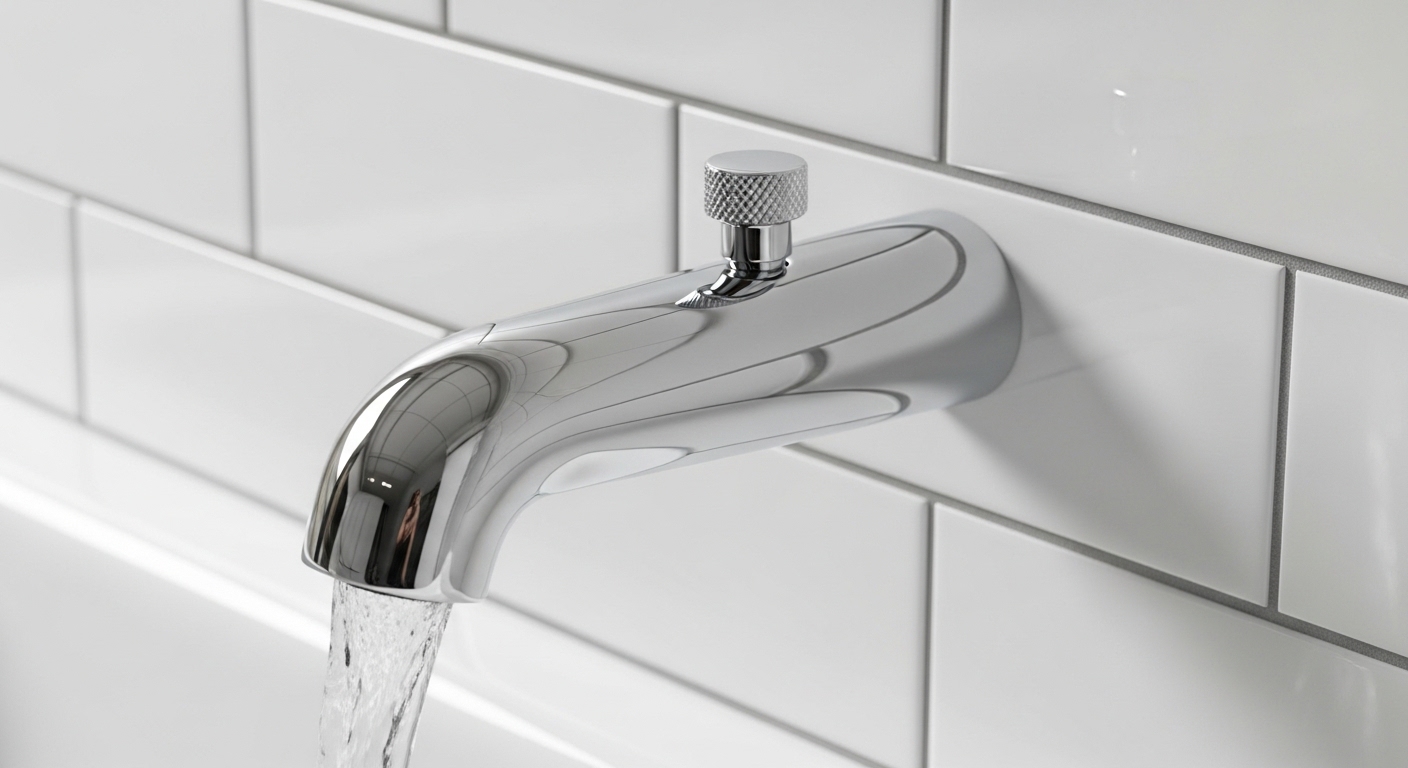
If you’ve ever reached down, pulled up the little tab on your bathtub faucet, and had water keep pouring out the spout instead of the showerhead, you’ve met a failing tub spout knob. That knob — technically the diverter — is one of the most-used and least-understood parts in your bathroom. It gets yanked thousands of times a year, it’s full of tiny rubber seals under constant water pressure, and when it wears out it fails in loud, annoying, water-wasting ways. The good news: it’s also one of the easiest fixtures in the entire house to diagnose and replace yourself.
Below, I’ll walk you through exactly what the knob does, why yours is misbehaving, how to pick the right replacement spout, and when it’s worth calling a plumber versus doing it in an afternoon. This is a buyer’s-and-fixer’s guide from people who sell and test these parts for a living.
What exactly is a tub spout knob, and what does it do?
A tub spout knob is the diverter control that switches water flow between your tub spout and your showerhead. Pull it up (or push it, on some designs) and it seals off the spout opening, forcing pressurized water up the riser pipe to the shower. Let it drop and gravity plus water flow sends everything back down to fill the tub.
Here’s the part most people don’t realize: on the overwhelming majority of American tub spouts, the knob is not a separate replaceable component. The knob, the lift rod, and the rubber diverter seal are all built into the spout as one sealed assembly. That’s why the standard repair is to swap the whole spout — the internal gasket that actually does the sealing simply isn’t sold on its own for most models.
There are a few exceptions. A handful of higher-end and older two-piece spouts use a serviceable diverter cartridge. And some tub-and-shower systems put the diverter in the wall behind the trim plate (a three-handle or a dedicated diverter valve) rather than on the spout. Knowing which kind you have decides your whole repair, so let’s sort that out first.
The three places a tub diverter can live
- On the spout (pull-up knob): By far the most common in modern U.S. homes. The knob sits on top of the spout. Failure = replace the spout.
- In the wall (third handle or center diverter): Older three-handle setups have a dedicated diverter valve between the hot and cold handles. Failure = rebuild or replace the wall valve/stem.
- Rotating spout collar: A twist-style ring at the base of the spout. Less common; usually still fixed by replacing the spout.
Why won’t my tub spout knob divert water to the shower anymore?
Nine times out of ten, water still pouring from the spout while the shower runs means the rubber diverter seal inside the spout has worn out or hardened, so it can no longer make a watertight block. Replacing the spout restores full pressure to the showerhead immediately.
The reason is simple wear. Every time you lift that knob, a small rubber flapper or washer presses against a seat to close off the spout. Hot water, minerals, chlorine, and thousands of cycles slowly stiffen and deform that rubber. Once it can’t seat fully, some water takes the path of least resistance — straight back out the spout — and your shower loses pressure.
Hard water makes this dramatically worse. Calcium and magnesium scale builds up on the diverter seat and the lift mechanism, and I’ve pulled spouts apart that were essentially cemented open. If you’re on well water or in a hard-water area, expect a diverter to last 3–5 years rather than 8–10.
The most common tub spout knob problems, ranked
| Symptom | Most likely cause | Typical fix |
|---|---|---|
| Water still pours from spout during shower | Worn/hardened diverter seal | Replace the spout |
| Knob won’t stay up (drops mid-shower) | Broken lift spring or worn rod | Replace the spout |
| Knob is stiff or stuck | Mineral/scale buildup | Descale, or replace if seized |
| Water dribbles from showerhead when filling tub | Diverter not fully seating downward | Replace the spout |
| Knob spins freely, does nothing | Detached internal lift mechanism | Replace the spout |
Notice the pattern: on a knob-style spout, almost every failure ends with « replace the spout. » That’s not a cop-out — it’s because the sealing parts aren’t sold separately, and a new spout costs less than a plumber’s trip charge.
How do I know which replacement tub spout to buy?
The single most important thing is your connection type: measure how the old spout attaches to the pipe before you buy anything. Get that wrong and nothing else matters, because a slip-fit spout won’t thread onto a threaded pipe and vice versa. Take five minutes with the old spout off and you’ll pick the right one the first time.
There are two main connection styles, plus one measurement that trips everyone up.
Threaded vs. slip-fit: the connection that decides everything
- Threaded (screw-on): The spout threads directly onto a 1/2″ NPT galvanized or brass nipple sticking out of the wall. You twist it off counterclockwise. Look for internal threads inside the back of the spout.
- Slip-fit (set-screw): The spout slides over a smooth 1/2″ copper pipe and locks with a small hex set screw on the underside near the wall. If you see that little Allen screw, you have slip-fit.
Then measure two things: the distance from the wall to the front of the spout (spout length) and, for threaded spouts, the thread depth. A too-short or too-long spout either won’t seat against the wall or won’t thread on far enough to seal. Universal spouts with multiple adapters exist and are a safe bet if you’re unsure, but a matched length always looks and seals better.
One more detail worth checking: if you’re upgrading finish anyway, this is the perfect time to match your spout to your handle trim and showerhead. A brushed-nickel spout next to chrome handles is the kind of mismatch you’ll notice every single day.
| Spout type | Connection | Best for | Price range |
|---|---|---|---|
| Threaded diverter spout | 1/2″ NPT screw-on | Most standard tub/shower combos | $15–$40 |
| Slip-fit diverter spout | 1/2″ copper, set screw | Modern homes with smooth copper stub-out | $18–$45 |
| Universal (adapter kit) | Fits both, includes adapters | Unsure of connection type | $20–$50 |
| Non-diverter spout | Threaded or slip | Tub-only (no shower) | $12–$30 |
If your whole tub trim is showing its age — pitted handles, a crusty escutcheon, a spout that’s beyond saving — it can be smarter to address the valve too. Our guide to Moen Roman tub faucet valves is worth a read if you’re rethinking a deck-mounted tub filler rather than a wall spout.
How do you replace a tub spout knob (spout) yourself?
You replace it by removing the old spout and installing a new one — no special skills required, and you don’t even need to shut off the main water supply for a threaded spout. Budget 15–20 minutes. Here’s the process that works for both connection types.
- Identify the type. Look underneath the spout near the wall. See a small hex set screw? Slip-fit. No screw? Threaded.
- For slip-fit: Loosen the set screw with a hex/Allen key (usually 1/8″ or smaller), then slide the spout straight off the copper pipe. It may take a firm pull if scale has built up.
- For threaded: Turn the spout counterclockwise by hand. If it’s stuck, insert a large screwdriver or dowel into the spout opening for leverage — but go gently to avoid cracking the fitting inside the wall.
- Clean the pipe and wall. Wipe away old plumber’s tape, scale, and gunk. Inspect the pipe stub-out for cracks or corrosion.
- For threaded: Wrap fresh Teflon (plumber’s) tape clockwise 4–6 times around the pipe threads. Thread the new spout on hand-tight until snug and pointing straight down.
- For slip-fit: Slide the new spout on, press it flush to the wall, and tighten the set screw. Add a bead of clear silicone caulk along the top edge where it meets the wall to keep water out.
- Test it. Run water, then lift the knob. Full pressure should hit the showerhead with little to no dribble from the spout.
That’s genuinely it. The trickiest part is a seized threaded spout, and even then patience beats brute force. If your spout is corroded onto the pipe and simply won’t budge, our detailed walkthrough on how to remove an old faucet from a tub without damaging the wall or plumbing covers the stubborn cases step by step.
When is a leaking tub spout knob a bigger plumbing problem?
If replacing the spout doesn’t stop water from reaching the showerhead — or if hot water keeps running even after the tub is shut off — the problem is behind the wall, not in the spout. That points to a worn valve cartridge, and it’s a different repair entirely.
A healthy diverter spout should completely stop shower flow the moment you let the knob drop. If a brand-new spout still lets water creep up to the shower, your pressure balance or mixing valve inside the wall may be the culprit. Likewise, a tub that keeps trickling hot water long after you’ve turned the handle off is a valve problem, not a spout problem — we break that exact scenario down in our guide on why your bathtub faucet is turned off but hot water is still running.
And if the drips are coming from the handle area rather than the spout, you’re looking at handle stem or cartridge seals. Our write-up on how to fix a leaking Moen shower faucet is the right place to start there. The rule of thumb: spout knob = flow direction; wall valve = temperature and shutoff. Match the symptom to the right part and you won’t waste money.
Do more expensive tub spouts actually last longer?
Yes, but the gains come from build material and finish quality, not from a fancier knob. A solid-brass spout with a ceramic-quality diverter and a well-plated finish will outlast a thin zinc-alloy or plastic spout by years, especially in hard water. The knob mechanism itself is broadly similar across price points.
Here’s what your money actually buys as you move up:
- Body material: Solid brass resists corrosion far better than pot-metal (zinc) or ABS plastic. Heft is a decent proxy — a heavier spout is usually brass.
- Finish durability: PVD (physical vapor deposition) finishes resist scratching and tarnish; cheaper electroplating chips and clouds. This matters most for brushed nickel, matte black, and bronze.
- Diverter longevity: Better spouts use higher-grade seals and smoother seats that scale up more slowly.
- Warranty: Reputable brands back finish and function with multi-year or limited lifetime warranties — a signal they expect the part to last.
For a bathroom you use daily, spending $30–$45 on a solid-brass spout instead of $12 on plastic is one of the best small upgrades you can make. It’s the difference between doing this repair once a decade versus every few years.
FAQ
Can I replace just the knob on my tub spout?
On most modern U.S. spouts, no — the knob and diverter seal are a single sealed unit, so you replace the whole spout. Only a few two-piece or premium spouts offer a serviceable diverter cartridge. Replacing the entire spout costs about the same and takes the same 15 minutes, so it’s rarely worth hunting for a knob-only part.
Why does water come out of both my tub spout and showerhead at once?
That’s a worn diverter seal that can’t fully block the spout opening, so water splits between both outlets and your shower loses pressure. It’s the classic end-of-life symptom. Replacing the spout restores a clean divert with full flow to the showerhead.
How long does a tub spout diverter last?
Typically 8–10 years in soft-water homes, but only 3–5 years with hard or well water because mineral scale wears the seal and seat faster. If you’re descaling your showerhead often, expect your diverter to need attention on a similar timeline.
Do I need to turn off the water to change a tub spout?
Usually not for a threaded or slip-fit spout replacement, since the spout sits downstream of the valve and no water flows when the faucet is off. That said, if you’re nervous or the valve seems to weep, shutting off the bathroom supply or main takes only a minute and adds peace of mind.
Is a stuck tub spout knob always a sign it needs replacing?
Not always — a knob that’s stiff from mineral buildup can sometimes be freed by soaking the spout in white vinegar to dissolve the scale. But if the lift rod or internal spring has physically broken, the knob will feel loose or spin freely, and that means the spout has to be replaced.
Will a universal tub spout fit my existing plumbing?
Most universal spouts include adapters for both 1/2″ NPT threaded pipe and 1/2″ slip-fit copper, so they fit the large majority of standard tub setups. Still, measure your spout length (wall to tip) before buying so the new one seats flush and looks right — universal covers the connection, not the reach.
About the author: This guide was written by the product and testing team at arcorarobinet, who install, bench-test, and pressure-cycle tub spouts and diverters as part of our fixture quality program. We evaluate diverter seals across thousands of open-close cycles and in hard-water conditions to see how they really hold up — not just how they look on day one.
About arcorarobinet: arcorarobinet designs and supplies faucets, shower systems, and bathtub fixtures for homeowners and trade customers across North America. Our tub spouts are manufactured to standard 1/2″ NPT and slip-fit specifications, tested to relevant ASME/cUPC flow and durability benchmarks, and backed by a limited warranty on finish and function so you can replace a worn diverter once and forget about it.



您好!Veuillez vous connecter