 ARCORA ROBINETS
Why Is My Bathtub Faucet So Loud, and How Do I Fix It?
Vues:3 ClassificationRepair
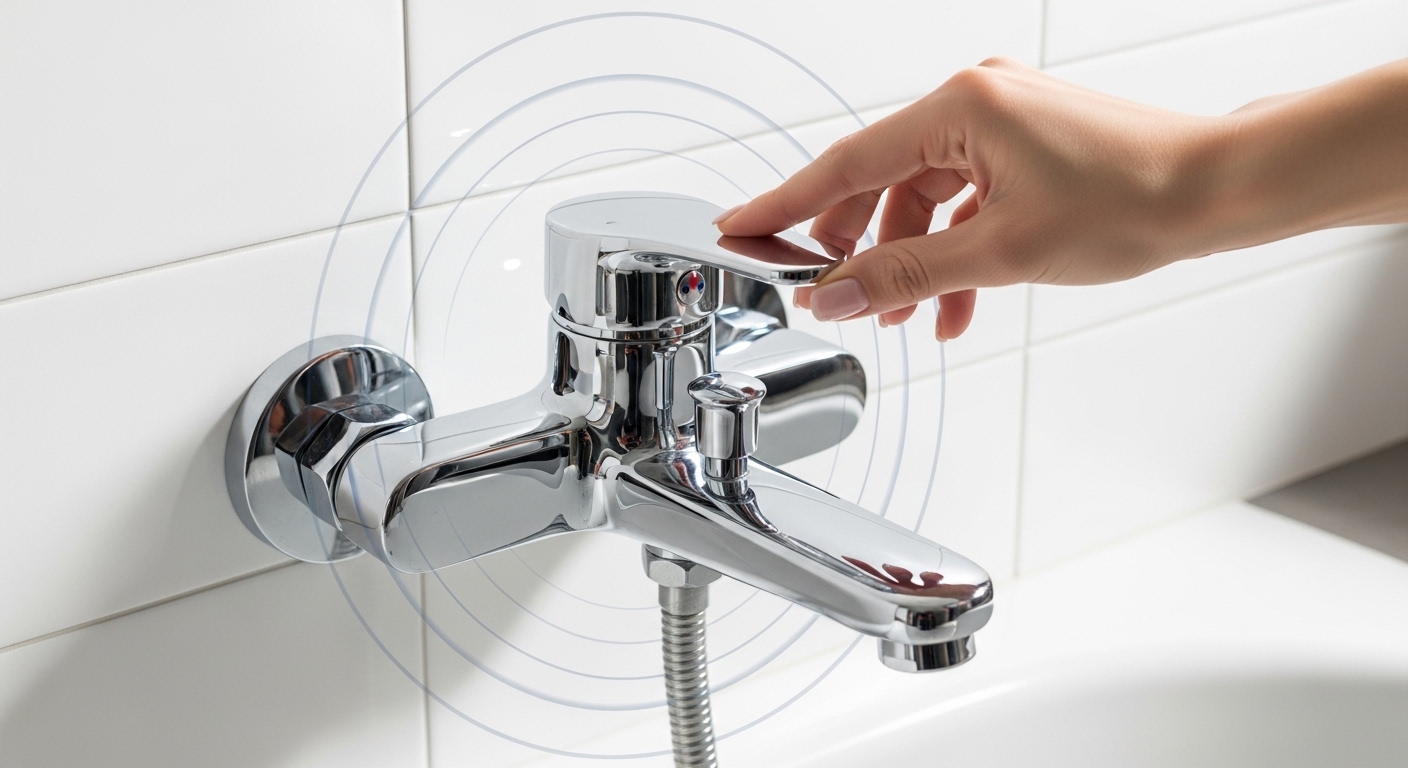
If you have a loud bathtub faucet — a screech when you turn it on, a deep hammering thud when you shut it off, or a low hum that rattles the whole wall — the noise is your plumbing telling you exactly what’s wrong. Sound is a symptom, and each type of sound points to a specific, fixable cause. The good news: the vast majority of noisy tub faucets come down to a worn rubber washer, a tired cartridge, or water pressure that’s too high, and all three are things you can diagnose in five minutes and often fix yourself the same afternoon. Below, I’ll walk you through what each noise means, how to find the real culprit, and exactly how to fix it — including when it’s genuinely time to replace the whole valve instead.
What does the specific noise my bathtub faucet makes actually mean?
The type of sound is your fastest diagnostic tool: a screech or whistle means a worn washer or partially closed valve, a bang or thud when you shut off is water hammer, and a hum or rattle while running is usually vibration from high pressure or a loose part. Match your noise to the list below before you touch a single tool — it saves you from tearing apart the wrong part.
- High-pitched squeal or whistle — a hardened or torn stem washer vibrating against its seat, or mineral buildup narrowing the water path. Most common on older two-handle compression faucets.
- Loud bang or knock when you turn the water OFF — classic « water hammer, » caused by fast-moving water slamming to a stop. Not the faucet itself so much as the pressure behind it.
- Chattering or machine-gun rattle — a loose washer, screw, or cartridge vibrating rapidly as water flows past it.
- Low hum or groan while running — often a failing cartridge or water pressure that’s simply too high (above 80 psi).
- Gurgling or hissing — trapped air in the lines, frequently after the water was shut off for a repair.
Once you’ve named your noise, you’ve narrowed the fix to one or two parts. That’s the whole game — most people waste time replacing things that were never the problem.
Why does my bathtub faucet screech or whistle when I turn it on?
A screeching or whistling tub faucet is almost always a worn-out stem washer — the small rubber disc at the bottom of the valve stem — that has hardened, cracked, or come loose and is now vibrating like a reed as water rushes past it. On single-handle tubs, the equivalent culprit is a scored or mineral-caked cartridge. Either way, the noise is friction and vibration, and replacing the cheap worn part silences it.
Here’s why it happens: every time you open the faucet, water is forced past that washer. Over years of hot water and mineral-heavy flow, the rubber loses its flexibility. Instead of sealing cleanly, it flutters in the stream and produces that ear-splitting whistle. Hard water makes it worse because scale builds up on the valve seat and narrows the opening, speeding the water and raising the pitch — the same reason a garden hose whistles when you pinch the end.
To fix a screeching two-handle tub faucet:
- Shut off the water — either at the tub’s dedicated shutoffs (behind an access panel, often in the closet or wall behind the tub) or at the home’s main valve.
- Open the faucet to drain residual water and relieve pressure.
- Pop off the handle cap, remove the handle screw, and pull the handle.
- Unscrew the retaining nut and pull out the valve stem with a deep socket or stem wrench.
- At the base of the stem, remove the brass screw holding the washer, swap in an identical new washer (bring the old one to the hardware store to match size), and smear a little plumber’s grease on it.
- While it’s apart, inspect the valve seat; if it’s rough or pitted, reseat it with a seat grinder or replace the seat — a rough seat will chew up a new washer within weeks.
- Reassemble and test.
If you have a single-handle tub, the process is similar but you’re pulling and replacing a cartridge rather than a washer. The same principles apply as a bathroom sink — if you want a step-by-step on handle removal in general, our guide on how to do a faucet handle replacement on a bathroom sink walks through the exact handle-and-stem sequence you’ll use here.
What is water hammer, and why does my tub bang when I shut the faucet off?
Water hammer is that loud bang or knock you hear the instant you shut the tub off, and it happens because fast-flowing water slams into a suddenly closed valve with nowhere to go — the shockwave rattles the pipes against the wall framing. It’s not the faucet failing; it’s physics, and it’s fixable without replacing the faucet at all.
Older homes often had small air-filled pipe stubs called « air chambers » near fixtures to cushion this shock. Over time they fill with water and lose their cushion, so the bang returns. Here’s how to tackle it, from easiest to most involved:
- Recharge the air chambers (free): Shut off your home’s main water supply, open the highest and lowest faucets in the house to fully drain the lines, then close them and turn the water back on. This refills the air chambers with air and often eliminates the bang instantly.
- Check your water pressure: A $10 gauge that screws onto a hose bib tells you your psi. Anything over 80 psi is too high and makes hammer far worse. Residential pressure should sit between 45 and 60 psi.
- Install a water hammer arrestor: If recharging doesn’t hold, a small arrestor (a sealed air-and-piston cushion) installed at the tub’s supply lines permanently absorbs the shock. They’re inexpensive and code-approved.
- Secure loose pipes: Sometimes the bang is a loose pipe knocking against a stud. Adding a cushioned pipe clamp in an accessible run can quiet it.
If your bang only started after you replaced a washer or cartridge, suspect trapped air first — run every faucet in the house for a minute to purge it before assuming anything worse.
Could high water pressure be causing the hum or vibration?
Yes — excessively high water pressure is one of the most overlooked causes of a humming, vibrating, or moaning tub faucet, because pressure above roughly 80 psi forces water through the valve fast enough to make internal parts and pipe walls resonate. If the noise happens across multiple fixtures in your home, not just the tub, pressure is your prime suspect.
Test it with an inexpensive pressure gauge on an outdoor spigot or laundry connection. If you’re reading 85, 90, or higher, the fix is a pressure-reducing valve (PRV) installed on your main line — usually a plumber job, but it solves noise at every faucet in the house at once, along with protecting your water heater, appliances, and every washer in your fixtures from premature wear. Many municipalities deliver water well above safe residential pressure, so this is more common than people realize.
A humming that’s isolated to just the tub, though, usually isn’t pressure — it’s a failing cartridge or a loose part vibrating. That distinction matters, so always check whether the noise follows one fixture or the whole house before spending money.
How do I know whether to repair or just replace the whole tub faucet?
Repair if the faucet body is sound and you’re only chasing a worn washer, cartridge, or O-ring — that’s a $3–$25 fix. Replace the valve if the body is cracked, the valve seat is corroded beyond reseating, replacement cartridges are discontinued, or you’ve already swapped the wearing parts and the noise persists. Here’s a straight comparison to help you decide:
| Situation | Best Fix | Typical Cost | Difficulty |
|---|---|---|---|
| Screech/whistle, faucet otherwise fine | Replace stem washer or cartridge | $3–$25 | Easy (30–60 min) |
| Bang on shutoff (water hammer) | Recharge air chambers / add arrestor | $0–$40 | Easy–Moderate |
| Whole-house hum, high psi | Install pressure-reducing valve | $150–$400 (with plumber) | Pro job |
| Rough/pitted valve seat | Reseat or replace seat | $10–$30 | Moderate |
| Cracked valve body / obsolete parts | Replace the valve/faucet | $80–$300+ | Hard (may open wall) |
The rule of thumb: if the noise-making part costs less than a nice lunch and the faucet body is intact, repair. If you’re facing a corroded body or discontinued cartridge on a builder-grade valve that’s 20 years old, put your money into a quality replacement instead of chasing parts. When it comes time to shop, checking the bathroom faucet UPC certification ensures the new valve meets safety and flow standards — worth a two-minute check before you buy.
What if the noise only happens with hot water, or only in one handle?
If the noise appears only on the hot side, the problem is isolated to the hot valve stem or cartridge — heat degrades rubber washers faster, so the hot side almost always wears out first. If only one handle is noisy, you only need to service that one stem, which cuts your work in half.
This one-sided pattern is actually helpful. It tells you not to bother touching the quiet handle. Pull the noisy stem, inspect its washer and seat, and replace just that side. If you’re on a single-handle tub and the noise is constant regardless of temperature setting, that points back to the single cartridge or to pressure. Two-handle setups give you this handy left/right diagnostic that single-handle valves don’t — one more reason plenty of people still prefer them. If you’re weighing configurations for a future remodel, our breakdown of whether one or two handle faucets are better covers the repair-friendliness trade-offs in detail.
Which tools and parts do I need to quiet a noisy tub faucet myself?
For the most common repairs you’ll need a small, cheap kit — nothing exotic. Here’s the complete list so you can make one hardware-store trip instead of three:
- Deep socket set or a dedicated tub/shower stem wrench (the valve sits recessed in the wall)
- Adjustable wrench and slip-joint pliers
- Flathead and Phillips screwdrivers plus an Allen key set for set-screw handles
- Replacement washers, O-rings, or the exact cartridge for your faucet model
- Plumber’s grease (silicone-based, safe on rubber)
- White vinegar for dissolving mineral scale on the stem and seat
- A pressure gauge if you suspect water hammer or high psi
- Rags and a bucket for residual water
The single most important step before shopping: identify your faucet’s brand and model. Bring the old washer or cartridge with you, or photograph the stamp on the trim plate. Universal parts rarely fit perfectly, and a mismatched washer is the number-one reason a « fixed » faucet starts whistling again a month later.
FAQ
Is a loud bathtub faucet dangerous, or just annoying?
Usually just annoying — but persistent water hammer is worth addressing because the repeated shockwaves can loosen pipe joints and stress fittings over time, eventually causing leaks inside the wall. A screeching washer isn’t dangerous, but ignoring it lets the vibration wear the valve seat, turning a $3 fix into a bigger job. So it’s not an emergency, but it is a « handle it this month » issue.
Why is my bathtub faucet loud only when the shower is running?
That points to the diverter — the mechanism that redirects water up to the showerhead. A worn diverter washer or a partially clogged diverter restricts flow and creates whistling or humming only in shower mode. Replacing the diverter washer or the tub spout itself usually solves it. Our guide on fixing a tub spout knob that won’t divert properly covers the exact part.
Can hard water make my tub faucet noisy?
Absolutely. Mineral scale builds up on the valve seat and inside the stem, narrowing the water path and speeding up flow, which creates whistling and screeching. Soaking removed parts in white vinegar for an hour dissolves the scale. If you’re on very hard water, expect washers to wear faster and plan on servicing the valve every few years.
How long does it take to fix a noisy bathtub faucet?
Most washer or cartridge replacements take 30 to 60 minutes once you have the right part, including shutting off the water and reassembling. The time-consuming part is usually the first trip to match the correct washer or cartridge — do that right and the actual repair is quick. Water hammer fixes like recharging air chambers take about 15 minutes.
Should I call a plumber for a loud tub faucet?
Call a plumber if the valve body is cracked, the parts are discontinued, the noise is whole-house high-pressure requiring a pressure-reducing valve, or the repair means opening a finished wall. For a straightforward worn washer or cartridge on an accessible valve, this is a confident DIY job that saves you a $150+ service call.
Why did my faucet get loud right after I replaced a washer?
Two likely reasons: trapped air in the lines (run every faucet in the house for a minute to purge it) or a slightly mismatched or over-tightened washer fluttering against the seat. If purging air doesn’t help, pull the stem and confirm the new washer is the exact size and seated flat, and that the valve seat underneath isn’t rough.
A note from our team: This guide was written by the product and testing team at arcorarobinet, drawing on hands-on evaluation of bathtub valves, cartridges, and diverters across dozens of faucet models. Arcorarobinet designs and sells bathroom and kitchen fixtures built to standard North American valve dimensions, and every faucet we ship is pressure-tested and backed by our warranty. We always recommend confirming your fixture’s certification and following the manufacturer’s torque and installation specs — proper installation is the difference between a faucet that stays quiet for a decade and one that whistles in a year.



您好!Veuillez vous connecter