 ARCORA ROBINETS
What Is a Bathroom Faucet UPC, and Why Should You Check It Before You Buy?
Vues:6 ClassificationProduct
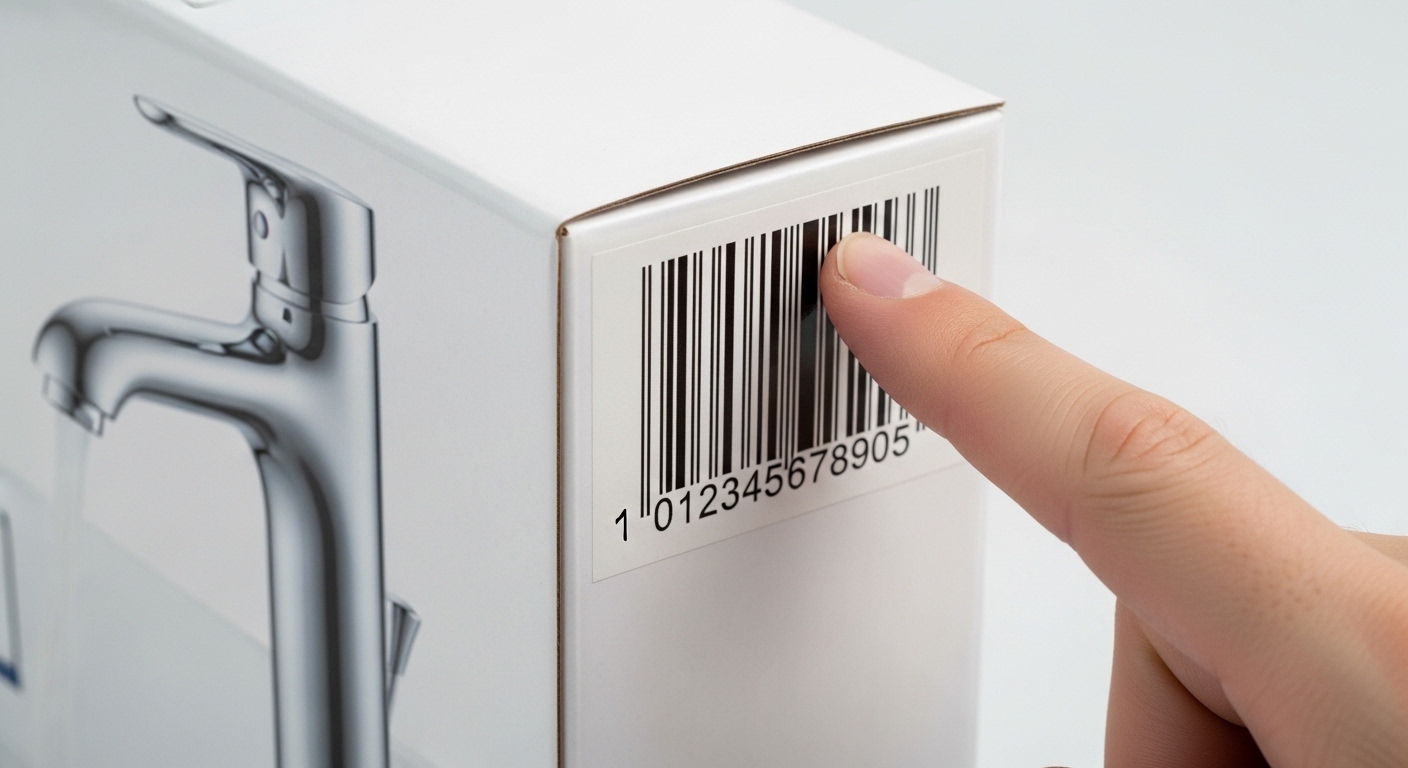
If you’ve ever stared at two nearly identical faucet boxes and wondered which one is actually the model you researched, the bathroom faucet UPC is how you settle it in five seconds. UPC stands for Universal Product Code — that black-and-white barcode with a 12-digit number printed underneath. Every distinct product variant gets its own code, so a brushed nickel single-hole faucet and the matte black version of the same model carry two different UPCs. Scan it or type it into a search bar and you’ll pull up the exact item, its spec sheet, and every retailer selling it. It sounds like boring warehouse trivia, but for a shopper it’s a genuinely useful anti-mistake tool — and it’s constantly confused with a plumbing certification that sounds almost identical. Let’s clear all of that up.
What does UPC actually mean on a bathroom faucet box?
UPC means Universal Product Code — a standardized 12-digit barcode that identifies one specific product down to the finish and configuration. It is a retail inventory number, not a quality rating or a certification. When a manufacturer registers a new faucet with GS1 (the organization that issues barcodes), that faucet gets a permanent UPC that follows it through every store, warehouse, and online marketplace.
Here’s what that number is doing behind the scenes. The first digits identify the manufacturer, the middle digits identify the specific item, and the final digit is a check digit that math-verifies the whole code is valid. Because the code is variant-specific, the same faucet family can easily have six or eight UPCs — one per finish, one per handle configuration (single-hole vs. widespread vs. centerset). That’s exactly why the UPC is your friend: it removes the guesswork. « Chrome, » « polished chrome, » and « brushed chrome » all look similar in a thumbnail, but each has its own code.
UPC vs. cUPC — aren’t they the same thing?
No, and this is the single most important distinction in this whole topic. A UPC is a retail barcode. cUPC (sometimes written cUPC or UPC-certified in a plumbing context) is a completely different thing: it’s a certification mark showing the faucet meets U.S. and Canadian plumbing and lead-safety standards. They share three letters and nothing else.
The « UPC » inside « cUPC » comes from the Uniform Plumbing Code, and the certification is administered by IAPMO (the International Association of Plumbing and Mechanical Officials). A faucet with cUPC certification has been tested to standards like NSF/ANSI 61 and 372 — meaning it’s been verified as low-lead and safe for drinking-water contact. So when a product listing brags « cUPC certified, » it is talking about safety and code compliance, not the barcode on the box.
| Feature | UPC (barcode) | cUPC (certification) |
|---|---|---|
| What it is | 12-digit retail product code | Plumbing & lead-safety certification |
| Issued by | GS1 | IAPMO |
| Tells you | Exact model, finish, price | Meets Uniform Plumbing Code & NSF/ANSI 61/372 |
| Where you see it | Barcode on the box | Marked on box/docs + listed in IAPMO database |
| Matters for | Buying the right item, reordering | Code compliance, drinking-water safety, inspections |
| Legally required? | No (retail convenience) | Often yes, for permitted installs in the US/Canada |
Bottom line: check the UPC to make sure you’re buying the exact faucet you researched, and check for cUPC (or NSF/ANSI 61/372) when you care about lead safety and passing a plumbing inspection. You want both boxes ticked — a genuine product AND a certified-safe one.
Why does lead-safety certification matter for a bathroom faucet?
Because water sits in your faucet body between uses, and if the metal contains too much lead, trace amounts can leach into the first draw of water. The U.S. « lead-free » law (the Reduced Lead in Drinking Water Act) caps the weighted-average lead content of wetted surfaces at 0.25%. NSF/ANSI 372 is the standard that verifies this, and NSF/ANSI 61 covers overall drinking-water safety. A cUPC-listed faucet has been independently tested against those standards, which is exactly the kind of third-party verification you want on anything water touches.
How do I look up or verify a bathroom faucet by its UPC?
Type the 12-digit number into a search engine or a barcode-lookup site, and you’ll get the exact product — brand, model number, finish, and a list of sellers with prices. It’s the fastest way to confirm a faucet is genuine and to price-check it. Here’s a clean way to do it:
- Find the number. It’s printed under the barcode on the box, and usually repeated on the spec sheet or the manufacturer’s product page.
- Search it directly. Paste the 12 digits into Google or a UPC-lookup database. A single, consistent product should come back across multiple retailers.
- Cross-check the model number. The UPC should map to the same manufacturer model number everywhere. If one listing shows a different model for the « same » UPC, treat that listing as suspect.
- Confirm the finish. Remember each finish has its own UPC — so match the code, not just the photo, to avoid getting matte black when you wanted brushed gold.
- Check certification separately. For safety, search the IAPMO cUPC listing or look for NSF/ANSI 61/372 on the documentation — the UPC won’t tell you that.
This trick is quietly powerful for reordering, too. Say you’re outfitting a double vanity and you want the second faucet to match the first exactly — the UPC guarantees an identical finish batch far better than eyeballing a website photo. The same logic applies if you’re replacing a broken unit and need the exact match; if you’re not sure whether to keep the same layout, our guide on the widespread faucet single handle question is worth a read before you reorder.
Can two different faucets share the same UPC?
They shouldn’t — a legitimate UPC is unique to one product variant. If you find the same 12 digits attached to two genuinely different faucets, one of the following is happening: a data-entry error in a retailer’s catalog, a recycled code from a discontinued item, or a counterfeit reusing a real product’s code. In all three cases, slow down and verify with the manufacturer’s model number before buying. Reputable brands, including us at arcorarobinet, register a fresh UPC for every finish and configuration precisely to prevent this kind of mix-up.
Does the UPC tell me anything about faucet quality or size?
Not directly — the UPC is an identifier, not a spec sheet. But it’s the key that unlocks the spec sheet. Once you’ve matched the code to the official product page, you get everything that actually determines fit and quality: the valve type, the number of mounting holes, the spout height and reach, and the flow rate.
Those specs matter far more than the barcode itself. Here are the ones worth pulling up the moment you’ve confirmed the UPC:
- Mounting configuration: single-hole, centerset (4″), or widespread (8″–16″). This has to match your sink’s drilling.
- Valve type: a ceramic-disc cartridge is the modern standard for a drip-free, long-lived faucet. It’s the same reason ceramic valves matter in the kitchen — see our roundup of the best kitchen faucets with ceramic valves for how that technology holds up.
- Flow rate: typically 1.2 GPM for bathroom faucets under WaterSense guidelines; some regions (like California) cap it lower.
- Spout height & reach: determines splash and clearance over your basin.
- Finish & material: solid brass bodies last longer than zinc-alloy; the finish should be corrosion-tested.
What finish should I match when I reorder by UPC?
Match the exact finish name AND its dedicated UPC — because « bronze » alone is meaningless across brands. Oil-rubbed bronze, brushed bronze, and champagne bronze are three different looks, and each carries its own code. If your existing faucet has developed worn spots and you’re deciding whether to reorder or touch it up, our guide to oil rubbed bronze faucet touch up paint walks through when a repair beats a replacement. When you do reorder, the UPC is your insurance against a subtly mismatched finish showing up next to your original.
When should I actually care about a faucet’s UPC as a regular shopper?
Realistically, in four situations: verifying authenticity, price-comparing, reordering a match, and filing a warranty claim. Outside those, you can ignore the barcode entirely. But in those four moments, it’s the single most reliable identifier you have — more reliable than the marketing name, which brands change across regions and sales channels.
| Scenario | Why the UPC helps | What to do |
|---|---|---|
| Buying online from an unfamiliar seller | Confirms it’s the genuine model, not a look-alike | Match UPC to the official product page |
| Price shopping | Same code = same exact item across stores | Search the 12 digits, compare sellers |
| Reordering to match an existing faucet | Guarantees identical finish & configuration | Reuse the original box’s UPC |
| Warranty or parts claim | Speeds up identifying your exact unit | Give the UPC + model number to support |
| Checking safety compliance | UPC won’t tell you — but leads you to the docs | Look up cUPC / NSF-ANSI 61/372 separately |
One honest caveat: don’t over-rotate on the barcode. Plenty of excellent faucets are sold locally or through showrooms where the box UPC barely comes up in conversation. If you’re shopping in person and want to see options near you, the practical hunt is more about showroom stock than codes — our piece on finding a widespread bathroom faucet near me covers that side of it. The UPC earns its keep mostly online and at reorder time.
Does a missing UPC mean a faucet is fake or low quality?
Not necessarily, but it’s a yellow flag worth a second look. Small-batch, imported, or trade-only faucets sometimes ship without a retail UPC because they were never registered for consumer barcode scanning. That doesn’t make them bad. What should concern you is a faucet with no UPC, no model number, no brand documentation, and no certification marks — that combination means you can’t verify anything about it, including whether it’s lead-safe. Ask the seller for the model number and the NSF/ANSI or cUPC listing; a legitimate product can always produce at least one of those.
How do UPC and certification work together when I buy from arcorarobinet?
Every faucet we list carries its own registered UPC per finish and configuration, and our wetted-surface materials are built to meet lead-free requirements — so you get both a traceable product code and the safety verification behind it. The UPC lets you confirm exactly what you’re ordering; the certification lets you trust what the water touches.
In practice, that means when you order a brushed-nickel single-hole faucet from us, the box UPC maps to that precise SKU, the spec sheet lists the ceramic-disc valve and flow rate, and the documentation points to the applicable NSF/ANSI standards. If you ever need a warranty part or a matching second unit, that same code identifies your faucet instantly. It’s a small thing that quietly removes a lot of the « did I order the right one? » anxiety that comes with buying fixtures online.
FAQ
Is a bathroom faucet UPC the same as its model number?
No. The model number is the manufacturer’s own name for the product (like « AR-1042-BN »), while the UPC is the standardized 12-digit retail barcode. They point to the same item, but the UPC is universal across all retailers, whereas model number formats vary by brand. For verification, match both — they should always agree.
Does every bathroom faucet finish have a different UPC?
Yes, in almost every case. Because a UPC identifies one specific product variant, each finish — chrome, brushed nickel, matte black, brushed gold — gets its own code, and different handle configurations do too. That’s exactly why the UPC is so reliable for reordering an identical match.
Is cUPC certification legally required for a bathroom faucet?
In much of the U.S. and Canada, faucets installed under a plumbing permit must meet the Uniform Plumbing Code and low-lead standards, and cUPC (IAPMO) listing is the common way manufacturers prove it. For a simple like-for-like replacement you may not face an inspection, but choosing a certified faucet is always the safer call — especially for drinking-water contact.
How do I find the UPC if I’ve thrown away the box?
Check the original order confirmation or invoice, which usually lists the UPC or SKU. Failing that, contact the manufacturer with the model number (often stamped on the faucet body or under the spout) and they can supply the matching UPC. Registering your purchase at buy-time also keeps this info on file for warranty claims.
Can I trust a low price I find by searching a faucet’s UPC?
A dramatically low price for a matching UPC deserves suspicion. Legitimate sellers cluster within a reasonable range; an outlier that’s far cheaper can signal a counterfeit reusing a real code, a grey-market import without warranty, or a discontinued unit. Verify the seller and confirm the product still carries its model number and certification before buying.
Author’s note: This guide was written by the arcorarobinet fixtures team, drawing on hands-on experience specifying, testing, and shipping bathroom faucets across finishes and configurations. arcorarobinet manufactures and sells faucets and bathroom fixtures direct to homeowners and trade buyers, and every product we list is registered with its own UPC and built to meet applicable NSF/ANSI low-lead standards, backed by our product warranty. As always, confirm local plumbing code requirements before installation.



您好!Veuillez vous connecter