 ARCORA ROBINETS
Bidet Faucet Hot and Cold: How Does a Hot-and-Cold Bidet Mixer Actually Work, and Do You Need One?
Vues:1 ClassificationProduct
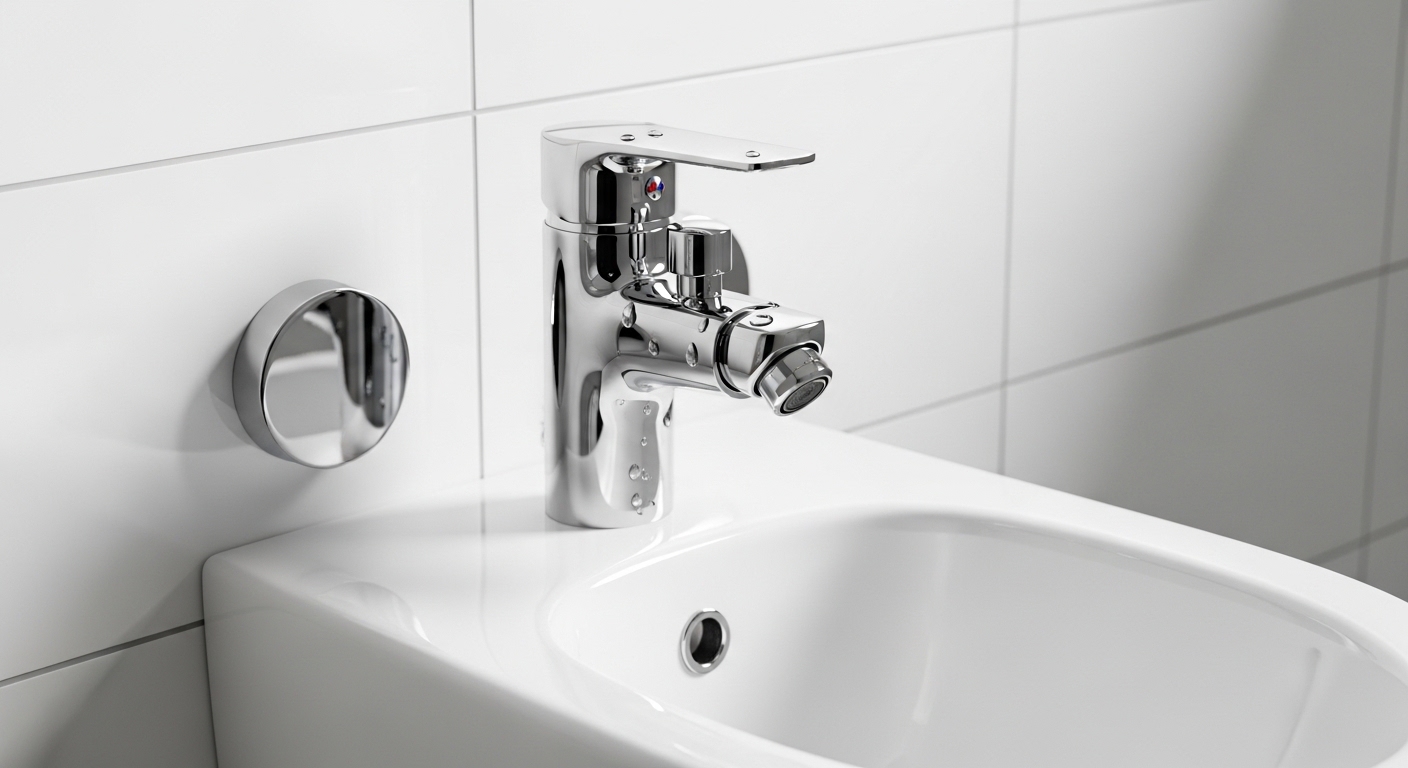
If you’ve been searching for a bidet faucet hot and cold setup, you’re really asking one practical question: how do I get warm water at the bidet instead of the shock of cold tap water in January? The short answer is that you need a bidet mixer valve plumbed to both your hot and cold supply lines, not a single-inlet cold-only valve. Get that one detail right and everything else — comfort, hygiene, resale appeal — falls into place. Get it wrong, and you’ll be retrofitting a hot line into a tiled wall you just finished. This guide walks you through exactly how these faucets work, what to look for, how to install one, and how to pick the finish and valve that will still work smoothly in ten years.
At arcorarobinet we design and pressure-test bidet and bathroom mixers for exactly this kind of daily, close-contact use, so below you’ll get the real engineering details in plain language — no fluff, just what actually matters when you’re buying.
How does a hot-and-cold bidet faucet actually work?
A hot-and-cold bidet faucet works by taking two water supplies — one hot, one cold — into a single mixing cartridge, then letting you blend them to the temperature you want before the water reaches the spout or spray. It’s the same principle as a bathroom sink mixer, just aimed at a bidet bowl or a spray nozzle instead of a basin.
Inside the body sits a valve — almost always a ceramic disc cartridge in a quality unit. When you lift or rotate the handle, two polished ceramic discs slide across each other, opening the hot port, the cold port, or any ratio in between. Push the lever left for hotter, right for colder; lift it higher for more flow. Because the discs are ground flat to within microns and are nearly frictionless once wetted, a good ceramic cartridge gives you that smooth, drip-free feel and holds up to hundreds of thousands of cycles. If you want the deeper story on why this valve type outlasts the old rubber-washer compression style, our guide on the best kitchen faucets with ceramic valves explains the same technology that sits inside a well-made bidet mixer.
There are three common physical layouts:
- Deck-mounted bidet mixer: installed on the rim of a standalone bidet, usually through one or three holes, with the spout arching over the bowl.
- Wall-mounted bidet mixer: the body and handle sit on the wall behind the bidet, with concealed hot and cold rough-in valves. Cleaner look, more work to install.
- Bidet spray / handheld sprayer with a thermostatic or mixing valve: a diverter-fed hand spray that blends hot and cold before it reaches the trigger — popular as an add-on next to a toilet.
Do I really need a hot-and-cold bidet, or is cold water fine?
You need hot and cold if you live anywhere with a real winter, share the bathroom with kids or older adults, or simply value comfort — cold-only is genuinely fine only in warm climates or for people who don’t mind bracing water. This is the single biggest decision, so be honest about your situation before you buy.
Here’s the practical reality. In summer, cold tap water is often 65–75°F and feels neutral. In winter, that same line can drop to 40–50°F, and on a sensitive area that’s not « refreshing, » it’s a flinch. Warm water in the 90–100°F range is far more comfortable and, for many people, does a better job of actually cleaning. There’s also a plumbing consideration: a hot-and-cold bidet future-proofs your bathroom. Running a hot line later means opening a wall or a vanity, so it’s dramatically cheaper to do it once, up front.
The one caution worth stating plainly: if children or elderly family members use the bidet, choose a model with a temperature limit stop or a thermostatic valve so nobody gets a blast of 140°F water. We’ll cover that safety feature below.
What’s the difference between a bidet mixer and a thermostatic bidet valve?
A standard bidet mixer lets you set temperature manually every time, while a thermostatic bidet valve locks to a temperature you pre-set and automatically holds it, even if someone flushes a toilet elsewhere in the house. For a bidet, thermostatic is a genuine safety and comfort upgrade, not just a luxury.
With a plain mixer, you nudge the lever until the water feels right — simple, reliable, and cheaper. The downside is that a pressure change on the cold line (a running shower, a flushed toilet) can suddenly make the water hotter. A thermostatic cartridge contains a wax element that expands and contracts to instantly re-balance the hot/cold ratio, keeping the output steady, and most include a safety stop button at around 100–104°F. If your household has small kids, a thermostatic bidet valve is worth the extra cost.
| Feature | Standard Hot-and-Cold Mixer | Thermostatic Bidet Valve |
|---|---|---|
| Temperature control | Manual, set each use | Pre-set, auto-maintained |
| Scald protection | Optional limit stop | Built-in safety button (~104°F) |
| Reacts to pressure drops | Temperature can spike | Stays stable |
| Typical price band | $40–$120 | $110–$280 |
| Best for | Adults, mild climates, budget builds | Families, kids, elderly, cold climates |
| Valve type inside | Ceramic disc cartridge | Wax thermostatic element + ceramic |
How do I install a hot-and-cold bidet faucet myself?
You install a deck-mounted hot-and-cold bidet faucet by shutting off both supplies, connecting the hot and cold flex hoses to their matching angle valves, seating the faucet through the bidet’s mounting hole(s), and testing for leaks before you trust it. Most handy homeowners can do a deck-mount swap in about an hour; a wall-mount with concealed rough-in is a bigger job that many people hand to a plumber.
Here’s the deck-mount sequence in order:
- Turn off both stop valves under or behind the bidet and open the old faucet to release pressure.
- Disconnect the old unit. If you’re replacing existing taps, take your time backing off the mounting nut — our walkthrough on how to remove old taps from a sink without wrecking the plumbing applies almost identically to a bidet deck.
- Check the supplies. Confirm you actually have a hot line present. Hot is conventionally on the left, cold on the right. No hot line? That’s your first project — a hot-and-cold faucet is useless without one.
- Fit the new faucet. Drop it through the hole(s), add the rubber gasket and washer from below, and hand-tighten the mounting nut, then snug with a basin wrench. Don’t overtighten and crack the ceramic.
- Connect the hoses to the correct valves — hot flex to hot stop, cold to cold. Wrap PTFE tape on threaded connections and tighten firmly but not with full force.
- Restore water slowly and check every joint. Run the faucet, cycle it hot to cold, and feel around the shanks and connections for weeping.
One tip from experience: leaks almost always show up at the flex-hose connections, not the faucet body, and they usually mean an over- or under-tightened nut or a missing washer. If you ever notice water pooling under the fixture later on, our guide on why a bathroom faucet leaks and how to stop it covers the same diagnosis steps for a bidet.
Which finish and configuration should I choose for my bathroom?
Choose your finish to match your existing sink faucet and shower trim — mismatched metals are the number-one regret — and choose your hole configuration to match the bidet you already own. Function first, then finish.
On configuration: a single-hole bidet takes a single-hole mixer with one lever; a three-hole bidet takes a widespread-style set with separate hot and cold handles and a center spout. If you like the clean, coordinated look of a single-lever design, the same logic we cover for basins in our piece on the widespread faucet single handle question applies to bidets too — one lever is easier to operate one-handed and simpler to keep clean.
On finish, here’s how the common options actually behave day to day:
- Polished chrome: the workhorse. Cheapest, hardest wearing, shows water spots but wipes clean instantly. Nearly impossible to make look wrong.
- Brushed nickel: warm, hides fingerprints and water spots best, pairs with most décor. A safe upgrade over chrome.
- Matte black: striking and on-trend, but shows limescale and dried water droplets in hard-water areas — you’ll wipe it more.
- Brushed gold / champagne bronze: premium look; make sure your other fixtures match or the bidet will stand out oddly.
Whatever finish you pick, look for a solid brass body under the coating rather than zinc alloy. Brass resists corrosion in the constant-moisture environment around a bidet and threads hold up to future service. This is the same reason brass is the default for hard-use fixtures generally, as we explain in our guide to choosing a quality bathroom faucet that fits your sink.
What water pressure and temperature does a bidet faucet need?
A hot-and-cold bidet faucet works best with balanced hot and cold pressure between about 20 and 80 psi, and comfortable output temperature of roughly 90–104°F. If your hot and cold pressures are badly mismatched, a manual mixer will feel twitchy and hard to dial in.
Most homes sit in a fine range, but two situations cause trouble. First, if your water heater is far away, there’s a warm-up lag — you’ll run the bidet a few seconds before hot arrives, which wastes a little water. A recirculation loop or a point-of-use heater solves it, but most people just wait the five seconds. Second, if one line is on a pressure-reducing path and the other isn’t, temperatures drift; a thermostatic valve is the clean fix. Aim to keep the delivered water no hotter than 104°F for direct-contact use — hotter than that isn’t just uncomfortable, it’s a scald risk on sensitive skin.
How long should a good bidet mixer last, and how do I maintain it?
A well-built hot-and-cold bidet mixer with a ceramic cartridge should give 8–15 years of daily service, and maintenance is mostly about limescale, not moving parts. Keep the aerator and cartridge free of mineral buildup and it’ll run smoothly for a decade or more.
The practical maintenance routine is short:
- Wipe the finish after use in hard-water areas to prevent spotting, especially on matte black or gold.
- Descale the aerator every few months by unscrewing it and soaking it in white vinegar for an hour — this restores a weak or splayed stream.
- Replace the cartridge, not the whole faucet, if it starts to drip or feel gritty. A quality mixer uses a standard cartridge that pops out with a wrench.
Before you buy, check that the manufacturer publishes a warranty and states the standards the faucet is tested to. Reputable bidet mixers are pressure-cycle tested (often to 200,000+ open/close cycles) and their finishes are salt-spray and abrasion tested. Those aren’t marketing numbers — they’re the difference between a lever that still feels smooth in year eight and one that’s stiff by year two.
FAQ
Can I add hot water to a cold-only bidet I already have?
Yes, but it means running a hot supply line to the bidet and replacing the cold-only valve with a hot-and-cold mixer. If there’s an accessible hot line nearby (for example, feeding the sink), a plumber can usually tee off it in a couple of hours. If not, you’re opening a wall or floor, which is why building in hot-and-cold from the start is far cheaper.
Is a hot-and-cold bidet faucet the same as a bidet toilet seat?
No. A hot-and-cold bidet faucet is a mixer tap for a standalone ceramic bidet or a handheld sprayer, plumbed to your hot and cold lines. A bidet toilet seat is an electronic seat that heats its own water internally and mounts on your existing toilet. Both give you warm-water washing; this guide is about the faucet/mixer type.
Why is my bidet water not getting warm?
The most common cause is that no hot line is actually connected — either the faucet was plumbed to two cold sources, or the hot stop valve is closed. Other causes are a long pipe run to the water heater (warm-up lag) or a failed thermostatic element. Start by confirming the hot supply is open and genuinely hot at its source.
Do bidet faucets need a special valve or cartridge?
Not a proprietary one, but you do want a ceramic disc cartridge rather than an old-style rubber-washer compression valve. Ceramic gives smoother control, a longer lifespan, and drip-free shutoff. For families, a thermostatic cartridge adds automatic temperature stability and a scald-safety stop.
What’s a safe water temperature for a bidet?
Aim for roughly 90–100°F for comfort, and never exceed 104°F for direct-contact use. If kids or elderly people share the bathroom, choose a mixer with a temperature limit stop or a thermostatic valve so the output can’t accidentally spike to scalding levels.
Chrome or matte black for a bidet faucet in a hard-water home?
Chrome or brushed nickel are the low-maintenance choices in hard water because they hide or shrug off spotting; matte black looks fantastic but shows dried mineral droplets and needs more frequent wiping. Pick based on how much cleaning you’re willing to do, and always match your other bathroom fixtures.
The bottom line
If warm water at the bidet matters to you — and in most climates it does — buy a genuine hot-and-cold mixer with a solid brass body and a ceramic cartridge, size it to your bidet’s hole configuration, and add a thermostatic valve if kids or older adults are in the house. Do it once, do it right, and you get a decade of comfortable, low-fuss service.
Author note: This guide was written by the arcorarobinet product team, who design, spec, and bench-test bidet and bathroom mixers for residential and light-commercial use. Our recommendations reflect real cartridge-cycle and finish testing, not just catalog copy — and every faucet we sell ships with a published warranty and standards documentation.



您好!Veuillez vous connecter