 ARCORA ROBINETS
Is a Polished Nickel Kitchen Tap in the UK Worth It, and How Do You Choose the Right One?
Vues:0 ClassificationProduct
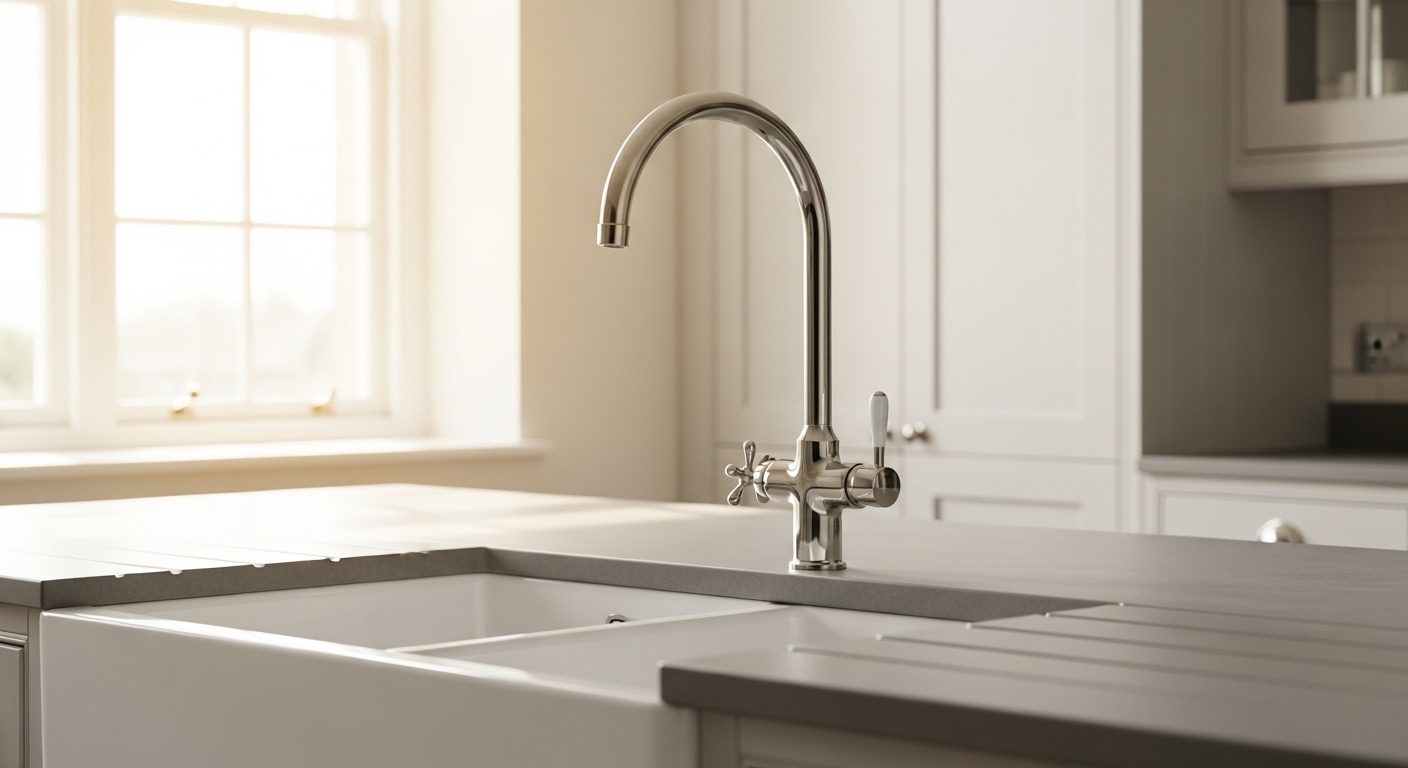
If you’ve been searching for a polished nickel kitchen tap UK shoppers actually rate, you’re really asking two questions at once: does this finish look as good in a real British kitchen as it does in the showroom photos, and will it survive our hard water without going patchy? The short answer to both is yes — provided you buy the right build quality and understand how the finish behaves. Below, we break down exactly what polished nickel is, how it compares to chrome and brushed finishes, what it costs, and how to pick a tap that still looks great in five years.
What exactly is polished nickel, and how is it different from chrome?
Polished nickel is a warm, slightly golden-silver metal finish — it looks like chrome that’s been softened and warmed up. Chrome is cooler, brighter, and almost blue-white; polished nickel has a gentler, more « old money » glow that reflects the colours around it rather than throwing back a hard mirror shine.
Technically, the tap body (usually solid brass) is electroplated with a layer of nickel and then polished to a mirror or near-mirror finish. That nickel layer is what gives you the warmth and, importantly, a bit more forgiveness with water spots than chrome. Chrome shows every fingerprint and every dried limescale droplet as a bright white speck; polished nickel’s warmer tone diffuses those marks so they’re less obvious day to day.
Here’s the practical difference for a UK buyer: in a kitchen with warm-toned lighting, oak or walnut worktops, or a period property, chrome can look clinical while polished nickel looks intentional and expensive. In a stark, ultra-modern white-and-grey kitchen, chrome or brushed nickel may actually suit the scheme better. Finish is a design decision first and a durability decision second.
Is polished nickel good for hard water areas in the UK?
Yes — polished nickel handles hard water better than chrome in terms of how visible the limescale is, but no finish is immune, so a quick daily wipe still matters. Most of the UK — London, the South East, East Anglia, the Midlands — sits in a hard or very hard water zone, and that’s the single biggest enemy of any shiny tap finish.
Limescale itself doesn’t damage the nickel plating; it’s the cleaning that damages taps. People reach for a scouring pad or a harsh limescale spray, and that’s what strips the shine and leaves micro-scratches. On polished nickel, the fix is gentle:
- Daily: a quick wipe with a soft, damp microfibre cloth after washing up, then buff dry. This alone prevents 90% of visible scale.
- Weekly: a mild washing-up liquid solution, rinse, and dry.
- Stubborn scale: a cloth soaked in a 50/50 warm water and white vinegar solution, laid on the spot for a few minutes, then rinsed and dried. Never leave acidic cleaner on plated finishes for long, and never use it on the aerator seals.
- Never: abrasive pads, cream cleaners, bleach, or anti-limescale sprays containing strong acids.
If your water is genuinely brutal, pairing the tap with a good aerator (which most quality mixers include) reduces splashing and scale build-up around the spout tip. Some households also add an under-sink filter — worth reading up on if water quality is a concern.
Polished nickel vs chrome vs brushed nickel: which finish should you buy?
Choose polished nickel for warmth and a premium period-friendly look, chrome for the lowest price and brightest modern shine, and brushed nickel if you want to hide fingerprints and water spots with almost no daily maintenance. Here’s how they stack up for a UK kitchen:
| Finish | Look | Hides limescale/fingerprints | Typical UK price | Best for |
|---|---|---|---|---|
| Polished nickel | Warm, soft mirror shine | Moderate — better than chrome | £120–£350 | Traditional, shaker, transitional kitchens |
| Polished chrome | Cool, bright, hard mirror | Poor — shows everything | £60–£220 | Modern, budget-conscious, minimalist schemes |
| Brushed nickel | Warm, matte/satin | Excellent — very forgiving | £110–£320 | Busy family kitchens, hard water areas |
| Brushed brass/gold | Warm, satin gold | Very good | £150–£400 | Statement, contemporary-classic kitchens |
The honest trade-off: polished nickel sits in the sweet spot between the clinical brightness of chrome and the low-maintenance calm of brushed finishes. It’s more characterful than chrome and easier to live with than you’d fear, but it’s not as fully hands-off as a brushed satin finish. If you love a shine and don’t mind a daily buff, polished nickel is the more beautiful choice. If your kitchen is chaos and no one will ever wipe the tap, brushed nickel is the sensible one.
If you’re still weighing warm metals against darker options, our guide on whether an oil rubbed bronze finish still looks modern is a useful companion read — the same « warm vs cool, shiny vs matte » logic applies across the whole tap range.
How much should a polished nickel kitchen tap cost in the UK?
Expect to pay £120–£350 for a quality polished nickel kitchen tap in the UK; anything under about £100 usually means thin plating or a plastic-heavy body that won’t hold up. Price tracks three things: the base metal, the cartridge, and the plating thickness.
Here’s what your money actually buys at each level:
- £60–£110 (budget): Often zinc-alloy or thin-walled brass bodies with basic plating. The finish can look convincing at first but is more prone to peeling or clouding within a couple of years, especially in hard water. Fine for a rental or short-term fix.
- £120–£220 (mid-range): Solid brass body, a genuine ceramic disc cartridge, WRAS approval, and proper multi-layer nickel plating. This is the value sweet spot for most homeowners and where we’d steer the majority of buyers.
- £230–£350+ (premium): Heavier solid brass, longer manufacturer warranties, branded cartridges (often German-made), pull-out or pull-down spray heads, and more precise finishing. Worth it if this is a forever kitchen.
One number that matters more than the sticker price: the cartridge. A good ceramic disc cartridge is the difference between a tap that operates smoothly for 15+ years and one that drips within 18 months. It’s worth understanding why ceramic valves matter before you commit — a cheap tap with a bad cartridge is a false economy no matter how good the finish looks.
What should you check before buying (spout height, hole size, and pressure)?
Before you buy any polished nickel kitchen tap, check three things: your water pressure, the number of tap holes in your sink, and whether the spout height and reach clear your sink and any window behind it. Getting these wrong is the number one reason a beautiful tap gets returned.
Water pressure. This is the big one in the UK because so many homes still run gravity-fed (low pressure) systems from a tank in the loft. Many designer taps are rated for high pressure only (0.5 bar and above, sometimes 1.0 bar+). If you have a combi boiler or unvented cylinder, you’re almost certainly high pressure and fine. If you have a hot water tank in the airing cupboard and a cold tank in the loft, check the tap’s minimum pressure rating carefully — you may need a « low pressure » or « universal » rated tap, or a pump.
Tap holes. Most modern kitchen sinks have a single tap hole for a monobloc mixer, which is what the vast majority of polished nickel kitchen taps are. If your sink has two holes (older setups), you’ll either need a deck plate/base plate or a different tap style.
Spout height and reach. A tall swan-neck spout looks stunning and makes filling pans easy — but measure the gap above your sink, especially if there’s a window sill or wall-mounted cabinet behind it. Also check the spout reaches roughly to the centre of the bowl so water doesn’t splash off the edge.
If you’re choosing between a single-lever monobloc and a twin-lever design, the ergonomics genuinely differ. Our breakdown of one-handle vs two-handle taps walks through which suits which household — single-lever wins for one-handed use with messy hands, twin-lever suits a more traditional look.
Do polished nickel taps come with pull-out sprays, and are they worth it?
Yes — plenty of polished nickel kitchen taps come with a pull-out or pull-down spray head, and they’re absolutely worth it for rinsing large pans, cleaning the sink itself, and washing veg. The spray hose adds real day-to-day convenience with only a small premium over a fixed-spout version.
The one thing to look at is the hose and connection quality. Cheap pull-out hoses can kink, leak at the connector, or retract poorly over time. Better models use a smooth-retracting weighted hose and reliable quick-connect fittings. If you want to understand what separates a good spray system from a frustrating one, read up on quick-connect pull-out hoses before you choose — the connector type affects both installation ease and long-term reliability.
A quick note on finish and spray heads: on a pull-out spray, the spray head is the part most handled and most exposed to water. On polished nickel, that means it’s the spot most likely to show fingerprints — another reason the daily buff habit pays off, or a reason some busy families opt for brushed nickel instead.
Will a polished nickel tap still look current, or is it a passing trend?
Polished nickel is a classic, not a fad — it’s been a premium finish for over a century and reads as timeless rather than trendy, which makes it a safer long-term choice than sharper fashion finishes. Warm metals overall are firmly in favour right now, and nickel in particular bridges traditional and contemporary styling.
That said, kitchen tastes do move, and it’s worth knowing where the wider market is heading before you commit to a finish you’ll live with for a decade. Our overview of the real kitchen tap trends for 2026 covers where warm metals, matte finishes, and spray functionality are going — useful context if you’re renovating the whole kitchen rather than swapping just the tap.
Our honest view: polished nickel is one of the least risky « statement » finishes you can buy. It won’t date the way a very fashionable colour might, it suits period and modern homes alike, and it resells well because buyers recognise it as a quality material.
FAQ
Does a polished nickel kitchen tap tarnish over time?
Not in normal kitchen use. Nickel plating is stable and doesn’t tarnish like unlacquered brass or copper. What can happen is clouding or micro-scratching from harsh cleaning — so the finish « dulls » through abuse, not age. Stick to a damp cloth and the occasional vinegar treatment and it stays bright for well over a decade.
Is polished nickel the same as brushed nickel?
No. They’re the same base metal but different finishing. Polished nickel is buffed to a warm mirror shine; brushed (or satin) nickel has a fine directional grain that gives a matte, low-sheen look. Brushed hides fingerprints and water spots far better, while polished looks more luxurious and reflective. Choose based on how much daily wiping you’re realistically willing to do.
Can I use limescale remover on a polished nickel tap?
Only mild ones, briefly. Strong acidic descalers and anti-limescale sprays can damage the plating and any rubber seals if left on. Use a 50/50 white vinegar and warm water solution on a cloth for a few minutes, then rinse and dry. Never use scouring pads, cream cleaners, or bleach.
Will a polished nickel tap work with my low-pressure UK water system?
Only if the tap is rated for it. Check the minimum operating pressure in the specification. If you have a gravity-fed (tank in the loft) system, look for a tap rated for low pressure — often 0.1–0.5 bar — or fit a pump. Combi boiler and unvented cylinder homes are high pressure and can run almost any tap.
How long should a good polished nickel kitchen tap last?
A quality solid-brass model with a ceramic disc cartridge should give 15+ years of service, with the cartridge being the main serviceable part if it ever drips. The finish itself will outlast the mechanism if you clean it gently. Cheaper zinc-alloy taps may only last 3–5 years before the finish or cartridge fails.
Is polished nickel more expensive than chrome?
Yes, usually by around £40–£100 for a comparable model. The extra cost reflects the additional nickel plating and finishing steps. You’re paying for the warmer look and slightly better limescale forgiveness, not for better mechanical performance — a well-made chrome and a well-made nickel tap use the same cartridges internally.
About the author: This guide was written by the arcorarobinet product team, who specialise in kitchen and bathroom taps and test finishes, cartridges, and spray systems in real UK hard-water conditions before recommending them. We’ve fitted and reviewed hundreds of monobloc mixers across gravity-fed and mains-pressure homes.
Why trust arcorarobinet: We design and supply solid-brass kitchen and bathroom fixtures built to WRAS-approved standards, with ceramic disc cartridges and multi-layer plating. Our polished nickel kitchen taps are backed by a manufacturer warranty and are pressure-tested and finish-tested against everyday UK water conditions before they reach your sink.



您好!Veuillez vous connecter