 ARCORA ROBINETS
Where Can I Find a Widespread Bathroom Faucet Near Me That’s Actually Worth Buying?
Vues:4 ClassificationProduct
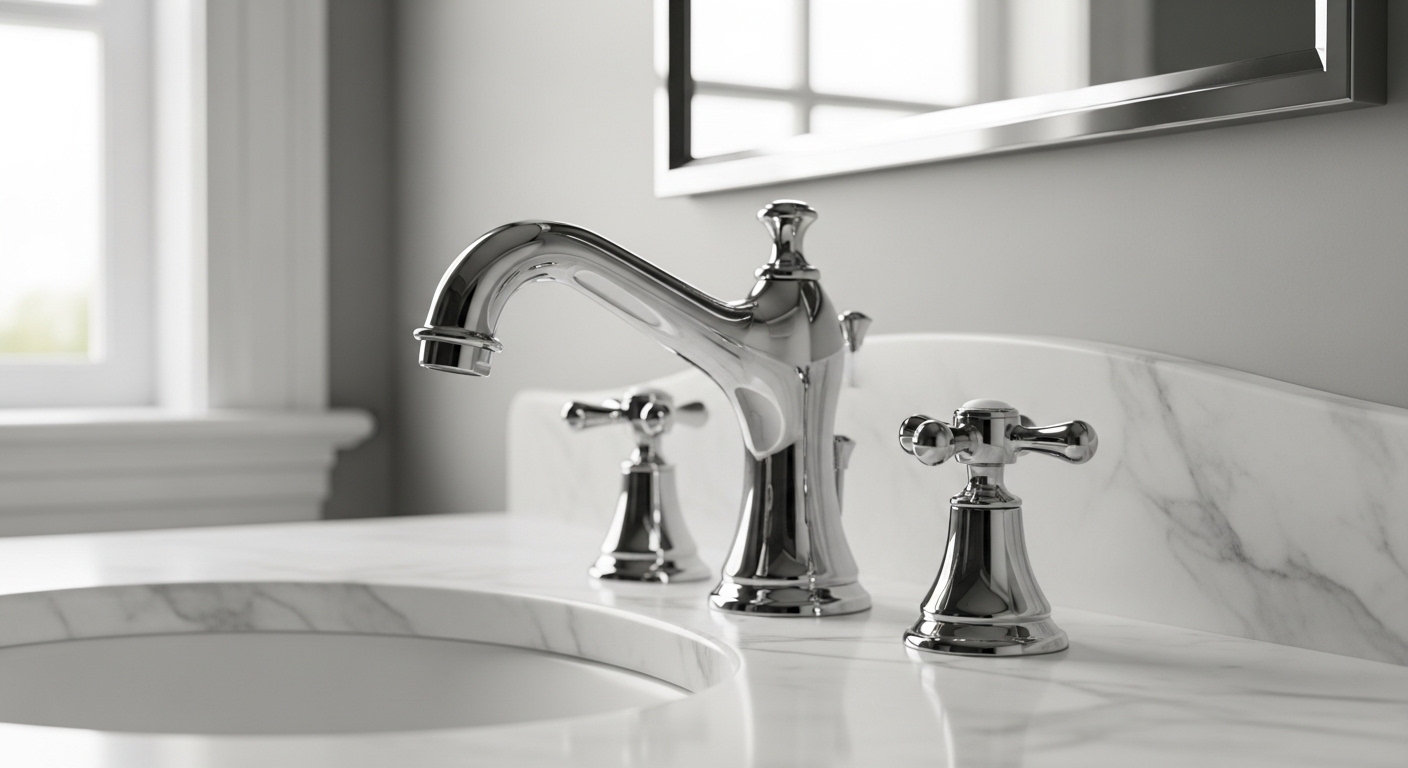
If you’ve been searching « widespread bathroom faucet near me, » you’re probably standing in a bathroom right now staring at three pre-drilled holes 8 inches apart, wondering why every faucet at the nearest Home Depot is either a builder-grade chrome unit for $79 or a designer piece for $650 with nothing in between. That gap is exactly why most homeowners end up ordering online — and why we wrote this guide. We’ll walk you through what « widespread » actually means, how to verify the spread on your sink, which finishes survive hard water, what to expect price-wise in 2026, and how to get one delivered to your door faster than driving to three stores.
What exactly is a « widespread » bathroom faucet, and how is it different from a centerset?
A widespread bathroom faucet is a three-piece fixture: two separate handles and a spout, each mounted independently into its own hole, with the handles spaced anywhere from 6 to 16 inches apart (8 inches is the U.S. standard). A centerset, by contrast, mounts all three pieces on a single 4-inch base plate. If your sink has three holes that look far apart, you have a widespread setup. If the three holes are clustered close together under what looks like a single trim plate, you have a centerset.
The reason this matters: the two faucets are NOT interchangeable. A centerset will not cover the holes of a widespread sink, and a widespread won’t fit a 4-inch centerset deck. Before you buy anything — locally or online — measure the distance from the center of the leftmost hole to the center of the rightmost hole. If it’s 6 to 16 inches, you need widespread. If it’s exactly 4 inches, you need centerset (or a single-hole faucet with a deck plate). For a deeper dive into the trade-offs between these two configurations, our team covers them in detail in this comparison of widespread vs. centerset faucets — it’s in French, but the diagrams translate.
Why is it so hard to find a good widespread bathroom faucet near me locally?
Big-box stores stock for volume, not variety. The average Home Depot or Lowe’s carries 8–12 widespread SKUs at any given time, and most are either entry-level (zinc-alloy bodies that pit within 18 months in hard-water regions) or premium designer lines marked up 30–40% over MSRP. The mid-range — solid brass, ceramic-disc cartridges, real PVD finishes, $180–$320 — is exactly the segment that’s missing from physical retail because turnover is slower and shelf space is expensive.
Plumbing supply houses (Ferguson, Winsupply, local outlets) carry a much better selection but typically serve contractors first and walk-in retail second. You’ll get knowledgeable help and access to brands like Brizo, Rohl, and Newport Brass — at a price. Online specialists, including direct-to-consumer faucet brands like arcorarobinet, fill the gap with deeper inventory, transparent specs, and shipping that’s often faster than driving across town.
| Where to Buy | Typical Price Range | Lead Time | Brass Body? | Selection |
|---|---|---|---|---|
| Home Depot / Lowe’s (in-store) | $79–$450 | Same day | Rarely under $200 | 8–12 SKUs |
| Local plumbing supply | $220–$1,200 | 1–3 days | Yes (most) | 50–150 SKUs |
| Amazon / Wayfair | $60–$800 | 2–5 days | Mixed, check listing | 1,000+ SKUs |
| Direct-to-consumer (arcorarobinet etc.) | $140–$420 | 2–5 days from U.S. warehouse | Yes (verified) | 30–80 curated SKUs |
| Designer showroom | $400–$2,500 | 2–6 weeks | Yes | Special-order |
How do I measure my sink to make sure a widespread faucet will actually fit?
Take a tape measure and find the distance between the centers of the two outer holes — that’s your « spread. » If it falls between 6 and 16 inches, almost any widespread faucet labeled « 8-inch adjustable » will fit, because the flexible supply lines between the handles and the spout accommodate that range. The most common spread on U.S. vanities is exactly 8 inches.
- Confirm hole count. You need three holes. Some pedestal sinks have only one — those need a single-hole faucet.
- Measure spread, center-to-center. Outer hole to outer hole. 6″–16″ = widespread compatible.
- Check hole diameter. Standard is 1-3/8″ (35 mm). Older sinks may be 1-1/4″.
- Measure deck thickness. Most faucets accommodate decks up to 1-3/4″ thick. Thicker stone slabs may need extension kits.
- Check clearance behind the sink. You need at least 1.5″ of clear wall space behind each handle for installation.
What finish should I pick if I have hard water?
For hard water (anything over 7 grains per gallon), the best widespread bathroom faucet finishes are, in order: brushed nickel, matte black, and champagne bronze. These three hide mineral spotting far better than polished chrome or polished nickel, which show every water droplet within hours of cleaning. PVD (Physical Vapor Deposition) coatings on these finishes are bonded at the molecular level and resist pitting from chloride-heavy water for 10–20 years with normal care.
Polished chrome is still the most affordable and the easiest to find a matching showerhead or towel bar for, but you’ll be wiping it daily if you have well water or municipal water above 10 gpg. Oil-rubbed bronze (the dark, slightly variegated finish) is technically a « living finish » — it’s designed to develop patina over time, which means hard-water marks blend in rather than stand out. We go deeper into this in our guide on choosing the best faucet finish for hard water, including which finishes you should specifically avoid if you’re on well water.
| Finish | Hard Water Performance | Cleaning Frequency | Typical Price Premium | Best For |
|---|---|---|---|---|
| Polished Chrome | Poor — shows every spot | Daily wipe-down | Baseline | Soft-water households, traditional baths |
| Brushed Nickel | Excellent | Weekly | +$10–30 | Most homes, transitional style |
| Matte Black | Excellent (hides spots) | Weekly | +$20–50 | Modern, contemporary baths |
| Champagne Bronze | Very good | Weekly | +$30–70 | Warm transitional, farmhouse |
| Oil-Rubbed Bronze | Excellent (living finish) | Bi-weekly | +$15–40 | Traditional, rustic |
| Polished Nickel | Poor–Fair | Daily | +$40–80 | Soft-water luxury baths |
How much should a decent widespread bathroom faucet cost in 2026?
Expect to pay $160–$320 for a quality widespread faucet with a solid-brass body, ceramic-disc cartridges, a real PVD finish, and a lifetime limited warranty. Below $120, you’re almost always getting zinc alloy or a brass-plated zinc hybrid that will leak within 3–5 years. Above $500, you’re paying for brand, design, or specialty finishes — not necessarily better mechanical performance.
Here’s what your money actually buys at each tier:
- $60–$120 (builder grade): Zinc-alloy body, plastic internals on some models, painted-on finish that can peel. Fine for a rental flip or short-term use; will not last 10 years in daily use.
- $140–$220 (sweet spot): Solid forged brass, ceramic-disc cartridges rated for 500,000 cycles, true PVD finish, cUPC/NSF 61 certification, lifetime limited warranty. This is where the vast majority of homeowners should shop.
- $240–$420 (designer mid-range): Everything above, plus high-end finishes (champagne bronze, brushed gold), heavier brass castings, premium aerator (often Neoperl), and matching tub/shower trim availability.
- $450–$1,200 (luxury / boutique): European castings, hand-finishing, limited-edition finishes (unlacquered brass, polished gold), and brand cachet. Diminishing returns on function above $500.
- $1,200+ (specification / architect): Wall-mounted variants, custom finishes, integrated electronics, and architect-spec designs.
What specs and certifications should I actually verify before clicking buy?
Before you check out — locally or online — verify these five things on the product spec sheet. If any are missing or vague, walk away.
- Body material: « Solid brass » or « lead-free brass » — not « metal, » not « zinc alloy, » not « brass-plated. » If the listing doesn’t specify, assume zinc.
- Cartridge type: Ceramic disc, ideally rated for 500,000 cycles. Avoid compression or rubber-washer cartridges in 2026 — they leak within 5 years.
- Certifications: cUPC (Canada/U.S. plumbing code) and NSF/ANSI 61 (lead-free, drinking water safe). California residents need NSF 372 compliance, which is essentially the AB1953 lead-free standard.
- Flow rate: 1.2 GPM is the U.S. federal standard for bathroom faucets. California, Colorado, Washington, and a handful of other states require 1.2 GPM by law. Some « high-flow » models on the market are illegal to install in those states.
- Warranty: Lifetime limited on the body and finish, 5–10 years on cartridges and electronic components. Anything less than lifetime on the body is a red flag for a brand expecting failures.
While we’re on the spec sheet — pay attention to the supply line connections too. Most modern widespread faucets use 3/8″ compression fittings on flexible braided supply lines, which fit standard U.S. angle stops without an adapter. Older homes may have 1/2″ IPS supply lines and need a $4 adapter from any hardware store. This is the kind of thing that turns a 45-minute install into a Saturday-ruining trip back to the store.
Can I install a widespread bathroom faucet myself, or do I need a plumber?
If you can use a basin wrench and read instructions, yes — a widespread faucet swap is a 60–90 minute DIY job for a competent homeowner. The trickiest part is reaching the nuts under the sink, which is why a basin wrench ($15 at any hardware store) is essential. If you’re replacing an existing widespread with a new one, the installation is nearly identical to the old one. If you’re upgrading from a centerset or single-hole faucet on a new sink, the holes are already drilled — you’re just connecting the pieces.
If you’ve never done it before, here’s the short version:
- Shut off the angle stops under the sink. Turn on the faucet to relieve pressure.
- Disconnect the supply lines (3/8″ compression nuts). Have a towel ready — there’s always residual water.
- Remove the old faucet’s mounting nuts with a basin wrench. Lift the old unit out.
- Clean the deck thoroughly. Old plumber’s putty or silicone needs to come off completely.
- Drop the new spout and handles into their holes, secure with the included mounting hardware, attach the bridge tees and supply lines per the manufacturer’s diagram.
- Reconnect supply lines, turn water back on slowly, check every joint for leaks for the first 24 hours.
For removing a stubborn old faucet — particularly if corrosion has fused the mounting nuts — our walkthrough on removing an old faucet without damaging the wall or plumbing covers the same techniques that apply to vanity faucets.
What about widespread bathroom faucets in unusual configurations — wall-mount, vessel sink, or 3-hole 4-inch?
Standard widespread (6–16″ deck spread) covers about 85% of U.S. bathrooms. The remaining 15% breaks down into a few specific scenarios:
- Wall-mount widespread: Handles and spout mount on the wall behind a vessel sink or floating vanity. Requires in-wall valves and typically a plumber. Adds $200–500 to the project but creates a stunning look.
- Vessel sink with widespread: Same as a standard deck-mount widespread, but spout must have a taller reach (8″+ from deck to spout outlet) to clear the rim of the vessel bowl.
- 4-inch « mini-widespread »: A hybrid configuration with separate handles and spout but only 4″ between them. Looks like a widespread but fits a centerset 4″ deck. Less common but a lifesaver if you want the widespread aesthetic without re-drilling the sink.
- 3-hole single-handle: A single-handle faucet with two side sprayers or accessory caps for the outer holes. Modern, minimalist, and a clever way to use an existing 3-hole sink without the formality of a widespread.
If you’re working with a brushed-nickel 3-hole vanity, our team put together a complete guide specifically for that configuration that walks through finish-matching with hardware, mirrors, and shower trim.
Why buy from arcorarobinet instead of just clicking the cheapest Amazon listing?
Honest answer: because the cheapest Amazon listing in the widespread bathroom faucet category is almost always a re-badged generic from a contract manufacturer with no warranty enforcement, no replacement parts inventory, and no way to file a claim if the finish fails in year three. We’ve seen the same physical faucet listed under 14 different brand names on Amazon at prices ranging from $59 to $189, all shipped from the same warehouse in Guangdong.
arcorarobinet sources directly from forged-brass foundries we audit on a recurring basis, every faucet is third-party tested to cUPC and NSF/ANSI 61 standards before it ships, and every model is backed by a lifetime limited warranty on the body and finish with U.S.-based customer service. We hold inventory in U.S. warehouses, so « near me » really does mean 2–5 business day delivery to most ZIP codes — usually faster than driving to a plumbing supply house and waiting on a special order.
FAQ
Does Home Depot or Lowe’s have widespread bathroom faucets in stock today?
Yes — both chains typically carry 8–12 widespread SKUs on the shelf, most in polished chrome or brushed nickel, priced $79–$450. Use their online stock checker before driving over; specific models, finishes, and the mid-range $180–$300 segment vary widely by store and are often out of stock or only available for ship-to-store delivery (3–5 days), at which point ordering direct from a specialist is faster.
What’s the standard spread for a widespread bathroom faucet?
8 inches center-to-center between the outer holes is the U.S. standard, but virtually all widespread faucets sold in North America are adjustable from 6 to 16 inches thanks to flexible supply lines connecting the handles to the spout. Measure your sink before buying — if your spread falls in that range, any « 8-inch widespread » faucet will fit.
Can I replace a centerset faucet with a widespread on the same sink?
No — a centerset uses three holes spaced very close together (4″ center-to-center on the outer holes) with a base plate covering all three, while a widespread requires the outer holes to be 6–16″ apart and has no covering base plate. You’d need a new sink or vanity top with widespread-compatible hole spacing, or you’d need to install a new countertop with the correct drilling.
How long does a quality widespread bathroom faucet last?
A solid-brass widespread faucet with ceramic-disc cartridges and a PVD finish should last 15–25 years in normal residential use, with the cartridges occasionally needing replacement (a $20 part and a 20-minute job) somewhere around the 10–15 year mark. Cheap zinc-alloy faucets typically fail at the body or finish within 3–7 years.
Are widespread faucets harder to clean than centerset faucets?
Slightly — three separate pieces mean three bases to wipe around instead of one, but the wider spacing actually makes it easier to clean between the spout and handles. If mineral buildup is your concern, the cleaning method is the same regardless of configuration; our Reddit-sourced faucet head cleaning method works on widespread aerators too.
Do widespread faucets come with the drain assembly?
Most widespread faucets do include a matching pop-up drain assembly with a lift rod that connects to a rod between the handles. A few minimalist designer models exclude the drain to let you specify a click-clack or grid drain separately. Always check the « what’s in the box » section of the product listing before buying — buying a matching drain separately can add $40–$80 to your project.
What’s the difference between 1.2 GPM and 1.5 GPM, and does it matter for a bathroom faucet?
1.2 GPM (gallons per minute) is the current federal maximum flow rate for bathroom faucets and the legal requirement in California, Colorado, Washington, Vermont, and Hawaii. 1.5 GPM was the older standard. The functional difference is barely noticeable for handwashing — modern aerators at 1.2 GPM are engineered to feel like 1.8 GPM thanks to air injection. Always buy 1.2 GPM unless you have a specific reason not to; some states will not allow a plumber to install anything else.
How quickly can I actually get a widespread bathroom faucet delivered « near me »?
From a U.S.-warehoused direct-to-consumer brand like arcorarobinet, 2–5 business days to most ZIP codes with standard shipping; same-day or next-day for orders to the West Coast from Pacific warehouses with expedited shipping. Big-box « ship to store » is typically 3–5 days. Special orders from designer showrooms run 2–6 weeks. If you need a faucet this week, online direct is almost always your fastest option.
About the author: This guide was written by the arcorarobinet product team, drawing on a decade of experience sourcing, testing, and certifying bathroom and kitchen faucets for the North American market. Every faucet we sell is independently tested to cUPC and NSF/ANSI 61 standards, backed by a lifetime limited warranty on the body and finish, and covered by U.S.-based customer support. arcorarobinet has supplied widespread bathroom faucets to homeowners, designers, and contractors across all 50 states since 2018.



您好!Veuillez vous connecter