 ARCORA ROBINETS
Which Is Better, One or Two Handle Faucets — And How Do You Pick the Right One for Your Sink?
Vues:1 ClassificationCompare
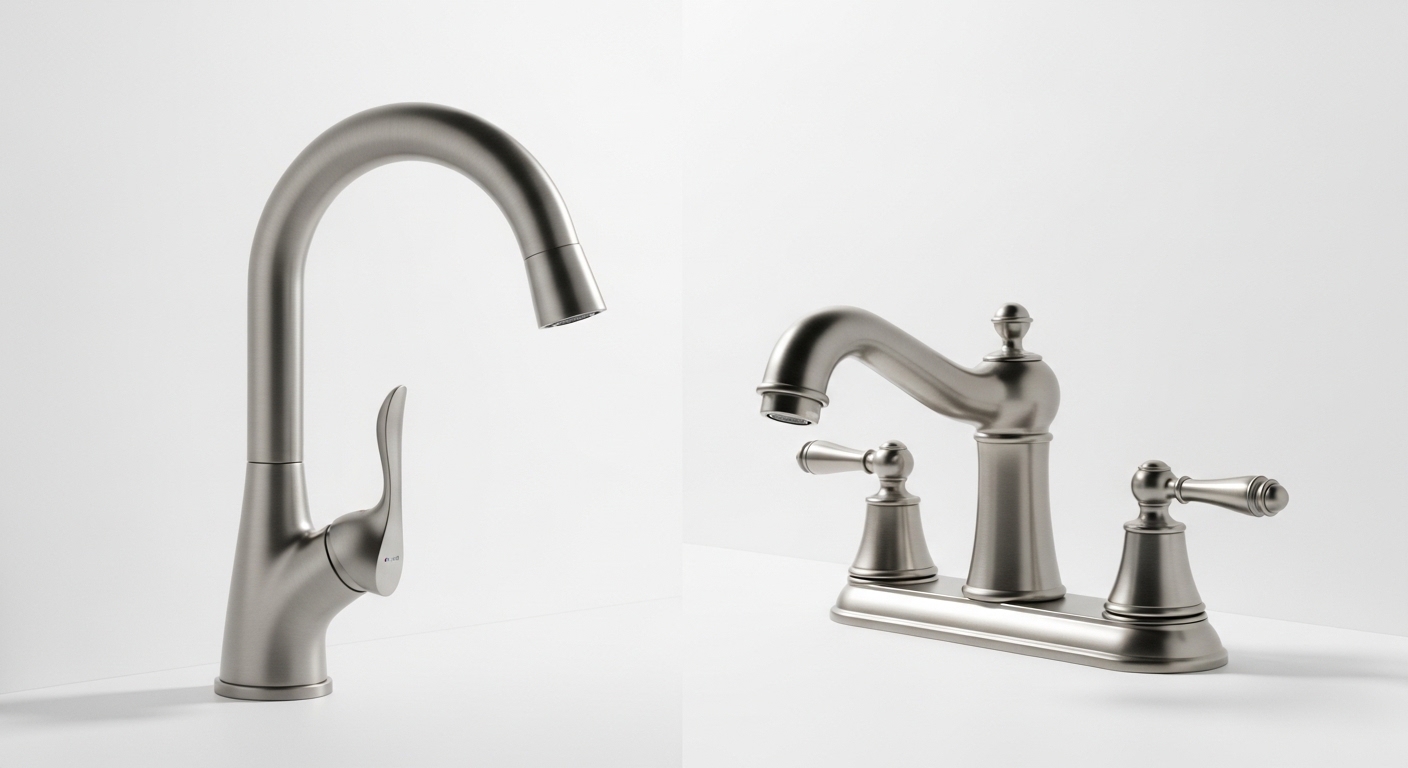
If you’ve ever stood in a showroom or scrolled a product page asking yourself which is better one or two handle faucets, you’re asking the right question — and the honest answer is « it depends on your sink, your habits, and your hole count, » not « one is always superior. » A single-handle faucet mixes hot and cold with one lever, so it’s faster and better for messy hands. A two-handle faucet gives you a dedicated hot valve and cold valve, so it dials in temperature more precisely and reads as more classic. Below, we’ll walk through exactly when each one wins, what breaks on each, what it costs to run over 10 years, and how to make sure whatever you buy actually fits the holes already drilled in your sink or countertop.
At arcorarobinet, we manufacture and test both configurations across kitchen and bathroom lines, so this guide isn’t a sales pitch for one style — it’s the same breakdown we give customers who email us before they buy.
What’s the actual difference between a one-handle and a two-handle faucet?
The core difference is how they blend hot and cold water. A one-handle (single-lever) faucet uses a single cartridge — usually ceramic-disc — that you move up/down for flow and left/right for temperature. A two-handle faucet uses two separate valves: one handle feeds hot, the other feeds cold, and they meet inside the spout. That one design choice drives everything else — the number of holes you need, how many parts can wear out, and how the faucet feels day to day.
Here’s what that means in plain terms:
- One handle = one motion. You bump it on with a wrist or forearm when your hands are covered in raw chicken or soap. Temperature and volume change together in one sweep.
- Two handles = two decisions. You set hot and cold independently, which gives you finer control but takes two hands and a moment of fiddling to nail the exact temperature.
- Hole count differs. Single-handle faucets typically need one hole (sometimes with an optional deck plate to cover three). Two-handle faucets need either a 4-inch « centerset » three-hole layout or an 8–16 inch « widespread » three-hole layout.
- Parts count differs. One cartridge versus two valves. Fewer parts generally means fewer places to leak — but also means one failure takes out both hot and cold at once.
If your sink already has holes drilled, that alone narrows the choice fast — more on that below, because it’s the single most common reason a customer has to return a faucet.
Which is better for a kitchen faucet — one handle or two?
For a working kitchen, a one-handle faucet is almost always the better call. You constantly turn the water on and off with full, dirty, or wet hands — rinsing produce, filling pots, scrubbing pans — and a single lever you can nudge with your wrist is simply more practical than reaching for two separate valves. That’s why the vast majority of modern pull-down and pull-out kitchen faucets ship as single-handle designs.
Single-handle also pairs naturally with the features people actually want in a kitchen: a high-arc spout, a pull-down sprayer, and quick one-motion flow control for filling a coffee kettle without adjusting two knobs. If you’re shopping for a family kitchen where the faucet gets used dozens of times a day, this is the configuration we point people toward. Our deeper breakdown of the best Moen one-handle pull-out kitchen faucet for a busy family kitchen walks through why the single-lever + pull-out combo has become the default.
Two-handle kitchen faucets still have a place — usually in traditional, farmhouse, or bridge-faucet kitchens where the look matters more than raw convenience, or in a bar/prep sink where you’re not constantly juggling messy hands. They also let you replace just one side’s valve if it fails, instead of swapping a whole cartridge. But for everyday cooking, one handle wins on convenience.
One thing that matters more than handle count in the kitchen: the valve inside. Whichever you choose, look for a ceramic-disc cartridge rather than older rubber-washer or ball designs, because ceramic resists wear and hard-water grit far better. We rounded up the standouts in our guide to the best kitchen faucets with ceramic valves in 2026.
Which is better for a bathroom faucet — and does the vanity size change the answer?
For bathrooms, the answer flips more often, and vanity size is the deciding factor. On a small powder-room sink or a compact vanity, a single-handle faucet keeps the look clean and the counter uncluttered. On a wide double vanity or a more traditional bathroom, a two-handle widespread faucet — with the hot and cold handles spread 8 to 16 inches apart — looks intentional and balanced, and it’s what most buyers expect a « nice » bathroom faucet to look like.
Bathroom use is also gentler than kitchen use. You’re washing hands and faces, not scrubbing roasting pans, so the « I need to turn it on with my elbow » argument matters less. That’s why two-handle designs remain hugely popular in bathrooms even as kitchens have gone almost entirely single-lever.
Three common bathroom layouts to know:
- Single-hole, single-handle: modern, minimal, easiest to clean around. Great for small vanities and contemporary looks. See our take on the widespread faucet single handle question for how to get a spread-out look with one lever.
- 4-inch centerset, two-handle: two handles and spout mounted on one 4-inch base plate. Budget-friendly, common in builder-grade sinks.
- 8-inch widespread, two-handle: three separate pieces for an upscale, custom look. The go-to for larger and more traditional vanities. If you’re shopping locally, our guide to finding a widespread bathroom faucet near you that’s actually worth buying covers what to check before you commit.
One-handle vs two-handle faucets: a side-by-side comparison
Here’s the quick-scan version. If you only read one thing, read this table.
| Factor | One-Handle (Single-Lever) | Two-Handle |
|---|---|---|
| Ease of use (messy/wet hands) | Excellent — one motion, one-handed, elbow-friendly | Fair — needs two hands to set temperature |
| Temperature precision | Good — quick to a comfortable temp | Excellent — fine independent hot/cold control |
| Holes required | 1 (optional 3-hole deck plate) | 3 (4″ centerset or 8–16″ widespread) |
| Installation difficulty | Easier — fewer connections | Harder — more connections to seal |
| Parts that can wear out | 1 cartridge (one failure = no hot or cold) | 2 valves (replace only the failing side) |
| Typical look | Modern, minimal, contemporary | Traditional, classic, upscale widespread |
| Best for | Kitchens, small vanities, accessibility | Larger vanities, traditional baths, precise temps |
| Typical price range | $60–$350 (kitchen), $50–$250 (bath) | $80–$450 (widespread runs higher) |
Do one-handle or two-handle faucets leak more, and which is cheaper to maintain?
Neither is inherently more leak-prone — the valve technology matters far more than the handle count. A single-handle faucet with a quality ceramic cartridge and a two-handle faucet with ceramic valves will both run drip-free for years. What actually causes leaks is worn rubber seals, hard-water scale, and cheap cartridges, regardless of how many handles you have.
That said, there’s a real difference in how they fail and what repair costs:
- One handle: Fewer seal points, so statistically fewer places to spring a leak. But when the single cartridge wears out, you lose control of both hot and cold, and you replace the whole cartridge (typically $15–$40). Repairs are usually a single-part job.
- Two handles: More seal points overall, but failures are isolated — if only the hot side drips, you rebuild or swap just that valve and leave the cold side alone. Individual valve/seat/washer kits are cheap, often $8–$25 per side.
Over a 10-year span, maintenance cost between the two is close to a wash for quality faucets. The bigger cost driver is buying a cheap faucet with a proprietary cartridge you can’t easily source — that’s what turns a $20 fix into a full replacement. If yours is already dripping, our step-by-step guide on why your bathroom faucet is leaking and how to stop it covers both handle types and will tell you whether it’s a five-minute cartridge swap or something bigger.
Which is better for accessibility and older adults?
For accessibility, a one-handle faucet is clearly better — and for a lever-style single handle, it’s not close. People with limited grip strength, arthritis, or wet/soapy hands can operate a single lever with a wrist, forearm, or the back of a hand, no twisting or pinching required. Two-handle faucets require gripping and rotating each knob, which is exactly the motion that’s hard for arthritic hands.
If you’re outfitting a bathroom for aging-in-place or universal design, choose a single-handle faucet with a wide, paddle-style lever. If you love the look of a widespread two-handle set, look for lever handles rather than cross or knob handles — the levers are far easier to operate than round knobs, giving you most of the accessibility benefit while keeping the classic three-piece look.
How do I know which one will actually fit my sink?
Before anything else, count the holes in your sink or countertop and measure the spacing — that determines your options more than any style preference. Buying a faucet that doesn’t match your deck is the number-one reason people end up returning one.
Here’s the quick decision path:
- Look under and around the sink. Count the pre-drilled holes: 1, 3, or occasionally 2 or 4.
- One hole only? You want a single-handle faucet. (Some single-handle models include a deck plate to cover a 3-hole sink, so you can still go single-lever on a 3-hole deck.)
- Three holes, close together (about 4 inches apart)? That’s a centerset layout — use a single-handle-with-baseplate or a 4-inch two-handle centerset faucet.
- Three holes, spread wide (6–16 inches)? That’s a widespread layout — a two-handle widespread faucet or a widespread-style single handle fits best.
- Check the spout reach and height against your basin so water lands in the drain, not on the rim.
One reassuring note: you’re rarely locked in. A single-handle faucet with an included escutcheon (deck plate) can convert a 3-hole sink to a clean single-lever look, and many manufacturers sell the plate separately. So if you have a 3-hole sink but want the modern one-handle look, you can usually have it.
So which should you actually buy?
Buy a one-handle faucet if you want everyday convenience, a modern look, easier installation, and the best accessibility — this covers most kitchens and most small-to-mid bathrooms. Buy a two-handle faucet if you want precise temperature control, a traditional or upscale widespread look on a larger vanity, or the ability to repair one side at a time. Then let your sink’s hole count and spacing confirm the choice, and prioritize a ceramic-disc valve either way.
If you’re still torn, default to single-handle for kitchens and utility sinks, and let the vanity decide the bathroom: small vanity → single-handle; wide or traditional vanity → two-handle widespread. That simple rule gets the right result for the large majority of buyers.
FAQ
Is a one-handle or two-handle faucet easier to install yourself?
A one-handle faucet is easier for a DIY install. It has fewer water connections to seal and usually mounts through a single hole, so there’s less that can leak if you’re new to it. Two-handle widespread faucets have three separate pieces and more connections under the deck, which means more supply lines and seals to get right. If it’s your first faucet swap, single-handle is the friendlier project.
Do two-handle faucets give better hot and cold control?
Yes — that’s their main advantage. Because each handle controls one temperature independently, you can fine-tune hot and cold separately and hold an exact blend, which some people prefer for shaving or filling a basin. A single-handle faucet gets you to a comfortable temperature faster but with slightly less granular control. For most daily use the difference is minor, but if precise temperature matters to you, two handles have the edge.
Which type lasts longer?
Longevity depends on valve quality, not handle count. Both configurations last 15–20+ years when built with ceramic-disc cartridges and solid brass bodies, and both fail early when built with cheap plastic internals. Look for ceramic valves, a solid brass or stainless body, and a manufacturer that publishes a lifetime or long-term warranty — those signals predict lifespan far better than one versus two handles.
Can I replace a two-handle faucet with a one-handle faucet?
Usually yes. If your sink has a 3-hole layout, choose a single-handle faucet that includes a deck plate (escutcheon) to cover the outer holes, and you’ll get a clean single-lever look on the existing deck. If you have a widespread 8-inch layout, you’ll want a single-handle model designed to bridge that spread or a deck plate sized for it. Always measure your hole spacing first so the plate covers everything.
Are one-handle or two-handle faucets more expensive?
They overlap heavily, but widespread two-handle faucets tend to run a bit higher because they’re three separate machined pieces with more finishing. Basic 4-inch centerset two-handle faucets are often the cheapest option, while premium single-handle pull-downs and premium widespread sets top out in similar ranges. Handle count is a small price factor compared to finish, valve quality, and brand.
Which is better for a rental or flip on a tight budget?
For a rental or flip, a mid-range single-handle faucet with a ceramic cartridge usually gives the best value: tenants find it easy to use, it installs fast, and there are fewer parts for a future tenant to break. If the property is traditional and you’re staging for resale, a modest 4-inch two-handle centerset can look more « finished » on a vanity for very little money. Match the choice to the property’s style and the existing hole layout.
About the author: This guide was written by the arcorarobinet product team, drawing on hands-on testing of single-handle and two-handle faucets across our kitchen and bathroom lines. We bench-test cartridges for cycle life, check flow rates against WaterSense guidelines, and pressure-test valve bodies before a model ships.
Why trust arcorarobinet: We design, manufacture, and stand behind our faucets, and we back qualifying models with a limited lifetime warranty on the finish and function of the valve. Our fixtures are built to meet recognized North American plumbing and lead-free standards (including low-lead compliance), and every cartridge we spec is tested to industry cycle-life benchmarks so you get drip-free performance whether you choose one handle or two.



您好!Veuillez vous connecter