 ARCORA ROBINETS
What Does « Sink Supply Line Male to Female » Mean, and Which Adapter Do You Actually Need?
Vues:6 ClassificationProduct
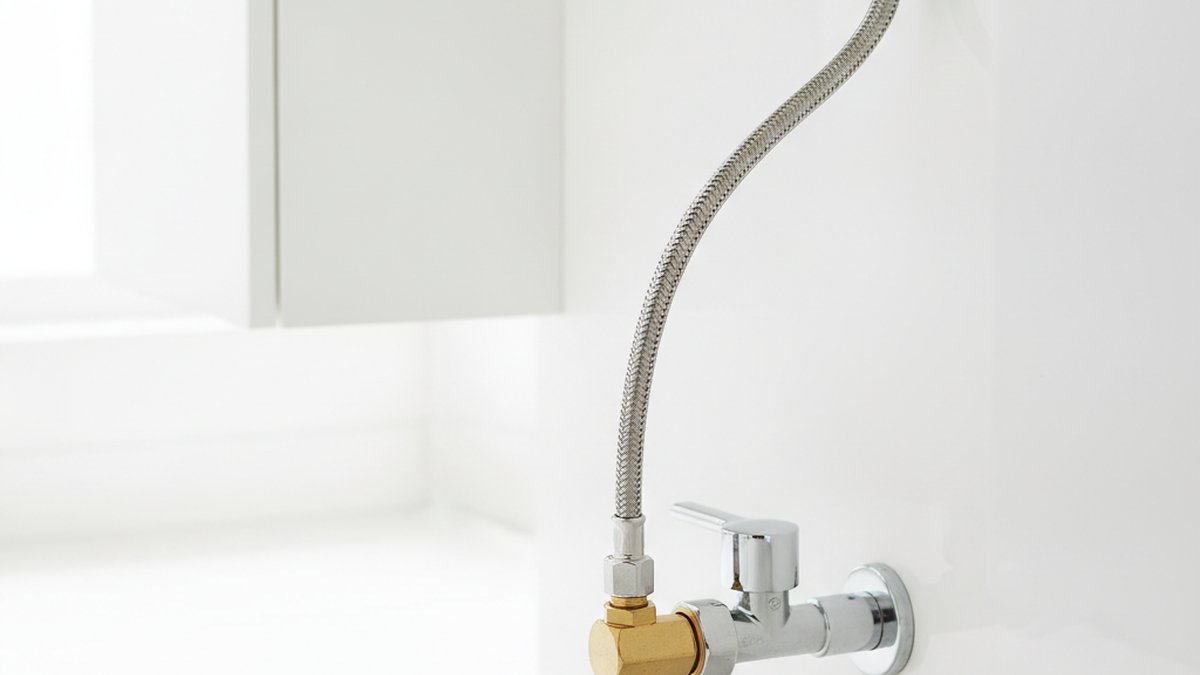
If you’ve ever stared at a braided hose under your sink wondering why nothing threads together, you’re wrestling with a sink supply line male to female mismatch — the single most common reason a « quick » faucet install turns into three trips to the hardware store. The good news: once you understand which end is male, which is female, and what a male-to-female adapter actually does, the whole thing becomes a five-minute job you’ll never overthink again.
What’s the difference between male and female on a sink supply line?
Male threads are on the outside of a fitting and screw into something; female threads are on the inside and something screws into them. On a supply line, the « gender » refers to which part carries the visible external thread. A male end has threads on a protruding stem or nipple. A female end is a nut or coupling with threads hidden inside its opening.
Here’s the part that trips people up: a standard sink supply line usually has female ends on both sides. That’s because the male threads it mates with are already built into your shutoff valve (the angle stop under the sink) and your faucet’s tailpiece or shank. So the hose « receives » both male connections. When a supply line is described as « male to female, » it either has one of each end, or you’re being sold a male-to-female adapter — a short brass coupling that changes one gender into the other so two mismatched parts can join.
- Male end: external threads on a stem — think of the valve outlet or the faucet shank sticking down.
- Female end: internal threads inside a nut — think of the swiveling nut at the end of your braided hose.
- Male-to-female adapter: a coupling that has a male thread on one side and a female thread on the other, letting you bridge two parts that are the same gender or the wrong size.
Do I need a male-to-female adapter for my sink supply line?
You need a male-to-female adapter only when the two things you’re joining share the same gender or don’t match in size — for example, when your faucet came with a male-threaded inlet but your new supply line also has a male end, so neither will screw into the other. If your valve is male and your hose is female (the typical setup), you don’t need an adapter at all; they mate directly.
The quickest way to know: dry-fit before you buy anything else. Hand-thread the supply line onto the valve and onto the faucet. If it spins on smoothly and snugs up, you’re done. If a threaded stem meets another threaded stem — two males kissing with nowhere to go — you need a female-to-female coupling. If a nut meets a nut, you need a male-to-male nipple. And if the thread is the right gender but feels gritty or won’t start, you likely have a size or thread-standard mismatch, which is a different problem worth understanding before you cross-thread and ruin a fitting. Our deep dive on what faucet supply line thread type you actually need walks through how to identify NPT vs. compression vs. metric threads by sight and feel so you buy the right adapter the first time.
What sizes and thread types show up on sink supply lines?
The two sizes you’ll meet 95% of the time are 3/8″ compression at the shutoff valve and 1/2″ IPS (or 15/16″-27) at the faucet end — and a huge share of confusion comes from people reading those numbers as if they mean the same thing. They don’t: « 3/8″ compression » measures the tubing, not the thread, so its actual thread is larger than a literal 3/8″. Below is the cheat sheet that clears up most under-sink guesswork.
| Connection point | Common size | Thread type | Typical gender on the hose |
|---|---|---|---|
| Shutoff / angle stop valve | 3/8″ compression | Compression (smooth, uses a ferrule or built-in cone) | Female nut on supply line |
| Bathroom faucet shank | 1/2″ IPS or M10/M8 metric | Straight or tapered pipe thread | Female nut on supply line |
| Kitchen / pull-down faucet | 3/8″ compression or 1/2″ IPS | Compression or IPS | Female, often pre-attached |
| Toilet fill valve | 7/8″ ballcock | Plastic coupling nut | Female |
| Male-to-female adapter | 3/8″ x 1/2″, 1/2″ x 3/8″, metric x IPS | Mixed — that’s the point | One male, one female |
A quick reality check: American faucets increasingly ship with metric-threaded inlets even when sold in the U.S., because so many fixtures are manufactured to European or Asian standards. That’s the sneaky cause behind a supply line that « almost » threads on but binds after a turn and a half. When that happens, a male-to-female adapter matched to both standards — not more force — is the fix.
How do I connect a male supply line to a female faucet inlet without leaks?
To connect a male supply line end to a female faucet inlet leak-free: hand-thread it first until it stops, then tighten roughly one-quarter to one-half turn past hand-tight with a wrench — no more. Overtightening is the number-one cause of leaks and cracked fittings, not undertightening. The threads and washer do the sealing; muscle does not.
Step by step for the most common scenario, a braided female hose joining a male valve and a male faucet shank:
- Shut off the water at the angle stop, or at the main if there’s no local valve. Open the faucet to release pressure.
- Inspect both threads. Wipe them clean. Compression fittings seal metal-to-metal on a cone — do not add tape or dope to a compression connection, as it prevents proper seating.
- Use thread sealant only on tapered pipe (NPT/IPS) threads. Two to three wraps of PTFE tape clockwise, or a thin bead of pipe dope. Never on compression, never on the rubber-washered end of a braided hose.
- Hand-thread the female nut onto the male stem straight and slow. If it resists in the first turn, back it off — you’re cross-threading. It should spin freely by hand for several turns.
- Snug with a wrench a quarter to half turn past hand-tight. For braided hoses with a rubber gasket, hand-tight plus a nudge is often enough.
- Turn the water back on slowly and watch the joint for 60 seconds. A bead forming at the nut means back off, reseat, and retighten — not crank harder.
If you’re doing this as part of pulling out an old, corroded fixture, the fittings are often seized and rounded off. Our guide on how to remove a 20-year-old bathroom faucet that won’t budge covers freeing frozen nuts without snapping the valve — worth reading first so you don’t crack the angle stop and turn a $6 hose swap into a plumber visit.
Why is my new sink supply line leaking at the connection?
A new supply line almost always leaks for one of three reasons: it’s cross-threaded, it’s overtightened (which deforms the washer or cracks the nut), or it’s the wrong thread standard so the threads never fully engaged. It is rarely because the connection is « not tight enough. » Back off, inspect, and reseat before you reach for a bigger wrench.
Run through this diagnostic in order:
- Drip at the nut, threads look clean: likely a missing or pinched rubber washer, or a compression connection that got PTFE tape it shouldn’t have. Remove tape, replace washer.
- Drip that worsens when you tighten more: classic sign of a cracked nut or crushed ferrule from overtightening. Replace the fitting; you can’t tighten your way out of it.
- Threads that never fully caught: a size or male/female standard mismatch. This is where a correct male-to-female adapter — not force — solves it.
- Weeping at the valve itself, not the hose: the shutoff is the culprit, not your new line. That’s a separate repair.
Leaks at threaded connections behave a lot like other fixture leaks — a small drip today is a warning, not a nuisance to ignore. If you’re the type who’s been living with a slow drip somewhere in the house, our piece on the real meaning of a dripping faucet explains why even a tiny under-sink weep is worth chasing down before it warps your cabinet base or spikes a water bill.
Can I reuse an old supply line, or should I always replace it?
Replace it. Braided and vinyl supply lines are inexpensive consumables, and reusing an old one when you’ve already got the cabinet open is a false economy — the rubber washers harden, the nuts fatigue, and a burst supply line is one of the most common causes of indoor water damage. A new braided stainless line costs a few dollars and is rated for far higher burst pressure than the old rubber-and-plastic line you’re pulling out.
A few buying pointers so you choose once and don’t come back:
- Go braided stainless over plain vinyl for anything permanent — the mesh jacket resists bursting and kinking.
- Measure length generously. A hose should reach with a gentle loop, never pulled taut. Taut lines stress the fittings and fail early.
- Match the gender and size to what you have, not what the package headline says. Confirm both ends before checkout.
- Buy one male-to-female adapter as insurance if you suspect a metric faucet inlet. It’s cheaper than a return trip.
A quick word on quality, testing, and why the fitting matters
It’s tempting to treat a supply line and its adapter as throwaway parts, but they’re holding back household water pressure 24/7. Look for fittings and hoses that reference recognized standards — in North America that means components tested to ASME A112.18.1 / CSA B125.1 for plumbing supply fittings, and burst-pressure ratings printed on the packaging. Reputable brands publish these; bargain-bin brass alloys with high lead content and no rating often don’t. Quality brass adapters are forged and machined to a clean, consistent thread; cheap ones have rough, uneven threads that are exactly what cross-thread and leak.
At arcorarobinet, our faucets and supply components are built to those North American thread and safety standards, pressure-tested before they ship, and backed by a manufacturer warranty precisely because the connection points are where fixtures live or die. We’d rather you install once and forget it than fight a slow leak for a year.
FAQ
Is a 3/8″ compression the same as a 3/8″ male thread?
No — and this catches everyone. « 3/8″ compression » describes the outside diameter of the tubing, and its actual thread measures larger than a literal 3/8″. A « 3/8″ male pipe thread » is a different animal entirely. Always confirm whether a fitting is compression or pipe thread (NPT/IPS) before matching sizes, because the numbers alone will mislead you.
Which end of a sink supply line goes to the faucet?
Usually the smaller-diameter female end connects to the faucet’s tailpiece or shank, and the larger female nut (typically 3/8″ compression) connects to the shutoff valve. Many faucets today come with the supply lines permanently attached, in which case you only connect the free end to the valve.
Do I use Teflon tape on a compression supply line connection?
No. Compression connections seal by metal-to-metal contact between the ferrule and the fitting, so PTFE tape or pipe dope actually prevents a proper seal and causes leaks. Reserve thread sealant for tapered pipe threads (NPT/IPS) only. The rubber-gasketed end of a braided hose needs no tape either.
What if my faucet inlet is metric and my supply line is IPS?
That’s exactly what a male-to-female adapter is for. Buy an adapter that’s metric on the faucet side and IPS on the hose side. Do not force an IPS nut onto a metric thread — it will feel like it’s catching, then bind and cross-thread, ruining both parts. When the threads don’t glide on freely by hand, stop and check the standard.
How tight should I make the supply line nut?
Hand-tight, then a quarter to half turn with a wrench — no more. For braided hoses with a rubber washer, sometimes hand-tight plus a small nudge is enough. Overtightening cracks nuts and crushes washers, which is the opposite of a seal. If it drips, reseat and reinspect rather than cranking harder.
Can one male-to-female adapter fix both size and gender at once?
Yes, if you buy the right one. Adapters come in combinations like 1/2″ IPS male to 3/8″ compression female, which change both the gender and the size in a single fitting. Just be sure you’ve correctly identified both ends first, because an adapter that solves the gender but not the size (or the thread standard) still won’t seal.



您好!Veuillez vous connecter