 ARCORA ROBINETS
Why Is My Pull Out Kitchen Faucet Leaking at the Handle, and How Do I Fix It?
Vues:0 ClassificationProduct
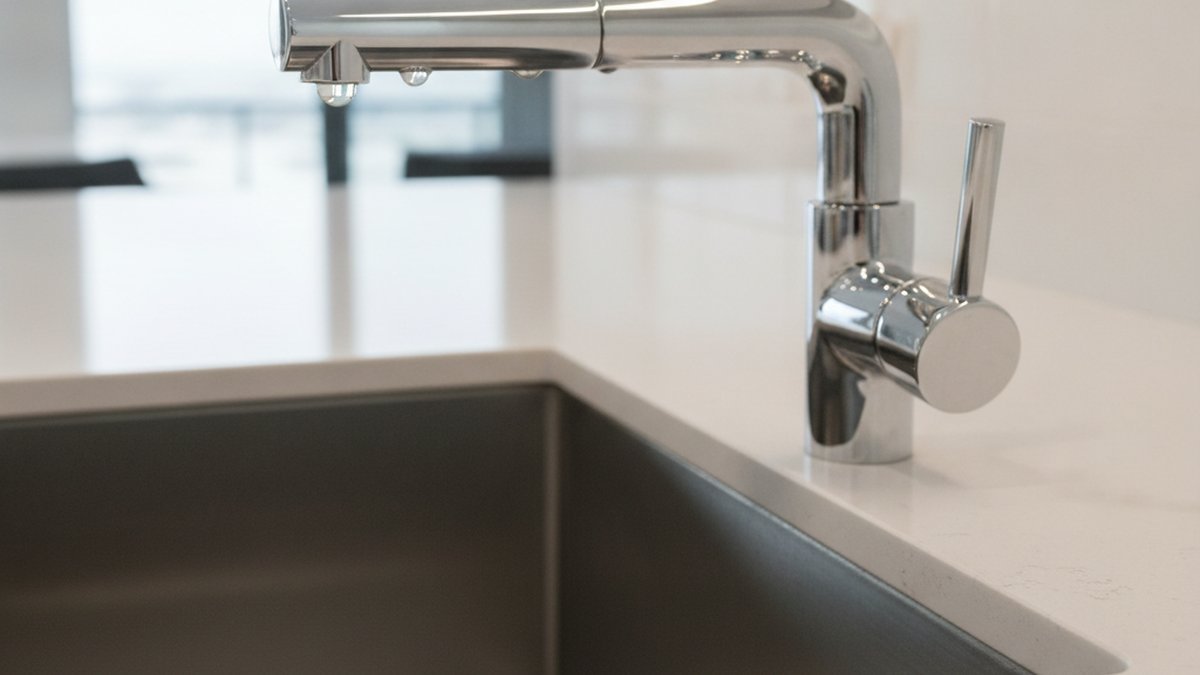
If you’ve got a pull out kitchen faucet leaking at the handle — water seeping out around the lever base every time you turn it on, or pooling behind the spout after a few minutes — the good news is this is one of the most common and most fixable faucet failures there is. It’s rarely a sign that your faucet is done. It’s almost always a worn rubber part inside the valve that has hardened, cracked, or shifted out of place. Below, we’ll walk through exactly why it happens, how to diagnose which part failed, how to fix it yourself, and when it’s genuinely time to replace the faucet instead.
As a brand that manufactures and stress-tests pull-down and pull-out kitchen faucets, we see the same three or four failure points again and again — and once you know what to look for, you’ll be able to zero in on yours quickly.
What Actually Causes a Pull Out Kitchen Faucet to Leak at the Handle?
The leak comes from inside the valve — specifically a failed cartridge or a set of hardened O-rings that no longer seal the pressurized water behind the handle. When those rubber seals degrade, water pushes past them and escapes at the weakest exit point: the gap where the handle meets the faucet body.
Here’s what’s happening mechanically. Under your single lever sits a cartridge — a cylindrical valve, usually ceramic-disc, that controls hot/cold mixing and flow. It’s sealed against the brass valve body by two or three O-rings and held down by a retaining nut or clip. Every time you lift the handle, that cartridge is under full line pressure. Over years, three things go wrong:
- The cartridge seals wear out. The internal ceramic discs and their rubber seats lose their tight fit, so water weeps up around the stem and out at the handle base.
- The O-rings dry and crack. Rubber loses its plasticizers over 5–10 years, especially with hot water and hard-water minerals, and stops flexing into a seal.
- The retaining nut backs off. Vibration from daily use slowly loosens the nut clamping the cartridge, opening a hairline gap that leaks under pressure.
Hard water is the biggest accelerant. Calcium and magnesium scale build up on the ceramic discs and O-rings, holding them slightly open and grinding at the rubber like fine sandpaper. If you’re on well water or a hard-water municipality, expect handle leaks a few years sooner than the faucet’s rated lifespan.
How Do I Know If It’s the Cartridge, the O-Ring, or Something Else?
Watch when and where the water appears — the timing tells you which part failed. This 60-second diagnosis saves you from buying the wrong replacement part.
| What you see | Most likely cause | Typical fix |
|---|---|---|
| Water at the handle base only when running | Worn cartridge seals | Replace cartridge ($15–$40) |
| Water seeping around handle even when off | Cracked O-rings / failed cartridge under static pressure | Replace O-rings + cartridge |
| Handle drips only when swiveling the spout | Spout base O-rings, not the handle valve | Replace spout O-rings ($8–$15) |
| Loose, wobbly handle that also leaks | Backed-off retaining nut | Tighten nut; reseat cartridge |
| Water dripping from under the sink, not the handle | Supply line or valve-body crack | Check connections / replace faucet |
One important distinction people miss: a leak at the handle is different from a leak at the sprayer wand. If the water is coming out of the pull-out spray head or the hose that retracts into the spout, that’s a separate repair — we cover that in detail in our guide on why your kitchen faucet sprayer is leaking and how to fix it yourself. Handle leaks live in the valve; sprayer leaks live in the hose and wand.
To confirm it’s the handle valve, dry the whole faucet with a towel, run the water for 30 seconds, and watch the base of the lever with a flashlight. If a bead forms right where the handle pivots, you’ve confirmed a cartridge or O-ring problem.
How Do I Fix a Pull Out Kitchen Faucet Leaking at the Handle Myself?
You can fix most handle leaks in 30–60 minutes with a hex key, a screwdriver, and an adjustable wrench — no plumber required. Here’s the exact sequence we recommend, and it works for the large majority of single-lever pull-out designs regardless of brand.
- Shut off the water. Turn both the hot and cold supply valves under the sink fully clockwise. Then open the faucet to release the pressure and confirm the water is truly off — you should get nothing but a dribble.
- Plug the drain. Drop in a sink stopper or a rag so you don’t lose the tiny set screw or cartridge clip down the pipe.
- Remove the handle. Find the set screw — it’s usually a small hex screw hidden under a decorative cap on the front or side of the lever, or directly under the handle. Loosen it and lift the handle straight up and off.
- Expose the cartridge. Under the handle you’ll find a dome or bonnet nut. Unthread it by hand or with a wrench, then remove any retaining clip or nut holding the cartridge down. Note the orientation — cartridges are keyed and must go back the same way, or your hot and cold will be reversed.
- Pull the cartridge. Grip the stem with pliers and pull straight up. If it’s stuck with mineral scale, a cartridge-puller tool (a few dollars) makes it painless. Don’t twist hard on a keyed cartridge.
- Inspect and replace. Look at the O-rings and the ceramic disc face. Flattened, cracked, or chalky rubber means replace. Bring the old cartridge to the store, or match the faucet’s brand and model number, and drop in the exact replacement. Smear the new O-rings with silicone plumber’s grease — never petroleum grease, which eats rubber.
- Reassemble and test. Reverse the steps, hand-tighten the retaining nut plus a quarter-turn with a wrench, reattach the handle, then slowly reopen the supply valves and check for leaks.
A quick word on parts: use the manufacturer’s cartridge for your specific model, not a generic look-alike. Ceramic cartridges are keyed and dimensioned per brand, and a near-match that’s a millimeter off will leak again in weeks. If your faucet is a common brand, the cartridge is usually stocked at any hardware store; keep the model number handy. And while you’re under there, it’s worth confirming your supply connections are sound — if you see moisture at the braided lines too, our breakdown of faucet supply line thread types and how to avoid a cross-threaded leak will help you rule that out.
Do I Really Need to Replace the Whole Faucet, or Just a Part?
In the overwhelming majority of handle leaks, you replace a part — not the faucet. A $15–$40 cartridge or a $10 O-ring kit fixes it. You only replace the entire faucet when the brass valve body itself is cracked, when the faucet is a discontinued off-brand with no available cartridge, or when it’s so old and corroded that new parts won’t seat cleanly.
Here’s a simple decision framework:
| Situation | Recommended action | Rough cost |
|---|---|---|
| Reputable brand, cartridge available | Replace cartridge / O-rings | $10–$40 DIY |
| Leak returns after new cartridge | Replace O-rings + inspect valve seat | $15–$50 DIY |
| Visible crack in the valve body | Replace the faucet | $120–$400+ |
| Discontinued/no-name faucet, no parts | Replace the faucet | $120–$400+ |
| Faucet 12+ years old, multiple failures | Consider full replacement | $120–$400+ |
This is exactly why we always tell shoppers to buy a faucet from a brand with a real lifetime warranty and stocked replacement cartridges. A faucet is only as repairable as its parts supply. If you’re weighing a full replacement, it’s worth comparing how the major players handle parts and warranty — our head-to-head Moen vs Delta faucet review for 2026 digs into exactly that, and the same repairability logic applies to any brand you consider.
One more note on brand-specific fixes: single-handle centerset designs share a lot of DNA with pull-out kitchen valves, so if you also have a leaky bathroom lever, the same skills transfer — see our walkthrough on fixing a Moen centerset faucet that drips, is loose, or won’t turn off.
How Do I Stop My Faucet Handle From Leaking Again?
Prevention comes down to three things: managing hard water, using the right grease, and not over-tightening. A cartridge you install correctly with proper silicone grease and clean water conditions can easily last 8–12 years.
- Tackle hard water. Scale is the number-one killer of cartridges and O-rings. A whole-home softener or even periodic vinegar descaling of the aerator and valve slows mineral buildup dramatically.
- Grease the seals. Always coat new O-rings and the cartridge with silicone-based plumber’s grease. It keeps rubber supple and lets the parts glide into a seal instead of pinching.
- Don’t over-tighten. Crushing the retaining nut deforms the cartridge and O-rings and causes the very leak you’re trying to prevent. Snug plus a quarter-turn is right.
- Match the exact part. A brand-correct cartridge seats fully; a generic near-match leaves micro-gaps that leak under pressure.
- Address low-grade drips fast. A tiny handle weep becomes a corroded valve seat if ignored for months. Fix it while it’s a $15 job.
If your faucet is well within its warranty window, contact the manufacturer before you buy anything — most reputable brands, including ours, ship replacement cartridges and O-ring kits free for the life of the product. There’s no reason to pay for a part the warranty covers.
When Is a Handle Leak Actually a Sign of Bigger Trouble?
Watch for water appearing below the sink rather than at the handle — that points to a supply-line or valve-body issue, not a simple cartridge swap. A handle leak that drips down the faucet shaft and into the cabinet can also rot your sink base over time, so don’t let it run.
Signs it’s more than a worn seal:
- Water pooling in the cabinet with a dry handle above — check the supply lines and the base gasket first.
- A new cartridge that leaks again within days — the valve seat inside the body may be pitted or cracked.
- Green or white corrosion crust around the valve body — mineral and metal corrosion that a new seal won’t overcome.
- Reduced flow plus the leak — scale is choking the valve, and the whole cartridge assembly is likely compromised.
In those cases, replacing the faucet is the smarter long-term call than chasing leaks through an aging valve body. A quality pull-out faucet installed today, with an accessible cartridge and a lifetime warranty, is a repair-once-a-decade fixture rather than a recurring headache.
FAQ
Can I fix a pull out kitchen faucet leaking at the handle without turning off the main water?
Yes — you only need to close the two shutoff valves directly under the sink, not your home’s main. Turn both fully clockwise, open the faucet to bleed the pressure, and confirm the flow stops before you disassemble anything. If those under-sink valves are seized or missing, then shut off the main.
How much does it cost to fix a leaking faucet handle?
DIY, it’s typically $10–$40 for a cartridge or O-ring kit plus a $5 cartridge-puller if the old one is stuck. If you hire a plumber, expect $100–$200 in labor for what’s usually a 30–45 minute job. Because the part is so cheap, this is one of the highest-value DIY plumbing repairs there is.
Why does my faucet handle leak only when I turn the water on?
That’s the classic signature of worn cartridge seals. When you open the valve, full line pressure hits the failed seals and pushes water up the stem to the handle base. If it also seeps when the faucet is off, the O-rings holding back static pressure have failed too, and you should replace both.
How long should a kitchen faucet cartridge last?
A quality ceramic-disc cartridge lasts roughly 8–15 years in normal water conditions. Hard water, frequent hot-water use, and grit in the supply lines shorten that to 4–7 years. Softening your water and using silicone grease on the seals pushes it toward the high end of that range.
Is a leaking faucet handle covered under warranty?
Usually yes. Most reputable kitchen faucet brands carry a limited lifetime warranty that covers the cartridge and O-rings — the exact parts that fail at the handle. You’ll typically pay nothing for the part and just do the swap yourself. Always check with the manufacturer before buying a replacement cartridge.
Can hard water really cause my faucet handle to leak?
Absolutely — it’s the single most common accelerant. Calcium and magnesium scale coats the ceramic discs and O-rings, holds them slightly open, and abrades the rubber over time. Homes on hard or well water see handle leaks years earlier than homes with softened water.
About the author: This guide was written by the arcorarobinet product and engineering team, who design, pressure-test, and warranty pull-out and pull-down kitchen faucets. Our cartridges and valve bodies are tested to industry cycle standards (100,000+ open/close cycles) and lead-free material requirements, and every faucet we sell ships with stocked, replaceable cartridges and a limited lifetime warranty — because a faucet you can fix in an hour beats one you have to throw away.



您好!Veuillez vous connecter