 ARCORA ROBINETS
What Is a Rainfall Shower Head O Ring, and How Do You Replace One That’s Leaking?
Vues:1 ClassificationProduct
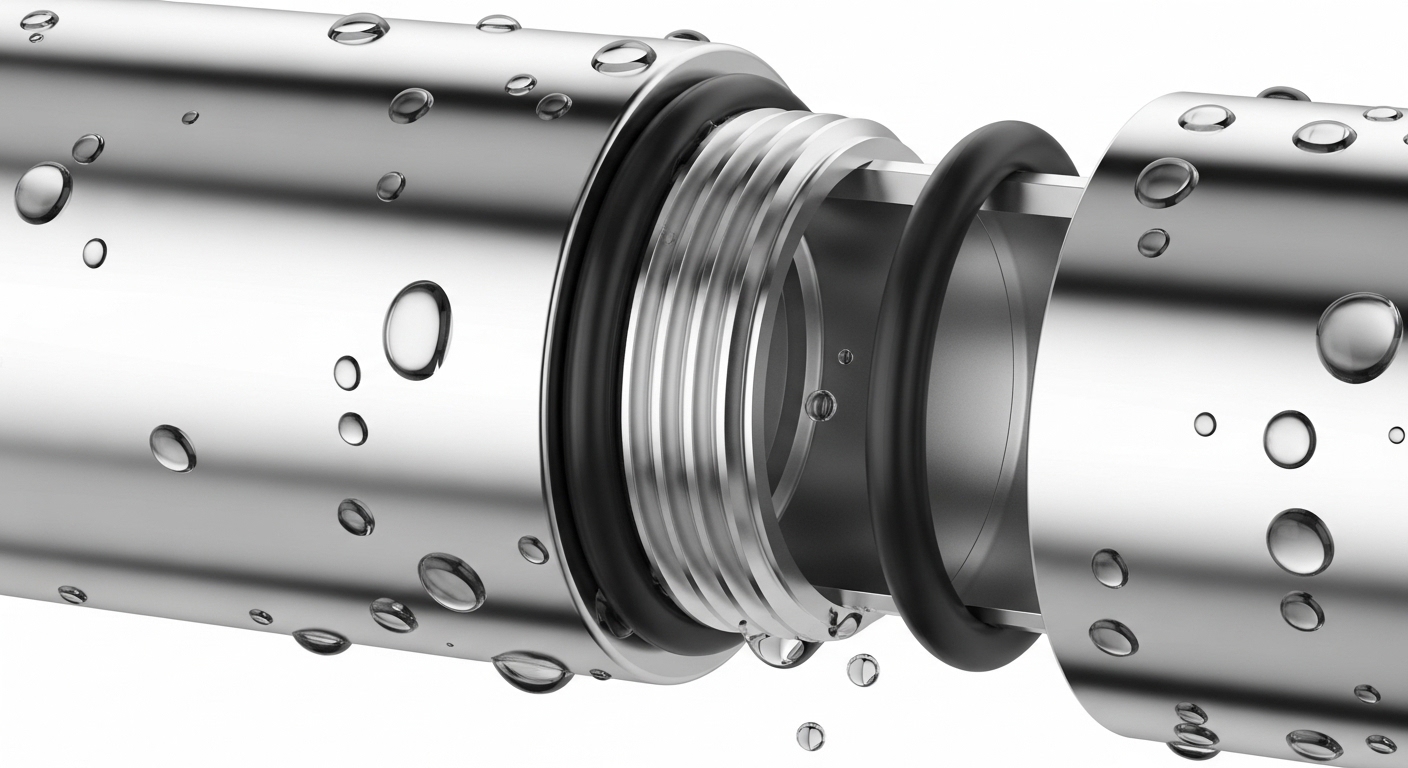
If your ceiling-mount or wall-mount rain shower has started dripping right where the head screws on, the culprit is almost always the rainfall shower head o ring — not the whole fixture. Rainfall heads are big and heavy, they hold a lot of standing water after you shut the valve, and that weight plus mineral buildup is exactly what wears out the tiny seal at the threaded joint. The good news: this is one of the cheapest, most beginner-friendly plumbing fixes in the whole bathroom. Below I’ll walk through what the ring actually does, how to pick the right size and material, and how to swap it without scratching your finish or overtightening the connection.
What does the O ring on a rainfall shower head actually do?
The O ring creates a watertight seal at every threaded or swivel joint on your shower head so water goes through the nozzles instead of leaking out the sides of the connection. On a rainfall head you usually have at least one O ring where the head meets the shower arm or the swivel ball joint, and sometimes a second one inside an inline filter or flow restrictor.
Here’s why it matters more on a rain head than on a standard one. A 8-to-12-inch rainfall panel can hold a surprising amount of residual water in its plenum after you turn off the valve. That water sits against the joint, and every heat-and-cool cycle from hot showers slowly hardens the rubber. Threads alone don’t seal water — they just hold the two parts together. The O ring (or plumber’s tape on tapered threads) is what actually blocks the leak path. When the ring goes flat, cracks, or gets a chip of limescale wedged under it, you get that classic slow drip that seems to come from “nowhere.”
How do I know it’s the O ring and not a cracked shower head?
If the drip is coming from the connection point — where the head screws onto the arm or pivots on the ball joint — it’s the O ring, not a crack. If water is weeping from the face plate or seams of the head itself, that’s a different (and worse) problem.
Run this quick 30-second diagnosis:
- Dry the whole area with a towel, then run the shower for 20 seconds and shut it off.
- Watch the threaded joint. If beads form right at the seam between arm and head, the O ring or tape has failed.
- Wiggle the head gently. A rainfall head that swivels too loosely or drips more when you tilt it has a worn swivel-joint O ring.
- Check for white crust. Chalky mineral buildup around the joint means limescale has broken the seal — common in hard-water homes.
If instead the water is spraying erratically or dribbling from the nozzles after shut-off, that’s usually clogged nozzles or a failing flow restrictor, not the O ring. And if the metal or plastic housing itself is cracked, no seal will save it — you’ll need a new head.
What size and material O ring does a rainfall shower head use?
Most rainfall shower heads in North America use a G1/2″ (half-inch BSP) connection, and the O ring that fits it is typically around 18–20 mm outer diameter, 14–16 mm inner diameter, and 2–2.5 mm thick, made of EPDM or silicone. But sizes vary by brand, so the safest move is to pull your old ring and measure it, or take it to the hardware store.
Material matters more than people expect. Here’s how the common options stack up for a hot, wet, constantly-cycling shower environment:
| O Ring Material | Heat & Hot-Water Resistance | Typical Lifespan | Best For |
|---|---|---|---|
| EPDM rubber | Excellent (rated well above shower temps) | 5–10 years | The default choice for shower heads — handles hot water without hardening |
| Silicone | Excellent, stays flexible | 7–12 years | Premium heads, hard-water homes, easy re-seating |
| Nitrile (Buna-N) | Fair — can harden in hot water over time | 2–5 years | Cheap, common, but not ideal for hot showers |
| Cheap generic rubber | Poor — dries and cracks fast | 1–3 years | Avoid if you can; it’s why the leak came back |
If you’re buying a replacement, ask for EPDM or silicone specifically. They’re pennies more and they’re the reason your fix lasts years instead of months. Grab a small assorted O ring kit ($6–$10) rather than a single ring — you’ll almost certainly reuse it on a faucet aerator or hose connection later.
How do you replace a rainfall shower head O ring step by step?
You replace it by unscrewing the head, prying out the old ring, seating a fresh EPDM ring in the groove, and hand-tightening the head back on. Total time is about 5–10 minutes and you don’t need to shut off the house water — just the shower valve.
- Turn off the shower valve and lay a towel in the tub or shower floor so you don’t lose small parts down the drain.
- Unscrew the head from the arm. Turn counterclockwise by hand if you can. If it’s stiff, wrap the connection in a cloth and use an adjustable wrench or slip-joint pliers so you don’t scratch the finish.
- Remove the old O ring. Use a fingernail, a toothpick, or a small flat pick — never a metal knife, which can gouge the plastic groove. Note where it sat (arm side, swivel joint, or filter housing).
- Clean the threads and groove. Wipe away old tape and limescale. For heavy mineral crust, soak the connector in a 50/50 white vinegar solution for 15–20 minutes, then scrub with an old toothbrush.
- Seat the new O ring. Roll it flat into the groove so it isn’t twisted. A tiny dab of silicone plumber’s grease helps it seat and last longer — skip petroleum jelly, which degrades rubber.
- Add plumber’s tape if the joint uses tapered threads. Wrap 3–4 turns of PTFE tape clockwise around the male threads. If your joint relies purely on the O ring (many rain heads do), tape isn’t needed — the ring does the sealing.
- Reattach hand-tight, then a quarter turn. Do not crank it. Overtightening is the #1 way people crush a fresh O ring and cause the leak to come right back.
- Test. Run the shower for a minute and watch the joint. Dry seam? You’re done.
This is the same core skill you’d use for a lot of small shower repairs. If you’re also dealing with a wobbly or leaking handle while you’re in there, our guide on how hard a faucet handle replacement shower repair really is walks through that fix the same way. And if you’re actually installing a new setup rather than repairing one, see how to install a shower faucet set yourself without opening the wall.
Why does my rainfall shower head keep leaking even after a new O ring?
If the leak came back, it’s almost always one of four things: you overtightened and crushed the ring, the ring is the wrong size, the sealing surface is scratched or scaled, or the leak was never the O ring to begin with. Fix the cause, not the symptom.
- Overtightening: A crushed or pinched O ring can’t spring back. Loosen and reseat hand-tight plus a quarter turn only.
- Wrong size: Too small and it won’t fill the groove; too big and it bunches. Measure the old one before buying.
- Damaged sealing face: A gouge in the plastic groove from a metal pick means the ring can’t seat evenly. This is why we say use a toothpick, not a knife.
- Hard water: If limescale keeps building at the joint, the seal keeps failing. Homes with hard water benefit from a filter — the same logic behind whether you really need a faucet water filter for your bathroom.
- Cracked housing: If the body of the head is cracked, no O ring fixes it. Time for a replacement head.
One more subtle cause on ceiling-mount rain heads: the weight of the fixture slowly loosens the joint over months of thermal expansion. A quick re-snug (hand-tight) every year keeps the O ring from working itself loose.
Should you just replace the whole rainfall shower head instead?
Replace the O ring first — it’s a $5 fix that solves 90% of connection leaks. Only replace the whole head if the housing is cracked, the finish is badly corroded, the nozzles are permanently clogged, or the head is more than 8–10 years old and you want an upgrade anyway.
Think about it in dollars. An O ring plus tape is under $10 and ten minutes. A quality rainfall head is $60–$250. If your current head still looks good and sprays evenly, there’s zero reason to toss it over a worn seal. But if you’re fighting recurring leaks and weak flow and a dated finish, that’s the signal to upgrade — ideally to a head with a solid brass swivel joint and replaceable O rings rather than a sealed plastic assembly you can’t service.
If you’re rethinking the whole shower rather than one head, it’s worth reading about the best shower system with a handheld and tub spout for a family bathroom, and if a slipping handheld is part of your setup, our guide to the best handheld shower head clip covers that separately.
How do you make a shower head O ring last longer?
Use EPDM or silicone, don’t overtighten, and keep limescale off the joint — those three habits get you 8–10 years out of a single ring. A little maintenance goes a long way with rain heads because they trap water against the seal.
- Descale twice a year. Unscrew the head and soak the connection and nozzles in white vinegar for 20 minutes.
- Use a dab of silicone grease on the ring at every reassembly to keep it supple.
- Never crank the joint tight — hand-tight plus a quarter turn is the sweet spot.
- Consider water softening or filtering if you’re on hard water, which is the single biggest killer of shower seals.
- Keep a spare ring or two from your assortment kit in the bathroom cabinet so the next fix is instant.
FAQ
Can I use plumber’s tape instead of an O ring on a rainfall shower head?
Not as a straight swap. Plumber’s (PTFE) tape seals tapered threads, while an O ring seals a flat-faced or swivel joint. Many rainfall heads rely on the O ring, so if your connection has a groove for one, replace the ring — you can add tape on the threads too, but tape alone won’t seal an O-ring-style joint.
Where exactly is the O ring on a rainfall shower head?
It sits in a small groove at the female-threaded end of the head where it screws onto the shower arm, or inside the swivel ball joint on adjustable-angle heads. Some rain heads also have a second O ring inside an inline flow restrictor or filter washer just behind the connection.
What size O ring fits most rainfall shower heads?
Most G1/2″ shower connections use an O ring roughly 18–20 mm outer diameter and 2–2.5 mm thick, but this varies by brand. Always measure your old ring or bring it to the store, because a ring that’s even 1–2 mm off will leak.
Why does my brand-new rainfall shower head still drip at the connection?
Usually because the factory O ring shifted during install, you overtightened it, or the ring was missing from the box. Unscrew the head, confirm the O ring is seated flat and untwisted in its groove, reattach hand-tight plus a quarter turn, and the drip should stop.
How often should I replace the O ring on my shower head?
A quality EPDM or silicone ring lasts 5–10 years. Replace it sooner if you see cracking, flattening, or a persistent joint leak — and it’s smart to swap the ring any time you remove the head for a deep descale, since it’s cheap insurance against a future drip.
Do I need to shut off my home’s main water to replace a shower head O ring?
No. Just close the shower valve. The connection you’re working on is downstream of the valve, so there’s no pressurized water once the shower is off. Lay a towel down to catch any residual drips and small parts.
Author note & brand credibility
This guide was written by the arcorarobinet fixtures team, drawing on hands-on testing of dozens of rainfall shower heads and repair scenarios across chrome, brushed nickel, and matte black finishes. arcorarobinet designs and sells bathroom and kitchen fixtures built around serviceable, replaceable seals — because a fixture you can maintain lasts far longer than one you throw away. The O ring materials referenced here (EPDM and silicone) align with common plumbing-grade sealing standards used in NSF/ANSI-certified shower components, and our heads ship with replacement O rings and a limited warranty so a worn seal never means a new shower head. As always, if a fixture is under manufacturer warranty, check the terms before disassembling it, since some warranties require authorized service.



您好!Veuillez vous connecter