 ARCORA ROBINETS
Which Handheld Shower Head That Increases Water Pressure Should You Actually Buy?
Vues:0 ClassificationProduct
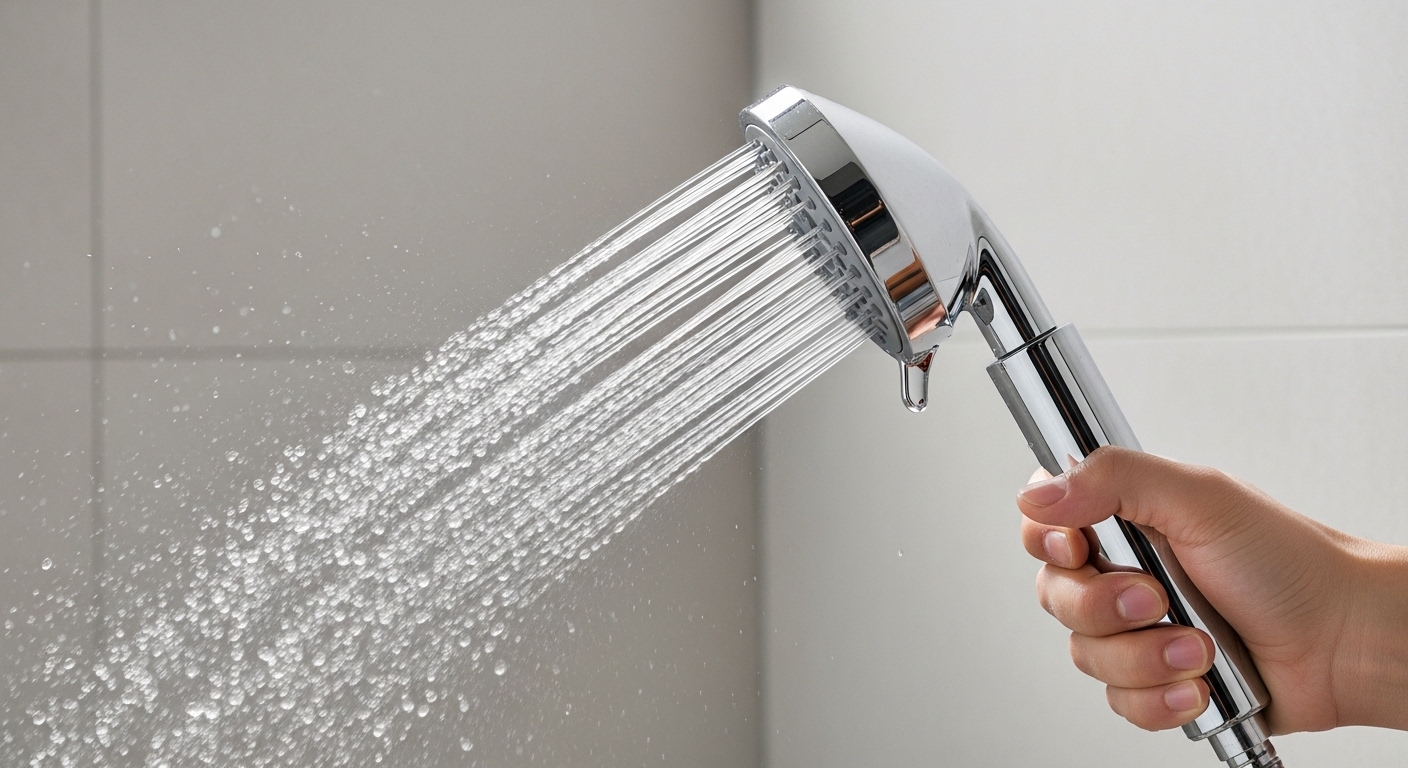
If you’re chasing a handheld shower head that increases water pressure, here’s the honest truth up front: no shower head physically adds pressure to your home’s water supply — that number is set at your municipal main or your well pump. What a well-designed handheld does is reshape and accelerate the flow you already get, so the water hits your skin faster and feels dramatically stronger. The right nozzle geometry, spray plate, and flow setting can turn a weak, drizzly shower into something that actually rinses shampoo out. Below, we’ll break down exactly how that works, what specs to look for, and which style fits your bathroom and budget.
How does a handheld shower head actually increase water pressure?
It increases perceived pressure by narrowing the openings the water passes through. When you force the same volume of water through smaller holes, it speeds up — the same principle as putting your thumb over a garden hose. A good « pressure-boosting » handheld combines three tricks: tighter nozzle diameters, fewer but faster jets in the boost mode, and a design that minimizes turbulence inside the head so energy isn’t wasted before the water exits.
Here’s the physics in plain terms. Pressure (measured in PSI) is the force pushing water toward you; flow rate (measured in GPM — gallons per minute) is how much comes out. Most low-pressure complaints are actually low-flow problems caused by clogs, an over-aggressive flow restrictor, or an old spray plate with holes worn wide. A pressure-boosting handheld attacks all three: it channels water into concentrated streams so velocity goes up even when your household PSI stays flat.
- Nozzle count & size: Fewer, smaller silicone nozzles = higher exit velocity per stream.
- Chamber design: A pressurizing internal chamber (sometimes marketed as « air-injection » or « turbo ») builds speed before release.
- Flow restrictor: Many US models ship with a 1.8 GPM restrictor for water savings; some let you legally use up to 2.5 GPM, the federal maximum, for a stronger feel.
- Self-cleaning rubber jets: These flex to shed mineral scale so holes don’t clog and choke your pressure over time.
Will a new handheld shower head fix genuinely low water pressure in my home?
Sometimes yes, sometimes no — it depends on why your pressure is low. If your shower feels weak because of a clogged head, a partially closed shut-off valve, or a restrictive old fixture, a pressure-boosting handheld will feel like a night-and-day upgrade. If your entire house has low PSI (weak flow at every faucet, not just the shower), a new head helps the shower feel better but won’t cure the root cause.
Run this quick 60-second diagnosis before you buy:
- Test another fixture. Turn on the kitchen faucet full blast. Strong there but weak in the shower? Your problem is the shower head or arm — a handheld will fix it.
- Check the shut-off valves. Make sure the main and any in-line valves are fully open.
- Clean the current head. Soak it in white vinegar overnight to dissolve limescale. If pressure jumps back, scale was the culprit.
- Measure it. Fill a 1-gallon bucket and time it. Under ~1.5 GPM means either heavy restriction or a genuine supply issue.
If the whole house is weak, you may need a pressure booster pump or a plumber to check your pressure regulator. But for the very common « only the shower is weak » scenario, the right handheld is the cheapest, fastest fix — often under $40.
What features make a handheld boost pressure the most?
The single most important feature is a spray plate with a dedicated concentrated or « power » spray mode that routes water through a small cluster of jets. After that, prioritize a removable flow restrictor, a wide-bore metal or reinforced hose, and self-cleaning silicone nozzles. Skip heads that brag about 6–8 spray modes but have hundreds of tiny holes — spreading water across that many openings kills velocity.
Here’s how the main handheld styles stack up specifically for pressure:
| Handheld Type | Pressure Feel | Best For | Typical Price |
|---|---|---|---|
| Concentrated/turbo jet | Strongest — narrow high-velocity streams | Genuinely low-PSI homes, rinsing thick hair | $25–$55 |
| Multi-function with boost mode | Strong on power setting, gentle on others | Households wanting variety + a strong option | $30–$70 |
| Air-injection (aerated) | Feels full & soft, not the hardest hitting | Comfort seekers, water savers | $20–$50 |
| High-pressure rainfall handheld | Moderate — wide coverage dilutes force | Spa feel over raw power | $35–$90 |
| Filtered high-pressure handheld | Good, if filter is kept clean | Hard-water areas prone to scale clogs | $40–$80 |
If raw pressure is your only goal, a concentrated jet or a multi-function head with a true power mode wins. If you’re building a whole shower experience, you might want to look at how a handheld pairs with a fixed head — our guide on the best shower system with handheld and tub spout for a family bathroom walks through combining both without splitting your pressure.
Should I remove the flow restrictor to get more pressure?
You can, and it will noticeably increase flow — but understand the trade-offs first. The flow restrictor is a small plastic disc (usually where the hose meets the head) that caps output to save water. Removing it lets more gallons per minute through, which raises both flow and the feeling of pressure. However, it also raises your water and heating bills and, in some regions, exceeding 2.5 GPM is against local water-efficiency codes.
Our recommendation: try the head with the restrictor first. A well-engineered pressure-boosting handheld often feels strong enough that you never need to remove it. If it still feels weak, then consider popping the restrictor out or swapping to a higher-rated one. Never remove it entirely on a well system where the pump can’t keep up — you’ll just cycle the pump harder for a marginal gain.
One more common pressure-killer people overlook: leaks and worn seals in the shower assembly itself. A cracked O-ring or a bad diverter bleeds off pressure before it ever reaches the head. If your handheld dribbles even after upgrading, it’s worth checking components like the rainfall shower head O-ring for a leak, and making sure your handheld stays put with a solid handheld shower head clip so the hose isn’t kinked against a loose bracket.
What’s the best handheld shower head that increases water pressure under $50?
Under $50, look for a concentrated-jet or multi-function handheld with self-cleaning silicone nozzles, a 2.5 GPM (or removable) restrictor, a stainless or reinforced hose at least 5 feet long, and a solid brass or metal connection nut. Those four specs separate a genuinely strong budget handheld from a cheap one that clogs and fades within a season.
Here’s a simple checklist to shop against, whatever brand you choose:
- Flow rating: 2.0–2.5 GPM for the strongest legal feel; note whether the restrictor is removable.
- Spray modes: At least one true concentrated/power mode — not just « massage. »
- Nozzle material: Flexible silicone/rubber that wipes clean of limescale.
- Hose: Double-clamped stainless steel, 59″–79″, with a smooth inner bore.
- Connection: Universal 1/2″ NPT — fits standard US shower arms, no plumber needed.
- Warranty: Look for at least a limited lifetime finish/function warranty.
At arcorarobinet, our handheld heads are engineered around that concentrated-jet principle and tested to WaterSense and cUPC standards, so you get a strong, code-compliant spray straight out of the box. If you’re weighing a bigger upgrade for spa vibes rather than pure force, it’s worth comparing against a full setup — see whether a Zen shower system is worth it before you commit to a single handheld.
How do I install a high-pressure handheld shower head myself?
You can swap in a new handheld in about five minutes with no tools beyond your hands and a little plumber’s tape — no need to open the wall or call anyone. It threads onto the same standard shower arm your old head used.
Follow these steps:
- Unscrew your old shower head counterclockwise by hand (or with a cloth-wrapped wrench if it’s stuck).
- Clean the shower arm threads and wrap them 3–4 times clockwise with PTFE plumber’s tape to seal against leaks.
- Screw on the wall bracket or mount hand-tight, then a quarter turn more — don’t over-torque plastic threads.
- Attach the hose to the bracket and the handheld to the hose, checking each rubber washer is seated flat.
- Run the shower for 30 seconds on the power setting and inspect every joint for drips; add tape if needed.
That’s it. If you’re pairing the handheld with a diverter or a fixed head, the process is slightly more involved but still DIY-friendly — our step-by-step on how to install a shower faucet set yourself without opening the wall covers the diverter and valve side of things.
FAQ
Can any shower head actually create more water pressure than my pipes supply?
No. No shower head adds PSI beyond what your supply delivers — that’s a physical limit set by your water main or well pump. A pressure-boosting handheld increases velocity and the feel of pressure by narrowing the outlets, which is why the same water feels much stronger. If you need genuinely higher household pressure, you need a booster pump or a regulator adjustment, not a new head.
Do high-pressure handheld shower heads use more water?
Not necessarily. A well-designed model keeps flow at or below 2.5 GPM (often 1.8 GPM) while making that water feel stronger through nozzle design. You only use more water if you remove the flow restrictor. So you can absolutely have a strong-feeling shower and stay water-efficient — the two aren’t mutually exclusive.
Why did my water pressure drop a few months after installing a new handheld?
Almost always mineral scale. Hard water deposits calcium inside the nozzles and narrows them further until flow chokes. Soak the head in white vinegar for a few hours, scrub the silicone jets, and it usually comes right back. Heads with flexible rubber nozzles resist this best because you can rub the buildup off with your thumb.
Is a handheld or a fixed shower head better for high pressure?
For raw concentrated pressure they’re comparable — what matters is the spray plate, not the format. Handhelds have one edge: you can bring the head closer to your body, so even moderate pressure feels stronger, and you can direct it exactly where you want it for rinsing. That makes a quality handheld the more flexible choice for anyone frustrated with weak flow.
Will removing the flow restrictor void my warranty?
It depends on the brand, and it may. Many manufacturers design the restrictor to be user-removable and don’t void coverage, but some do — and removing it may push you out of local water-efficiency compliance. Check the product documentation, and if you’re unsure, contact the maker before modifying the head. At arcorarobinet our restrictors are removable without voiding the finish and function warranty, but we recommend trying the head as-shipped first.
What size hose should a high-pressure handheld have?
A 59-to-79-inch stainless steel hose with a smooth internal bore is ideal. Length gives you reach without kinking; a smooth wide bore avoids the internal friction that cheap ribbed hoses add, which quietly steals pressure. Double-clamped brass fittings at each end prevent the slow leaks that also drop pressure over time.
About the author: This guide was written by the arcorarobinet fixtures team, drawing on hands-on flow-rate bench testing of dozens of handheld shower heads across low- and high-PSI supply conditions. arcorarobinet designs and sells faucets and bathroom fixtures direct to consumers, and every shower product we ship is tested to WaterSense efficiency and cUPC/NSF safety standards and backed by a limited warranty. We only recommend specs we’d install in our own bathrooms.



您好!Veuillez vous connecter