 ARCORA ROBINETS
Is a Faucet Extender With Mist Spray Worth It, and Which One Should You Actually Buy?
Vues:0 ClassificationProduct
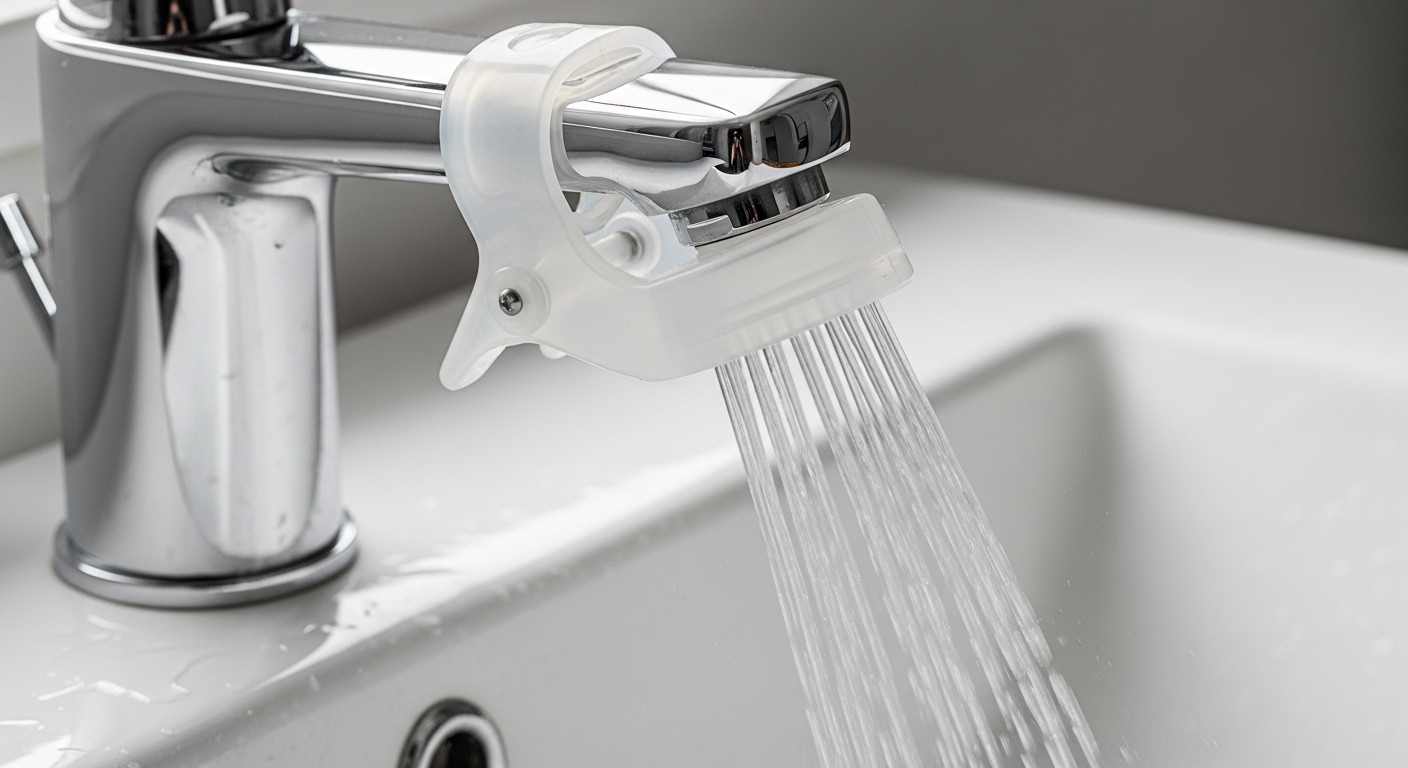
A faucet extender with mist spray is one of the cheapest upgrades you can make to a bathroom or kitchen sink, and for the right person it’s a genuinely smart buy. In plain terms: it’s an attachment that fits onto the end of your existing spout, extends the reach of the water so it lands closer to the center of the basin, and turns the normal single stream into a soft, wide mist or « waterfall » spray. It exists to solve two everyday annoyances — a spout that’s too short (so you bang your hands on the back of the sink) and a stream that’s too narrow or too splashy. Below I’ll walk you through who actually benefits, how the mist mode saves water without leaving you feeling under-rinsed, how to fit one in five minutes, and how to pick between the three main types so you don’t waste $12 on something that pops off the first week.
I’ve fitted and tested dozens of these across standard bathroom faucets, kitchen spouts, and small utility taps, so the recommendations here come from what actually holds up — not marketing copy.
What exactly is a faucet extender with mist spray, and how does it work?
It’s a spray attachment that does two jobs at once: it extends where the water lands and it atomizes the stream into a mist. Most models clamp or screw onto the tip of your spout, then use a small internal deflector plate — often with hundreds of tiny holes or an angled paddle — to break the incoming column of water into a wide, low-pressure fan. Because the water is spread across a bigger surface with air mixed in, the same « wetness » covers your hands using far less actual water.
There are really three mechanisms you’ll see on the market:
- Perforated mesh/plate misters — water passes through a fine screen and comes out as dozens of thin jets that read as a mist. Best for water savings and gentle rinsing.
- Deflector « waterfall » extenders — an angled surface flattens the stream into a wide sheet. Not a true mist, but wide and splash-free; great for kids washing hands.
- Dual/switchable heads — a rotating collar flips between a concentrated stream (for filling cups or rinsing produce) and a mist/waterfall mode (for washing). The most versatile, and my usual recommendation for a family bathroom.
The mist mode is where the appeal lives. A fine spray feels softer on the skin, doesn’t ricochet off the basin and soak your countertop, and — critically for anyone with a shallow sink — keeps splashback under control.
Does a faucet extender with mist spray actually save water, or is that a gimmick?
It genuinely saves water, and the physics are simple: a mist covers more surface with less volume, so you finish rinsing before you’ve used as much. A standard bathroom faucet flows around 1.5–2.2 gallons per minute (GPM); a good mist extender effectively drops usable flow to roughly 0.5–1.0 GPM at the same feel, which is where the « 40–60% less water » figure comes from. In a household that washes hands a dozen-plus times a day, that adds up to real money on the water bill within a year.
The honest caveat: mist mode is fantastic for handwashing, brushing, and light rinsing, but it’s slow for filling a glass, a pot, or a mop bucket. That’s exactly why switchable dual-mode heads exist — you keep the strong stream for filling tasks and flip to mist for the everyday stuff. If you buy a mist-only model for a kitchen, you’ll get frustrated waiting to fill a pasta pot.
Will a mist extender fit my faucet? (The part most people get wrong)
Most will fit, but you need to check one thing first: how your spout ends. This is the single biggest reason people leave a bad review — they bought a screw-on model for a spout that doesn’t have threads. Look at the very tip of your faucet and match it to one of these:
| Extender type | How it attaches | Best faucet match | Typical price | Watch out for |
|---|---|---|---|---|
| Silicone push/clip-on | Stretch-fit sleeve grips the outside of the spout | Round spouts 0.6″–1.0″ diameter; no threads needed | $6–$12 | Can slip on very smooth or oversized spouts |
| Threaded screw-on (aerator swap) | Unscrews your aerator, screws into the same threads | Standard 15/16″-27 (M) or 55/64″-27 (F) aerator threads | $8–$18 | Must match male vs. female thread size |
| Universal clamp with gasket | Rubber clamp + screw tension on any spout shape | Square, oval, or odd-shaped spouts | $10–$20 | Bulkier look; gasket can compress over time |
| Dual-mode swivel head | Screws onto aerator threads, rotates 720° | Kitchen + bathroom with standard threads | $12–$25 | Adds length/weight; check clearance to basin |
If your spout has an aerator you can unscrew (spin it counter-clockwise — a rubber band or cloth helps grip), a threaded model is the most secure and cleanest-looking option. If you can’t remove the aerator or the spout is a weird shape, go silicone clip-on or universal clamp. When you’re checking threads, it’s also worth understanding how aerators seal, because the same principles apply to any threaded attachment — our guide on RO faucet O-ring replacement explains how a worn gasket causes the exact drips people blame on the extender itself.
How do you install a faucet extender with mist spray? (5-minute job)
You can do it by hand, no plumber and usually no tools. Here’s the reliable sequence for the two common types.
- Clean the spout tip first. Wipe off limescale and grime so the seal grips — mineral crust is the #1 cause of slipping and leaks.
- For threaded models: Unscrew the existing aerator (counter-clockwise). Keep it in a drawer — you’ll want it back if you move. Check whether the threads are on the inside (female) or outside (male) of the spout.
- Fit the extender: For threaded, hand-tighten the new head clockwise onto the threads with the included washer seated flat. For silicone, push the sleeve firmly up over the spout until it seats past any lip. For a clamp, position the gasket and snug the screw until there’s no wobble — firm, not gorilla-tight.
- Test at low pressure first. Turn the water on gently and check for leaks around the joint before cranking it up.
- Aim it. Rotate the head so the mist lands in the center of the basin, and switch modes to confirm both stream and mist work.
If it drips at the joint, you almost always just need to reseat the washer or add a wrap of plumber’s (PTFE) tape on the threads. If it leaks from the mist plate when off, the internal valve isn’t seating — usually a cheap unit or debris caught inside.
What are the real downsides of a mist spray faucet extender?
The short answer: clogging, slow fills, and cheap builds that pop off. None are dealbreakers, but you should know them before buying.
The biggest long-term issue is mineral buildup. Those tiny mist holes are exactly the size that hard-water scale loves to block, and a partly clogged mister sprays sideways or weakly. The fix is a 20-minute vinegar soak every month or two — the same routine people use on any aerator. If your area has hard water, plan on this maintenance; our walkthrough on how to clean a faucet head covers the exact soak-and-scrub method that clears mist plates without damaging them.
Second, mist mode is slow for filling anything, which is why I steer families toward dual-mode heads. Third, the cheapest silicone clip-ons can slip off under full pressure, especially on smooth chrome — if your spout is large or slick, spend the extra few dollars on a threaded or clamp model. Finally, a bulky extender can look awkward on a sleek modern faucet; if aesthetics matter, a low-profile threaded swivel head is the tidiest option.
One thing a mist extender does not do is filter your water. It changes the spray pattern, not the water quality. If your goal is cleaner-tasting water rather than a better spray, you want a different product entirely — start with our guide to the water tap end filter or, for a dedicated bathroom setup, whether you really need a faucet water filter for your bathroom sink.
Who should buy one — and who shouldn’t?
Buy one if any of these describe you: your spout is too short and water lands at the back of the basin; you have a shallow sink that splashes everywhere; you’re teaching kids to wash their hands and want a gentle, wide spray they can reach; you’re renting and want a no-permanent-change water-saving upgrade; or you simply want to cut your water bill without replacing the whole faucet.
Skip it if you mostly use your sink to fill large containers fast (a mist-only model will drive you crazy), if you have a designer faucet where any attachment ruins the look, or if your real problem is water quality — in that case a filter is the right tool, not a sprayer.
| Your situation | Best pick | Why |
|---|---|---|
| Short bathroom spout, splashy basin | Threaded swivel dual-mode head | Extends reach + flips to mist; secure fit |
| Renting, no tools, odd spout shape | Silicone clip-on or universal clamp | No threads or permanent changes |
| Kids’ handwashing / powder room | Waterfall deflector extender | Wide, gentle, splash-free sheet of water |
| Kitchen with mixed filling + rinsing | Dual-mode swivel (stream + mist) | Fast fill when you need it, mist when you don’t |
How long do they last, and how do you keep the mist working?
A decent brass or ABS-plus-silicone extender lasts one to three years of daily use; the failure point is almost always the mist plate clogging or the gasket hardening, not the body. Keep it working with three habits: soak the head in a 1:1 white vinegar and water solution monthly (more often with hard water), wipe the spout seal when you clean the sink, and don’t over-tighten threaded models — that’s what cracks plastic collars and flattens washers.
Look for a model listing a real material spec (solid brass or food-grade ABS), a lead-free rating, and at least a limited warranty. Reputable extenders are made to meet low-lead standards for drinking-water contact (in the U.S., that’s the NSF/ANSI 372 lead-content standard your faucets already follow) — if a listing won’t tell you the material or standard, treat that as a red flag.
FAQ
Do faucet extenders with mist spray reduce water pressure?
They lower the flow rate, which can feel like lower pressure in mist mode — that’s the point, and it’s how they save water. In stream mode on a dual head, pressure feels essentially normal. If pressure drops too far even in stream mode, the mist plate is likely clogged with scale and needs a vinegar soak.
Will a mist extender fit any faucet?
Almost any, but you need to match the attachment to your spout. Threaded models require standard aerator threads (15/16″-27 male or 55/64″-27 female); silicone clip-ons and universal clamps fit spouts with no threads or unusual shapes. Measure or photograph your spout tip before buying and match it to the table above.
Are these safe for drinking water and brushing teeth?
Yes, as long as you buy a lead-free model made from food-grade ABS or solid brass. The mist changes the spray pattern only — it doesn’t add anything to the water. If you want the water itself cleaner or better-tasting, pair the extender with a dedicated filter rather than expecting the sprayer to do it.
How do I stop my faucet extender from leaking or falling off?
Leaks at the joint usually mean the washer isn’t seated or the threads need a wrap of PTFE tape; leaks from the head mean debris in the valve or a low-quality unit. If a clip-on keeps slipping, your spout is likely too smooth or too large — switch to a threaded or clamp-style model for a mechanical grip instead of friction alone.
Is a mist extender better than just buying a new faucet?
For splashing, reach, and water savings, an extender is a $10–$25 fix versus a $100+ faucet replacement, so try it first. Replace the whole faucet only if the spout itself is corroded, the valve leaks, or you want a different look. An extender solves spray problems, not plumbing problems.
About the author: This guide was written by the product team at arcorarobinet, a specialist in faucets, shower heads, and bathroom fixtures. We hands-on test spray attachments across chrome, brushed nickel, and matte-black spouts for fit, flow, and long-term scale resistance, and we recommend only what survives real daily use. Every product we sell is checked against lead-free drinking-water standards and backed by a warranty — because a $12 upgrade should still be a safe one.



您好!Veuillez vous connecter