 ARCORA ROBINETS
Is the Xiaomi Faucet Water Purifier Filter 58612 Worth Buying for Everyday Tap Water?
Vues:0 ClassificationProduct
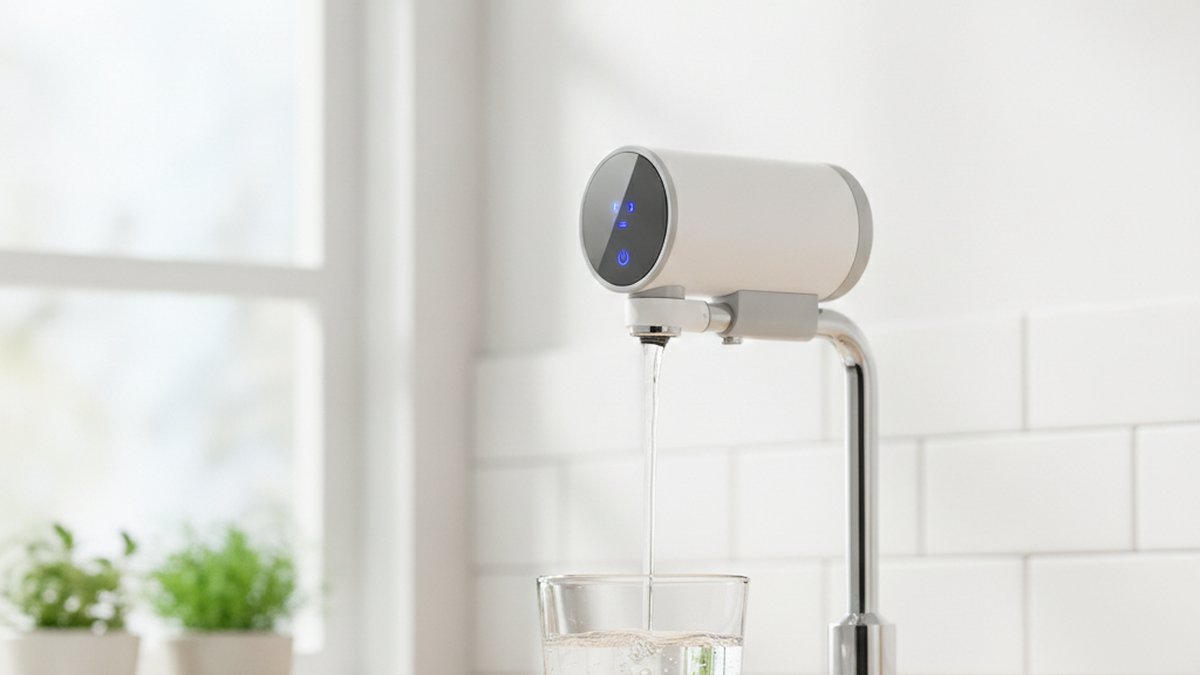
If you’ve been eyeing the xiaomi faucet water purifier filter 58612 and wondering whether a tiny gadget that clips onto your tap can really make your water cleaner, the honest answer is: it does a specific job well, and it’s important to know exactly what that job is. This is a faucet-mounted (also called tap-mounted) filter — it screws onto or over the end of your existing faucet spout and pushes water through a multi-stage cartridge before it reaches your glass. It’s not magic, and it’s not a whole-home system. But for the price and the two-minute install, it’s one of the easiest water-quality upgrades you can make without calling a plumber.
Below, I’ll walk through what this filter actually removes, how long it lasts, whether it fits your faucet, how it compares to pitcher filters and under-sink systems, and the real-world gotchas nobody mentions until after you’ve bought one.
What exactly is the Xiaomi faucet water purifier filter 58612, and what does it remove?
It’s a faucet-mounted water filter with a replaceable multi-stage cartridge — designed to reduce chlorine, sediment, rust, sand, odor, and larger suspended particles from municipal tap water at the point of use. The « 58612 » is the SKU/model reference you’ll see on listings for the unit and its compatible replacement cartridge.
Most Xiaomi-style faucet purifiers in this class use a layered cartridge that typically combines:
- A PP (polypropylene) sediment layer — catches sand, rust flakes, and visible grit down to around 5 microns.
- Activated carbon (often coconut-shell carbon) — the workhorse for chlorine, chlorine byproducts, and that « pool water » taste and smell.
- A fine membrane or hollow-fiber layer — some versions in this family use an ultrafiltration (UF) membrane rated near 0.01 micron, which is fine enough to block many bacteria and cysts while letting water flow.
What it’s good at: making ordinary city tap water taste and smell better, removing visible particles, and giving you cleaner water for drinking, coffee, tea, baby formula, and cooking. What it is not designed to do: fully remove dissolved minerals (so it won’t soften hard water or stop limescale), heavy metals like lead across its whole life at high certified levels, nitrates, fluoride, or dissolved chemicals the way a reverse-osmosis (RO) system does. If your water is heavily contaminated or you’re on a private well with known issues, a faucet filter is a supplement, not a solution.
Will the 58612 actually fit my kitchen faucet?
It fits most standard round faucet spouts using the included threaded adapters, but it will not fit pull-out or pull-down spray heads, most gooseneck spray faucets, or spouts with non-standard/hidden aerator threads. This is the single biggest reason people return tap-mounted filters, so check before you buy.
Here’s the practical fit test. Look at the very tip of your faucet where the aerator screws in. Faucet-mount filters attach where your aerator currently sits, so they need:
- A standard cylindrical spout end (not a pull-down sprayer that detaches).
- Aerator threads that are either external (male) or internal (female) in a common size — the kit usually ships with a couple of adapter rings to cover the typical variants.
- Enough clearance between the spout and the sink/backsplash, because the filter body adds a few inches of height and bulk.
If you have a modern pull-down kitchen faucet, this filter almost certainly won’t work — the spray head is the wrong shape and detaches. In that case you’re better off with a pitcher filter or an under-sink cartridge. If you’re not sure what thread you have, it’s worth understanding aerator and connection sizing before ordering; our guide on what kitchen faucet aerator flow rate you actually need explains how aerator threading and flow work, which is exactly the connection point this filter relies on.
How long does the 58612 filter cartridge last before you replace it?
Plan on replacing the cartridge roughly every 2 to 3 months, or sooner if you notice slower flow or the taste returning — the exact life depends on your water hardness, sediment load, and how much filtered water you draw each day. Faucet-mount cartridges are small, so they simply hold less filter media than a big under-sink canister and need changing more often.
A few honest realities about cartridge life:
- Sediment-heavy or hard water shortens life. Lots of rust, sand, or scale clogs the PP layer faster, and you’ll feel it as dropping flow.
- Flow rate falls as the cartridge loads up. When your once-brisk stream slows to a trickle even in « filtered » mode, that’s the cartridge telling you it’s spent — not necessarily a faucet problem. (If flow is slow from day one, that’s a different issue — see our piece on why a faucet can have low water pressure and how to fix it.)
- Don’t stretch it. A carbon cartridge past its life can stop adsorbing and, worse, become a place where bacteria grow. When in doubt, change it out.
Factor the replacement cartridges into the true cost. The unit itself is cheap; the ongoing filters are the real expense over a year. Even so, for most households the annual cost still lands well below buying bottled water.
Xiaomi faucet filter vs. pitcher filter vs. under-sink RO — which should you actually buy?
Buy the faucet-mounted 58612 if you want the cheapest, fastest, no-plumbing improvement to taste and clarity; buy a pitcher if your faucet won’t take a mount or you only filter a little water; buy under-sink RO if you have serious contamination or want the highest purity and don’t mind installation. Here’s the side-by-side:
| Factor | Xiaomi Faucet Filter 58612 | Pitcher Filter | Under-Sink RO System |
|---|---|---|---|
| Upfront cost | Low | Very low | High |
| Install effort | ~2 min, no tools | None | Plumbing + drilling |
| Filters on demand | Yes, straight from tap | No, must wait to fill | Yes, dedicated tap |
| Chlorine / taste / odor | Good | Good | Excellent |
| Dissolved solids / hardness | Minimal | Minimal | Excellent |
| Cartridge life | ~2–3 months | ~1–2 months | 6–24 months (per stage) |
| Best for | Renters, dorms, small homes | Fridge-cold water, tiny use | Well water, high purity needs |
The short version: the faucet filter is the sweet spot for people who rent, move often, or just want better-tasting tap water without committing to a project. You can uninstall it in seconds and take it with you. For anyone whose water report shows real contamination, treat the 58612 as a first-line improvement, not a substitute for certified heavy-duty filtration.
How do you install the Xiaomi faucet water purifier filter 58612 yourself?
You unscrew your existing aerator, choose the adapter that matches your faucet threads, hand-tighten the filter onto the spout, then flush it for a few minutes before drinking — the whole job takes about two minutes with no tools. Here’s the step-by-step:
- Unscrew the current aerator at the tip of your spout (turn counterclockwise; use a cloth for grip if it’s tight). Keep it — you’ll want it back if you ever remove the filter.
- Match the adapter. Try the included adapter rings against your spout threads and pick the one that threads on smoothly. If your faucet has male (external) threads vs. female (internal) threads, the adapter is what bridges the difference. If you’re fuzzy on thread types, our explainer on faucet thread types and how to avoid a cross-threaded leak is the same principle at the spout end.
- Hand-tighten the filter body onto the adapter. Snug is enough — don’t crank it, or you’ll deform the rubber washer and cause a drip.
- Check the switch. Most units have a toggle for filtered vs. unfiltered flow, so you’re not wasting cartridge life washing dishes.
- Flush it. Run water through the filtered setting for 3–5 minutes to rinse carbon fines and « condition » the new cartridge before you drink from it.
- Watch for leaks at the joint for the first day. A small drip almost always means the washer isn’t seated or you over-tightened — back it off, reseat, and re-snug by hand.
What are the real downsides people run into with tap-mounted filters?
The three most common complaints are reduced water pressure in filtered mode, cartridges that clog faster than expected in hard-water areas, and fit problems on non-standard or spray faucets. None are dealbreakers if you go in with the right expectations.
Some specific things to know before you commit:
- Filtered flow is slower than raw tap flow. That’s physics — you’re pushing water through media. It’s fine for filling a glass or pot; it’s not a firehose.
- Bulk on the spout. The filter adds height and weight to your spout tip. On a lightweight or loose faucet, it can make the spout droop or swivel more easily.
- Hot water is a no-go through the filter. Run hot water only in unfiltered/bypass mode. Hot water damages carbon media and can dump previously trapped contaminants. Always filter cold.
- It won’t fix hardness or scale. If you have white crusty buildup on your fixtures, a faucet filter won’t stop it — that’s a water-softening problem, not a taste-filter problem.
- Replacement discipline matters. The unit is only as good as the cartridge inside it. Skip changes and you lose the benefit.
If you’re setting up a clean, budget kitchen and shopping for the faucet itself alongside a filter, it’s worth pairing the filter with a spout it actually fits — our roundup on where to find a white kitchen faucet that actually lasts covers standard-spout designs that play nicely with tap-mounted accessories like this one.
Who should buy the 58612 — and who should skip it?
Buy it if you rent, live in a dorm or small apartment, are on treated municipal water, and mainly want better taste and clarity cheaply. Skip it if you have a pull-down sprayer faucet, well water with real contamination, or need certified removal of lead, fluoride, or dissolved chemicals.
Think of it as the entry point to filtered water. For a huge number of households, « city water that tastes and smells clean, on demand, for the cost of a couple of coffees a month » is exactly what they need — and this delivers that. For anyone with a lab-confirmed contamination problem, don’t gamble on a small tap filter; get water tested and match a certified system to the specific contaminant.
FAQ
Does the Xiaomi faucet water purifier filter 58612 remove lead and heavy metals?
Not reliably across its full life the way a certified lead-reduction system does. Its strengths are chlorine, taste, odor, sediment, rust, and larger particles. If lead is a known concern in your building’s plumbing, use a filter specifically certified for lead reduction (look for NSF/ANSI 53 certification) rather than relying on a general tap filter.
Can I use hot water through the filter?
No. Only run cold water through the filtered setting. Hot water degrades the activated carbon and can release trapped contaminants back into your water. If your unit has a bypass toggle, switch to unfiltered mode for hot water, dishwashing, and cleaning.
How often do I really need to change the 58612 cartridge?
Every 2 to 3 months for typical use, but let performance be your guide. If the flow slows noticeably or the chlorine taste comes back before then, change it early — usually a sign of heavy sediment or hard water loading the cartridge faster.
Will it fit a pull-down or pull-out spray kitchen faucet?
Almost never. Faucet-mount filters need a standard round spout with accessible aerator threads. Pull-down spray heads are the wrong shape and detach, so the filter has nowhere to seat. If that’s your faucet, choose a pitcher filter or an under-sink system instead.
Does the filter reduce my water pressure?
Yes, slightly, in filtered mode — you’re forcing water through filter media, so the stream is gentler than raw tap flow. It’s perfectly adequate for drinking and cooking. If your pressure was already weak before installing anything, that’s a separate faucet or plumbing issue worth diagnosing on its own.
Is a cheap tap filter actually better than bottled water?
For cost and waste, easily. Even counting replacement cartridges, a faucet filter typically costs a fraction of buying bottled water for a year, produces no plastic waste, and gives you filtered water on demand. On pure contaminant removal it won’t beat a premium bottled or RO source, but for everyday municipal water it’s a strong, practical trade-off.
The bottom line
The Xiaomi faucet water purifier filter 58612 is a smart, low-risk upgrade for the right person: someone on municipal water, with a standard-spout faucet, who wants cleaner-tasting water without tools, plumbing, or a big spend. Set your expectations correctly — it improves taste, smell, and clarity and blocks particles; it doesn’t soften water or replace certified heavy-duty filtration — and it’s genuinely one of the best value-per-dollar water improvements you can make. Match it to a compatible faucet, stay disciplined about cartridge changes, and it quietly does its job every day.
Author note: This guide was written by the arcorarobinet fixtures team, who spend their days sizing faucets, aerators, and tap accessories for real kitchens and bathrooms. arcorarobinet specializes in faucets and bathroom fixtures, and we base our fit and compatibility advice on hands-on testing of spout threads and aerator connections rather than spec sheets alone. As always, for water quality that affects health, confirm any filter’s claims against recognized standards such as NSF/ANSI 42 (taste/odor) and NSF/ANSI 53 (specific contaminants), and check the manufacturer’s warranty and certification before you rely on it.



您好!Veuillez vous connecter