 ARCORA ROBINETS
Is a Zen Shower System Worth It, and Which One Should You Buy for a Spa-Like Bathroom?
Vues:0 ClassificationProduct
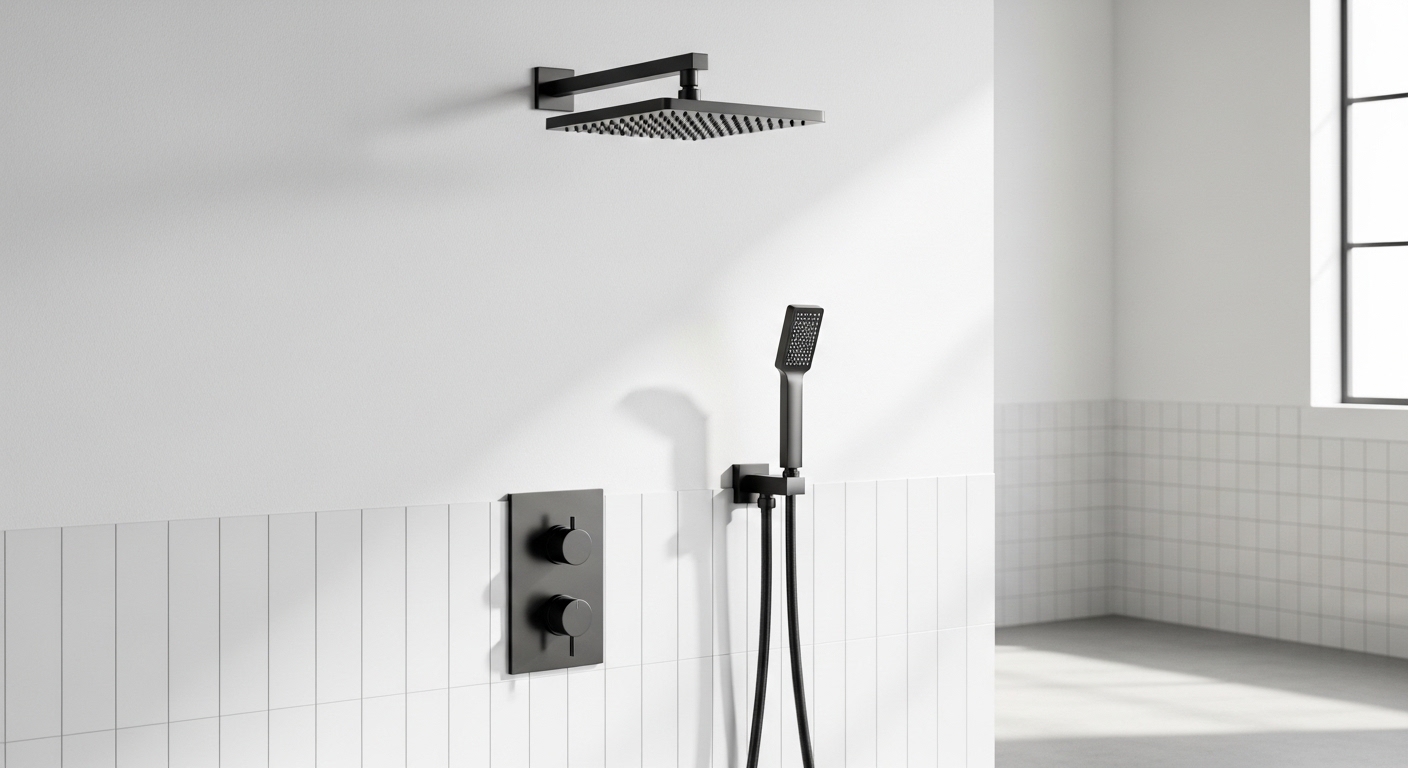
A zen shower system is a complete, coordinated shower kit — usually a large ceiling- or wall-mounted rainfall head, a handheld sprayer on a slide bar or hose, and sometimes body jets — all controlled by a single matching valve with a clean, minimalist « zen » aesthetic (think matte black, brushed gold, or brushed nickel with square or slim round lines). Instead of buying a head, a valve, and a handheld separately and hoping they match, you get one designed set. Below, we answer the real questions people ask before buying one: whether it’s actually worth the money, what specs matter, how it installs, and which finish and valve type fit your bathroom and budget.
What exactly is a « zen shower system, » and how is it different from a normal shower head?
A zen shower system is a full multi-outlet shower package built around a minimalist design language, whereas a normal shower head is a single sprayer that screws onto your existing arm. The difference is scope: a plain head changes only the spray; a zen system replaces the whole control-and-spray experience — valve, diverter, rain head, and handheld — so every piece matches in finish and geometry.
The « zen » part is really about restraint. These systems lean on clean lines, low-profile heads, hidden or semi-recessed mounting, and calm finishes. The functional heart, though, is the valve. Most zen systems ship with one of two valve types:
- Pressure-balanced valve: keeps water temperature roughly steady when someone flushes a toilet or runs the kitchen faucet. Standard on mid-range sets, and required by code in most U.S. jurisdictions for anti-scald protection.
- Thermostatic valve: holds a set temperature within about ±1.8°F (±1°C) and lets you run the rain head and handheld at the same time at independent flow. This is the upgrade you feel every morning.
Is a zen shower system actually worth the money, or is it just marketing?
It’s worth it if you value a coordinated look and a genuinely better shower feel — and if you buy a set with a thermostatic or pressure-balanced valve and a brass valve body. It is not worth it if you’re only paying extra for the word « zen » on a thin stamped-metal head with a plastic valve. The value lives in the valve and the build, not the branding.
Here’s the honest math. A basic rain head alone runs $30–$80. A quality rough-in valve is $60–$150. A handheld with slide bar is $40–$90. Buying a matched zen system for $180–$400 usually costs about the same as assembling those pieces separately — but you save the guesswork of matching finishes and thread sizes, and you get one warranty covering the whole set. Where you overpay is the $500+ « designer » systems that don’t add a thermostatic valve or more spray outlets; at that point you’re paying for a name.
Two concrete tells that a system is worth it: the spec sheet lists a brass valve body (not zinc or plastic), and the head is WaterSense-labeled at 1.8–2.0 GPM if you care about water bills, or a true 2.5 GPM if you want maximum drench. If a listing hides the valve material and flow rate, treat that as a red flag.
How much does a good zen shower system cost, and what do you get at each price?
Expect roughly $180–$600 for a system worth installing, with the sweet spot around $250–$400 for a thermostatic set with rain head and handheld. Below that, you’re usually getting a pressure-balanced or manual valve; above it, you’re paying for extra body jets, brass everywhere, and premium finishes. Here’s how the tiers break down:
| Price tier | Typical valve | What’s included | Best for |
|---|---|---|---|
| $120–$200 | Manual or pressure-balanced | Rain head + handheld, exposed pipe or basic trim | Guest bath, rental, tight budget |
| $220–$400 | Thermostatic | 10–12″ rain head, handheld on slide bar, dual-function diverter | Primary bathroom, most buyers |
| $420–$600+ | Thermostatic, high-flow | Rain head + handheld + 3–6 body jets, all-brass, premium finish | Spa remodel, walk-in shower |
One budgeting tip: don’t forget the rough-in valve is inside the wall. If your existing valve is old or a different brand, a plumber may need to open the wall to swap it, adding $150–$400 in labor. If you want to avoid that, look for a system that matches your current valve brand, or an exposed (surface-mounted) zen system that runs its pipe outside the wall — no demolition required.
Thermostatic vs. pressure-balanced: which valve should you get for a family bathroom?
For a family bathroom where showers overlap with dishwashers, laundry, and flushing toilets, a thermostatic valve is the better buy — it locks your temperature so no one gets a cold or scalding surprise, and it lets two outlets run at once. A pressure-balanced valve is fine and code-compliant for a single-user bath or a tighter budget, but it only protects against temperature swings; it doesn’t let you precisely set and hold a number.
Think about it this way. Pressure-balanced keeps the hot/cold ratio steady, so if pressure drops it throttles both to avoid scalding — but the water may cool slightly. Thermostatic actively measures temperature and adjusts, so 104°F stays 104°F even as household demand changes. In a busy home with a big soaking tub setup, that stability is the single upgrade people notice most. If you’re weighing a shower-plus-tub layout specifically, our guide to the best shower system with handheld and tub spout for a family bathroom walks through diverter choices in depth.
Do you need body jets, or is a rain head plus handheld enough?
For most bathrooms, a rain head plus handheld is plenty — body jets are a luxury that only pays off if you have the water supply to run them. Body jets each pull 1.5–2.5 GPM, so three jets plus a rain head can demand 8+ GPM, which many ½-inch supply lines and standard water heaters can’t sustain without pressure or temperature drops.
Before you buy a system with jets, check two things: your home’s water pressure (ideally 45–60 psi) and your water heater’s recovery. If you’re on a well pump or a small tank heater, skip the jets and put that money into a better thermostatic valve. The handheld already covers rinsing, cleaning the shower, and washing kids or pets — arguably the most useful outlet in the whole system. A secure handheld shower head clip or slide bar matters more day to day than a wall of jets you’ll rarely turn on.
What finish should you choose for a zen look — matte black, brushed gold, or brushed nickel?
For a true zen aesthetic, matte black and brushed (not polished) nickel are the safest, most timeless picks, while brushed gold/brass reads warmer and more boutique. All three hide water spots far better than polished chrome, which is why they dominate the zen category. Choose based on your existing fixtures and lighting, not just trends.
| Finish | Vibe | Shows water spots? | Pairs well with |
|---|---|---|---|
| Matte black | Modern, bold, minimalist | Low (hides them) | White tile, wood, concrete-look |
| Brushed nickel | Warm-neutral, classic | Very low | Almost anything; safest choice |
| Brushed gold / brass | Warm, upscale, spa | Low | Marble, green/blue tile, matte black accents |
| Polished chrome | Bright, budget-classic | High | Traditional baths (least « zen ») |
A practical rule: match your shower system finish to your door handles and the faucet on the vanity, not to the towel color you’ll swap out in a year. And know that matte black shows dried mineral scale (white residue) if you have hard water, so if your water is hard, brushed nickel is the most forgiving. If you’re still torn on whether classic chrome is the smarter value, we compare durability and cost in our piece on whether a chrome finish is worth it versus trendier options.
Can you install a zen shower system yourself, or do you need a plumber?
You can install the trim, rain head, and handheld yourself in an afternoon if the rough-in valve is already in the wall and compatible — that’s basic hand-tool work. You need a plumber (or serious DIY confidence plus turning off the main) if the system requires a new in-wall valve, because that means opening the wall, soldering or push-fitting supply lines, and re-tiling.
Here’s the realistic DIY path for a trim-and-head swap:
- Shut off the water at the shower stop valves or the home’s main.
- Remove the old trim plate, handle, and shower arm.
- Wrap the shower arm threads in 3–4 turns of PTFE (plumber’s) tape, then hand-thread the new arm and rain head — snug, not gorilla-tight.
- Install the new valve trim over the existing cartridge (only if it’s the same brand/model).
- Mount the handheld slide bar into studs or use quality anchors, connect the hose, and check every joint for drips at full pressure.
If your project involves a fresh valve or moving the plumbing, read our step-by-step on how to install a shower faucet set yourself without opening the wall before you commit — it covers when a swap is genuinely no-demo and when it isn’t. And when leaks show up later at the rain head, they’re usually a worn washer or O-ring, not a failed head; our guide to the rainfall shower head O-ring replacement is a five-minute fix that saves you a whole new head.
What water pressure do you need for a rainfall head to feel good?
You want at least 40 psi (ideally 45–60 psi) for a rainfall head to feel like rain instead of a drizzle, because big low-profile rain heads rely on volume and gravity rather than a forceful jet. Below ~40 psi, wide rain heads can feel weak — that’s the most common complaint, and it’s usually a pressure issue, not a defective head.
If your pressure is low, you have options: choose a smaller rain head (8–10 inches concentrates flow better than 14+), pick a head with a denser nozzle pattern, or install a shower pump/booster. Thermostatic valves also help here because they let you send full pressure to one outlet instead of splitting it. Test your pressure with a $12 gauge on an outdoor spigot before you buy a giant head you’ll be disappointed by.
How do you keep a zen shower system looking and working like new?
Wipe the head and trim dry after showers to prevent water spots, and every 1–3 months soak the rain head’s nozzles in white vinegar to clear mineral buildup — that’s 90% of the maintenance. Most modern rain heads use flexible silicone nozzles you can rub clean with a thumb, so scale rarely clogs them permanently.
For hard-water homes, mineral scale is the main enemy. A quick routine keeps flow strong:
- Rub silicone nozzles monthly to pop off dried scale.
- Once a quarter, tie a bag of 50/50 white vinegar and water over the head for 30–60 minutes, then run hot water to flush.
- Never use abrasive pads or acidic tile cleaners on matte black or brushed gold — they can dull or etch the finish. Use mild soap and a soft cloth.
- If flow from the handheld weakens, check the small screen filter/aerator at the hose connection; it catches grit and clogs first.
When a handle gets loose, sloppy, or won’t shut fully, it’s almost always the cartridge, not the whole valve. Swapping one is beginner-friendly — see our walkthrough on a faucet handle replacement for a shower before you assume you need a plumber.
Who should buy a zen shower system — and who shouldn’t?
Buy one if: you’re remodeling or building a walk-in shower, you want a coordinated modern look, your water pressure is 45+ psi, and you’ll use both a rain head and a handheld. Skip it if: your bathroom has very low pressure you can’t boost, you rarely shower at home, or you’re in a rental where you can’t touch the in-wall valve — in that case, a simple screw-on rain head plus a handheld diverter gets you 80% of the feel for a fraction of the cost and effort.
The best value buyer is someone upgrading a tired single-head shower to a thermostatic rain-plus-handheld set in the $250–$400 range, in brushed nickel or matte black, with a brass valve body and a WaterSense-labeled head. That configuration hits the sweet spot of luxury feel, water efficiency, and long-term reliability without paying for gimmicks.
FAQ
What GPM should a zen shower system have?
For a good balance of drench and efficiency, look for a rain head rated 1.8–2.5 GPM. WaterSense-labeled heads at 1.8–2.0 GPM save water and still feel full at decent pressure; a true 2.5 GPM head gives the most rainfall drench but uses more hot water. If you add body jets, make sure your water heater and supply lines can handle the combined GPM.
Do zen shower systems come with the valve, or do you buy it separately?
It varies by product, and this trips buyers up constantly. Some « systems » include the rough-in valve and trim; others sell only the visible trim, head, and handheld, assuming you already have a compatible valve. Always read the spec sheet — if it doesn’t clearly say « includes rough-in valve, » assume you need to buy or reuse one, and confirm brand compatibility.
Will a zen shower system fit my existing plumbing?
The rain head and handheld will fit standard ½-inch NPT threads found in nearly all U.S. showers. The valve is the catch: trim only fits the matching valve body, so a full system swap either reuses a compatible valve or requires opening the wall to install the included one. Exposed (surface-mounted) zen systems avoid wall work entirely by running the pipe outside the wall.
Is matte black hard to keep clean in a shower?
Matte black hides water spots and fingerprints better than chrome, but it shows white mineral scale in hard-water areas. Wipe it dry after use and clean it with mild soap only — never abrasive pads or acidic descalers, which can dull the finish. If your water is very hard, brushed nickel is the more forgiving choice.
Can a zen shower system run the rain head and handheld at the same time?
Only if it has a thermostatic valve with a shared diverter or a dedicated 2-way/3-way diverter rated for simultaneous flow. Many pressure-balanced systems use an either/or diverter, meaning water goes to one outlet at a time. If running both together matters to you, confirm the system lists a « simultaneous » or « shared function » diverter.
How long should a quality zen shower system last?
A system with a brass valve body and a ceramic-disc cartridge should last 15–20 years, with the occasional cartridge or O-ring swap along the way. Look for a manufacturer offering a limited lifetime warranty on the valve and finish — that’s a strong signal of build quality. Zinc or plastic valve bodies typically fail far sooner, often within 5–7 years.
Author note: This guide was written by the arcorarobinet fixtures team, drawing on hands-on testing of rainfall heads, thermostatic and pressure-balanced valves, and handheld diverters across a range of water-pressure conditions. arcorarobinet designs and sells faucets, shower systems, and bathroom fixtures built to North American plumbing standards; we recommend choosing systems with brass valve bodies, ceramic-disc cartridges, WaterSense-labeled heads, and a manufacturer warranty on both the valve and the finish. Always confirm your local plumbing code’s anti-scald requirements (a pressure-balanced or thermostatic valve is mandatory in most jurisdictions) before you buy.



您好!Veuillez vous connecter