 ARCORA ROBINETS
What’s the Real Meaning of a Dripping Faucet — Is It Just Annoying or a Warning Sign?
Vues:1 ClassificationRepair
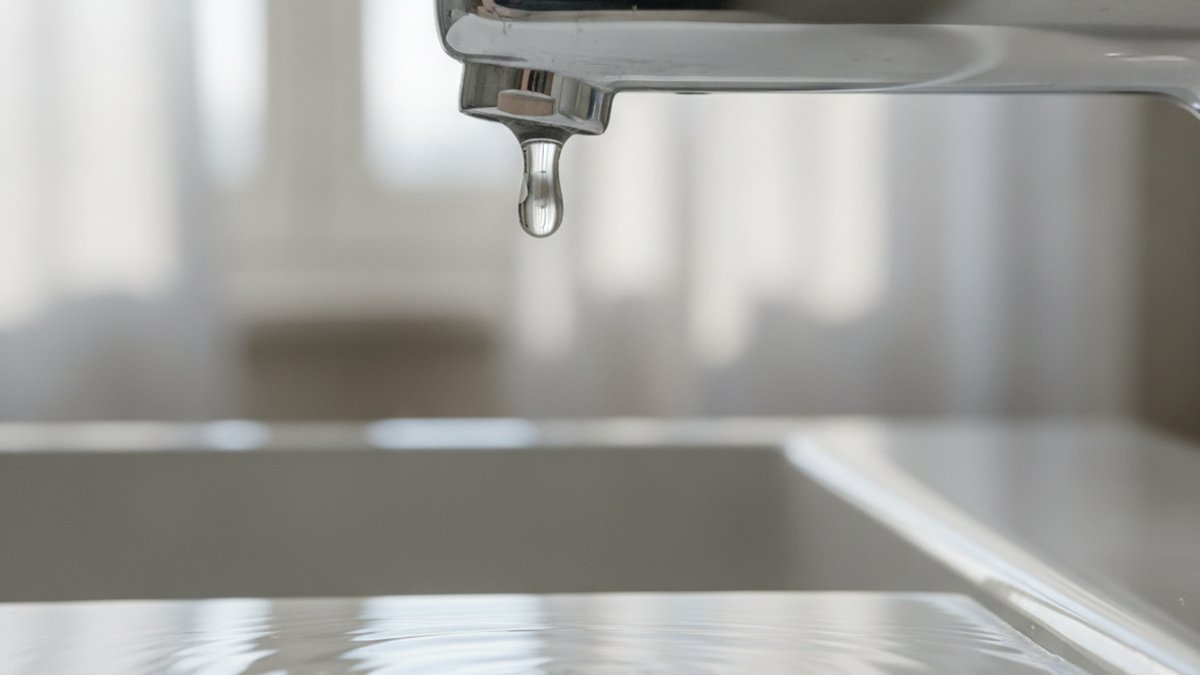
If you’ve been lying awake listening to that steady plink…plink…plink, here’s the plain-English answer: the dripping faucet meaning you’re looking for is almost never “my faucet is broken and needs replacing.” It means one small seal inside the faucet has worn down and can no longer hold back the water pressure in your line. That’s it. In 9 out of 10 homes, a drip is a $2–$15 part and 20–40 minutes of work — not a plumber’s invoice.
But a drip is also your faucet talking to you. Where it drips, when it drips, and how fast it drips each point to a different worn part. Below, I’ll walk you through exactly what a dripping faucet is telling you, how much it’s really costing you, and how to trace it to the right fix — the same way I diagnose them on a workbench.
What Does a Dripping Faucet Actually Mean — Is Something Broken?
A dripping faucet means an internal seal has failed to fully close — water is sneaking past a part that’s supposed to stop it when the handle is “off.” Nothing is catastrophically broken. The faucet body, the spout, and the supply lines are almost always fine. The culprit is one of a handful of small, cheap seals that wear out from normal use.
Think of a faucet like a valve with a soft gasket at the bottom. Every time you turn it off, a rubber or ceramic part presses down to block the flow. Over months and years, that part hardens, cracks, or gets chewed up by grit and mineral scale. Once it can’t seat perfectly anymore, pressurized water forces a thin trickle through — and you get a drip. The higher your home’s water pressure, the faster a tired seal starts leaking.
Here are the parts that fail, roughly in order of how often they’re the cause:
- Rubber washer — the classic culprit in older compression (two-handle) faucets. Hardens and cracks over time.
- O-ring — a small ring that seals the stem or spout base; drying out causes drips and base leaks.
- Cartridge — the modern all-in-one insert in most single-handle and newer faucets. When it wears, it drips or gets stiff.
- Valve seat — the metal surface the washer presses against. Corrosion here makes even a new washer leak.
- Worn ceramic disc — in disc-style faucets, grit can score the discs so they no longer seal.
Why Is My Faucet Dripping Even When It’s Turned All the Way Off?
If your faucet drips when it’s fully closed, the seal that’s supposed to make the “off” position watertight has failed — most likely a worn washer, a bad cartridge, or a corroded valve seat. The handle feels off, but internally the water still has a path through.
This is the most common drip complaint, and it’s genuinely diagnostic. When water gets past a valve that’s supposed to be shut tight, only three things are usually to blame:
- The washer or cartridge no longer seals. The soft part has hardened or torn, so it can’t create a full block. This is your first suspect on any faucet more than a few years old.
- The valve seat is pitted or scaled. Even a brand-new washer can’t seal against a rough, corroded seat. Hard-water homes see this a lot.
- The cartridge is cracked or scored. On single-handle faucets, a failing cartridge drips regardless of how firmly you push the handle down.
One quick test: if you have a two-handle faucet and it only drips when a specific handle is off, you’ve found your side — that handle’s washer or seat is the problem, and you can skip the other side entirely.
How Much Water — and Money — Does a Dripping Faucet Really Waste?
A faucet dripping once per second wastes roughly 5 gallons a day, which adds up to about 2,000–3,000 gallons a year — enough to notice on a water bill and more than enough to stain a sink. A faster drip or a thin steady stream can easily triple that.
People underestimate this because a single drop looks tiny. But drops are relentless. The U.S. EPA’s WaterSense program estimates that household leaks waste about a trillion gallons nationally each year, and a steadily dripping faucet is a textbook example. Here’s the practical breakdown:
| Drip rate | Approx. water lost per day | Approx. per year | What it usually means |
|---|---|---|---|
| 1 drip every few seconds | ~1–2 gallons | ~500–750 gallons | Early-stage worn washer or O-ring |
| 1 drip per second | ~5 gallons | ~2,000–3,000 gallons | Failed washer or aging cartridge |
| Fast drip / thin trickle | ~15–30 gallons | ~5,000–10,000+ gallons | Badly worn seal or corroded valve seat |
Beyond the bill, there’s the hidden cost: constant moisture leaves mineral rings and rust stains on your basin, corrodes the drain, and — if the drip is warm water — quietly runs up your water-heating cost too. The drip is cheap to fix and expensive to ignore.
Where the Drip Comes From Tells You Which Part Failed
The location of the leak is your fastest diagnostic shortcut: a drip from the spout tip means a valve seal (washer or cartridge), while a leak from the handle base or under the sink means an O-ring or a supply connection. Match your symptom to the table below before you touch a wrench.
| Where it drips | Most likely cause | Typical fix |
|---|---|---|
| From the spout tip (faucet off) | Worn washer, cartridge, or valve seat | Replace washer/cartridge; reface or replace seat |
| Around the base of the handle | Dried-out O-ring or packing | Replace O-ring / packing washer |
| From the spout base where it swivels | Spout O-rings | Swap the spout O-ring set |
| Under the sink at the connections | Loose or cross-threaded supply line | Re-seat or replace the supply line |
| Only from the sprayer/pull-out head | Worn sprayer seal or hose | Replace sprayer head or hose |
This matters because the wrong fix wastes your afternoon. If the drip is at the handle base, replacing the cartridge won’t help — you needed an O-ring. If a two-handle faucet drips only from the spout, don’t take the whole thing apart; rebuild the one side that’s leaking. And if the leak is actually down at the supply connection, the real issue may be your faucet supply line thread type and a cross-threaded fitting, not the faucet at all.
How Do I Stop a Dripping Faucet Myself — and What Does It Cost?
You can stop most dripping faucets yourself in under an hour with a few dollars in parts — a washer, O-ring kit, or cartridge for your model. The only real skill is shutting off the water, working methodically, and matching the replacement part exactly. Here’s the reliable sequence:
- Shut off the water. Turn the two shut-off valves under the sink clockwise. No under-sink valves? Shut off the main. Then open the faucet to drain the line.
- Plug the drain. A stopper or a rag keeps tiny screws and springs from vanishing down the pipe.
- Remove the handle. Pop the decorative cap, remove the screw, and lift the handle off. Take a photo at each step so reassembly is painless.
- Pull the worn part. Unthread the packing nut and extract the stem or cartridge. Inspect the washer, O-rings, and the valve seat inside.
- Match and replace. Take the old part to the store, or note your faucet’s brand and model. An exact match is everything — a washer that’s 1mm off will still drip.
- Grease and reassemble. Coat new O-rings with plumber’s silicone grease, rebuild in reverse, then turn the water back on slowly and test.
Cost check: a washer or O-ring kit runs $2–$10; a brand-name cartridge runs $15–$50. Compare that to a $150–$300 plumber call-out for the same job. The main reason to call a pro is a corroded valve seat that won’t come clean, or a faucet so old the parts have seized — the kind of situation described in our guide on removing a 20-year-old bathroom faucet that won’t budge.
What’s the Difference Between a Compression, Cartridge, and Ceramic Disc Faucet When It Drips?
The drip fix depends entirely on your faucet’s valve type: compression faucets need a new washer, cartridge faucets need a new cartridge, and ceramic-disc faucets need the disc cylinder cleaned or replaced. Identifying your type first saves you from buying the wrong part.
- Compression (two handles, tightens firmly): The oldest design. Uses a rubber washer that presses onto a valve seat. Drips = replace the washer, and check the seat. Cheapest to fix.
- Cartridge (one or two handles, smooth motion): A single insert controls flow. Drips = pull and replace the cartridge with the exact model. Most common in newer faucets.
- Ceramic disc (single lever, high quality): Two ceramic discs slide to control water. Very durable, but grit or scale can score them. Drips = clean or replace the disc cartridge.
- Ball type (single handle, often kitchen): Uses springs and rubber seats under a rotating ball. Drips = rebuild kit with new springs and seats.
If you’re dealing with a single-handle unit and the drip won’t stop after a washer or O-ring, the cartridge is the answer — and the procedure is nearly identical across bathroom and shower valves. Our step-by-step on a shower faucet cartridge replacement on a Delta valve walks through the exact removal-and-seat process you’d use at a sink too.
When Is a Dripping Faucet a Sign of a Bigger Problem?
Most drips are minor, but a few patterns signal something worth acting on quickly: a drip that returns days after a fresh repair usually means a corroded valve seat, and a drip paired with banging pipes or fluctuating pressure can point to a water-pressure or valve problem in the wider system.
Watch for these red flags:
- The drip comes back fast after a new washer. The valve seat is pitted and shredding the new part — reface or replace the seat.
- Multiple faucets start dripping around the same time. Often a sign your home water pressure is too high (above ~80 psi). A pressure regulator may be the real fix.
- Dripping plus noise. A drip alongside a rattle or hum can share a root cause with a loud bathtub faucet — worn internals plus high pressure.
- Outdoor spigot dripping from the stem. A different animal with its own packing and freeze concerns; see why an outdoor faucet leaks from the stem.
And if the “drip” is actually coming from a tub spout rather than a sink, the diagnosis shifts to the diverter and valve — our guide on a tub spout dripping water covers that specific case in detail.
FAQ
Does a dripping faucet mean I need a whole new faucet?
Almost never. A drip means a worn seal — a washer, O-ring, or cartridge — that costs a few dollars to replace. You’d only replace the whole faucet if the body is cracked, the valve seat is destroyed beyond refacing, or the faucet is so old that no parts are available.
Is a dripping faucet an emergency?
No, a steady drip isn’t an emergency, but it’s not something to leave for months either. It wastes hundreds to thousands of gallons a year, stains your fixtures, and can worsen into a steady trickle. Treat it as a “fix it this weekend” job, not a “call at midnight” one.
Why does my faucet drip only at night or randomly?
It doesn’t really drip more at night — it’s just quieter, so you hear it. What can vary is water pressure: pressure often rises when no one in the neighborhood is using water (late at night), and higher pressure pushes more water past a worn seal, making the drip faster and more noticeable.
Can hard water cause a faucet to drip?
Yes. Hard water leaves mineral scale that builds up on washers, O-rings, and valve seats, and grit accelerates wear on ceramic discs. That’s why hard-water homes see drips return sooner. Cleaning scale off the valve seat during a repair — and matching your aerator flow rate to reduce turbulence — both help parts last longer.
How long should a faucet last before it starts dripping?
A quality faucet with ceramic-disc or good cartridge internals often runs 10–15 years before any drip, and the washers in a compression faucet may need swapping every few years. Cheaper faucets with soft internal parts can start dripping within a year or two — one reason it pays to buy a faucet with a solid warranty and replaceable parts.
What if replacing the washer didn’t stop the drip?
Then the valve seat is likely corroded or pitted, so the new washer can’t seal against it. Reface the seat with a seat-dressing tool or replace a removable seat. If it’s a single-handle faucet, replace the entire cartridge instead — the drip is coming from a scored surface inside it, not the washer.
Author note: This guide was written by the arcorarobinet fixtures team, drawing on hands-on bench testing and repair of hundreds of faucet valves across compression, cartridge, and ceramic-disc designs. We focus exclusively on faucets, showers, and bathroom fixtures — not general home renovation.
About arcorarobinet: We design and sell faucets and bathroom fixtures built to standards like ASME A112.18.1/CSA B125.1, and every faucet we ship is pressure-tested before it leaves the line. Our valves and cartridges are backed by warranty coverage and stocked replacement parts, because a fixture you can repair is a fixture worth buying. When in doubt about a drip, match the exact part to your model — and if you can’t identify it, our team can help before you buy.



您好!Veuillez vous connecter