 ARCORA ROBINETS
Is a Widespread Faucet Single Handle the Right Choice for Your Bathroom in 2026?
Vues:2 ClassificationProduct
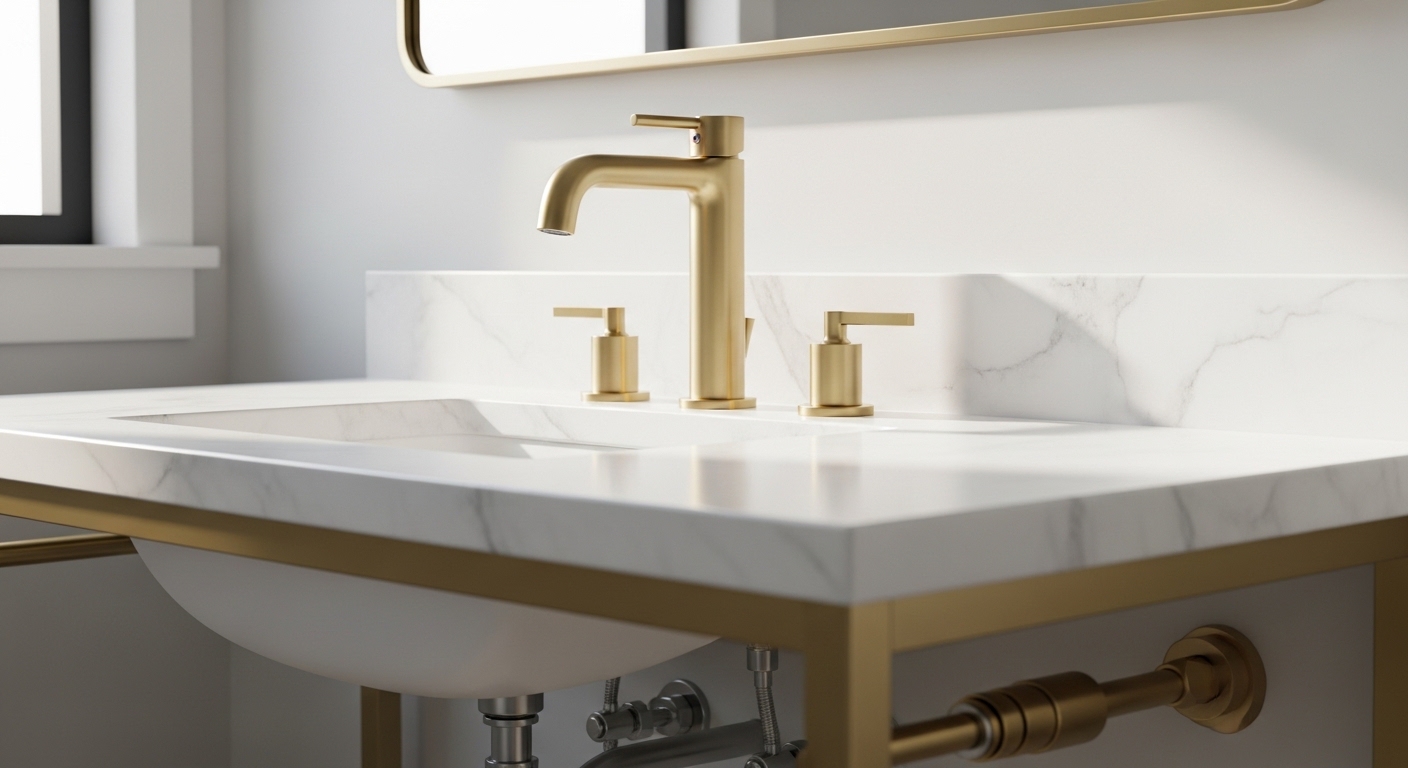
A widespread faucet single handle is exactly what it sounds like: a faucet built to fit a standard widespread (8-inch) three-hole drilling, but with a single lever handle that mixes temperature and flow, rather than the two separate hot and cold handles you’d expect on a classic widespread set. It’s a hybrid — the open, decorator spacing of a widespread, with the one-touch simplicity of a single-handle mixer. If you’ve been staring at three holes in your countertop and a wall of two-handle faucets, wondering whether you have to give up that clean one-lever feel, the answer is no. This style was made for exactly that situation.
Below, I’ll walk through how this faucet actually works, when it’s the smart pick (and when it isn’t), how to make sure it fits your sink before you buy, and what separates a faucet that lasts 20 years from one that drips in 18 months. I install and test these for a living, so I’ll keep it concrete — real measurements, real trade-offs, no fluff.
What exactly is a widespread faucet single handle, and how is it different from a regular widespread?
It’s a faucet that mounts in three separate holes spaced 8 inches apart (center to center on the outer holes), but uses one lever to control both temperature and water volume. A traditional widespread has three independent pieces — a spout in the middle and two handles on the outside, connected underneath by flexible hoses. A widespread single handle keeps that separated, spread-out installation, but the outer holes are used for the spout body or a deck plate, and a single mixing cartridge does the work of two handles.
Here’s the key thing people get confused about: « widespread » describes the hole spacing, not the number of handles. A centerset faucet fits holes 4 inches apart on a single base. A widespread fits holes 8 inches apart with gaps in between. So a single-handle widespread is a single-handle mixer engineered for that wider 8-inch three-hole footprint — sometimes by using two of the holes for decorative caps or a unified body, sometimes with a connecting deck plate. If you want a deeper breakdown of widespread versus centerset layouts and their pros and cons, our team covers the full comparison in this guide to widespread vs. centerset faucets.
Should I get a single-handle or two-handle widespread for my bathroom?
Choose a single handle if you value one-touch temperature control, easier cleaning, and a modern minimalist look; choose two handles if you want precise independent hot/cold control, a traditional or transitional style, or the ability to repair one side without touching the other. Neither is « better » — they solve different problems.
In practice, here’s how I steer customers. Families with kids and older adults almost always prefer the single handle, because you can nudge it to a comfortable temperature with one wrist, a forearm, or even an elbow when your hands are full or covered in soap. People restoring a period home, or who simply love the symmetry of matched hot and cold handles, lean two-handle. And anyone obsessed with a spotless vanity tends to love the single lever, because there’s one base and one handle to wipe instead of three separate bodies collecting water spots and toothpaste.
| Feature | Widespread Single Handle | Two-Handle Widespread | Centerset Single Handle |
|---|---|---|---|
| Hole spacing | 8 in. (3 holes) | 8 in. (3 holes) | 4 in. (3 holes / 1 base) |
| Temperature control | One lever (combined) | Two handles (independent) | One lever (combined) |
| Best for sink width | Wide vanities, 24 in.+ | Wide vanities, 24 in.+ | Compact / powder rooms |
| Ease of one-handed use | Excellent | Fair | Excellent |
| Cleaning effort | Low (1 handle) | Higher (2 handles) | Low |
| Look | Modern, upscale, spacious | Classic / transitional | Practical, space-saving |
Will a single-handle widespread fit my existing three-hole sink?
If your sink or countertop has three holes spaced 8 inches apart on the outer two, yes — a widespread single handle is designed for that exact drilling. The one measurement that matters most is the center-to-center distance between the two outer holes; widespread is 8 inches (some accept 6–16 inches because the pieces are independent), centerset is 4 inches. Measure before you buy.
Grab a tape measure and check three things:
- Outer hole spacing: center of the left hole to center of the right hole. Around 8 inches means widespread.
- Hole diameter: standard faucet holes are 1 3/8 inches (about 35 mm). Most faucets fit holes up to 1 1/2 inches.
- Deck thickness: measure your countertop depth so the supplied mounting hardware and shanks are long enough — thick stone tops sometimes need extended kits.
If you currently have a centerset faucet (4-inch spacing) and want this wider look, you can’t just drop one in — you’d need a sink or top drilled for 8-inch widespread, or a new vanity top. And if you’re pulling out an old faucet to make the swap, do it carefully so you don’t crack the basin or strip the supply lines; our step-by-step on removing old taps from a sink without wrecking the plumbing walks through it. For local buying options and what’s actually worth the money, we also break it down in our guide to finding a widespread bathroom faucet near you.
What should I look for in the valve and finish so it lasts?
Prioritize a ceramic disc cartridge and a solid brass body — those two things determine whether your faucet drips in a year or runs smoothly for two decades. Finish matters for looks and durability, but the valve is the heart of the faucet, and it’s the part that fails first on cheap units.
A ceramic disc cartridge uses two polished ceramic plates that slide against each other to control flow. They shrug off the grit and mineral content in hard water far better than old rubber-washer designs, which is why a good ceramic cartridge is rated for hundreds of thousands of open-close cycles. If you want to understand why this single component matters so much, our deep dive on faucets with ceramic valves applies just as much to bathroom mixers as kitchen ones — the engineering is the same.
On finishes, here’s the quick reality:
- Brushed nickel: the safe, forgiving all-rounder — hides water spots and fingerprints, matches almost everything.
- Chrome: brightest and easiest to clean, but shows every spot; great for classic and budget-friendly builds.
- Matte black: bold and modern, hides spots well, but can show limescale as white chalky marks in very hard water.
- Brushed gold / champagne bronze: warm and upscale, currently the most-requested look; pricier and needs a quality PVD coating to resist wear.
Whatever finish you pick, look for the words PVD coating (physical vapor deposition). PVD bonds the finish at a molecular level and resists scratching and tarnishing dramatically better than electroplated coatings. It’s the difference between a finish that still looks new after years of daily cleaning and one that wears through at the high-touch spots on the handle.
How hard is it to install a widespread single-handle faucet myself?
For a confident DIYer it’s a 60–90 minute job with basic tools, and it’s actually simpler than a two-handle widespread because there’s only one valve body and one handle to connect instead of two separate handle assemblies. If you’ve ever installed any faucet, you can do this one.
Here’s the basic sequence:
- Shut off the hot and cold supply valves under the sink and open the old faucet to release pressure.
- Disconnect the supply lines and remove the old faucet (mounting nuts are usually up behind the basin — a basin wrench saves your knuckles).
- Clean the deck, then set the new spout body through the center hole with its gasket or a bead of plumber’s putty.
- Mount any side pieces or escutcheons in the outer holes per the instructions, and connect the flexible mixer hoses to the valve.
- Hand-tighten, then snug the mounting nuts from below. Attach the single handle.
- Connect new braided stainless supply lines, turn the water back on slowly, and check every joint for drips. Run hot and cold to flush the cartridge.
One pro tip: always use fresh braided stainless steel supply lines rather than reusing old ones, and don’t over-tighten — most leaks I’m called out to fix come from someone cranking a connection until they crush the washer or crack a fitting. Snug plus a quarter turn is plenty. If you do end up with a drip after install, our guide on why bathroom faucets leak and how to stop it covers the usual culprits and quick fixes.
Is a single-handle widespread worth the money compared to a basic centerset?
Yes, if you have the three-hole 8-inch drilling and want a higher-end look — a quality single-handle widespread typically runs $90 to $300 and reads as a clear upgrade over a $40 centerset, both visually and in feel. The spread-out layout simply looks more custom and more expensive, and the single lever keeps it practical.
Where it’s not worth it: a small powder room with a compact sink, where the 8-inch spacing would look stretched and you’d be paying for a footprint you don’t have room for. In those cases a centerset single-handle is the smarter, cheaper buy. But for a primary bathroom, a double vanity, or any sink 24 inches or wider, the widespread single handle hits a sweet spot — designer presence without the daily fuss of two handles. Match it to your bathroom hardware, choose a ceramic cartridge and brass body, and it’s one of the better value upgrades you can make to a bathroom without renovating anything.
FAQ
Can I replace a two-handle widespread with a single-handle widespread?
Usually yes, because both use the same 8-inch three-hole drilling. The single-handle version is built to occupy or cover those same three holes, often using the outer holes for the body or a coordinating cap. Just confirm your specific model’s required holes and whether it includes a deck plate before ordering.
What’s the difference between widespread and centerset spacing again?
Widespread faucets fit three holes spaced 8 inches apart (center to center on the outer holes) with visible gaps between the pieces. Centerset faucets fit holes 4 inches apart, with the handles and spout joined on one base. Measure your outer-hole spacing — roughly 8 inches means you need widespread; roughly 4 inches means centerset.
Do single-handle widespread faucets leak more than two-handle ones?
No — if anything they have fewer potential leak points, because there’s one cartridge instead of two. Most leaks come from a worn cartridge or a bad supply-line connection, not the handle count. A faucet with a quality ceramic disc cartridge and proper installation should run drip-free for many years.
What sink width do I need for a widespread single-handle faucet?
Aim for a sink or vanity top at least 24 inches wide with three holes drilled at 8-inch spacing. Anything narrower and the spread-out layout starts to look cramped or won’t physically fit the drilling, in which case a 4-inch centerset is the better match.
Are widespread single-handle faucets ADA compliant?
Single lever handles are generally considered the most accessible option, since they can be operated with a closed fist and no tight grasping or twisting — which aligns with ADA operability guidance. Always check the individual product’s documentation, but the single-handle design is exactly the style accessibility standards favor.
How long should a good widespread single-handle faucet last?
A well-made unit with a solid brass body, ceramic cartridge, and PVD finish should last 15 to 20+ years with normal use. Look for a manufacturer that backs the faucet with a limited lifetime warranty on the finish and function — that warranty is a strong signal of how confident they are in the build.
A note on testing, standards, and who’s behind this guide
This guide was written and reviewed by the product team at arcorarobinet, a faucet and bathroom-fixtures specialist that has been designing, manufacturing, and pressure-testing brassware for residential and commercial projects for over a decade. Every faucet we recommend is built around lead-safe brass and ceramic disc cartridges, and our fixtures are tested against recognized plumbing standards for flow, durability, and material safety (the kind of cycle-testing and low-lead requirements covered by ASME A112.18.1 / NSF 61 and similar benchmarks). We stand behind our bathroom faucets with a limited lifetime warranty on finish and function. The measurements, price ranges, and install steps above come from hands-on installation and field testing, not spec sheets alone — if a recommendation wouldn’t survive a real bathroom with hard water and a busy family, it doesn’t make it into our guides.



您好!Veuillez vous connecter