 ARCORA ROBINETS
What Should a Shower System Price Actually Be in 2026 — and How Much Do You Really Need to Spend?
Vues:0 ClassificationProduct
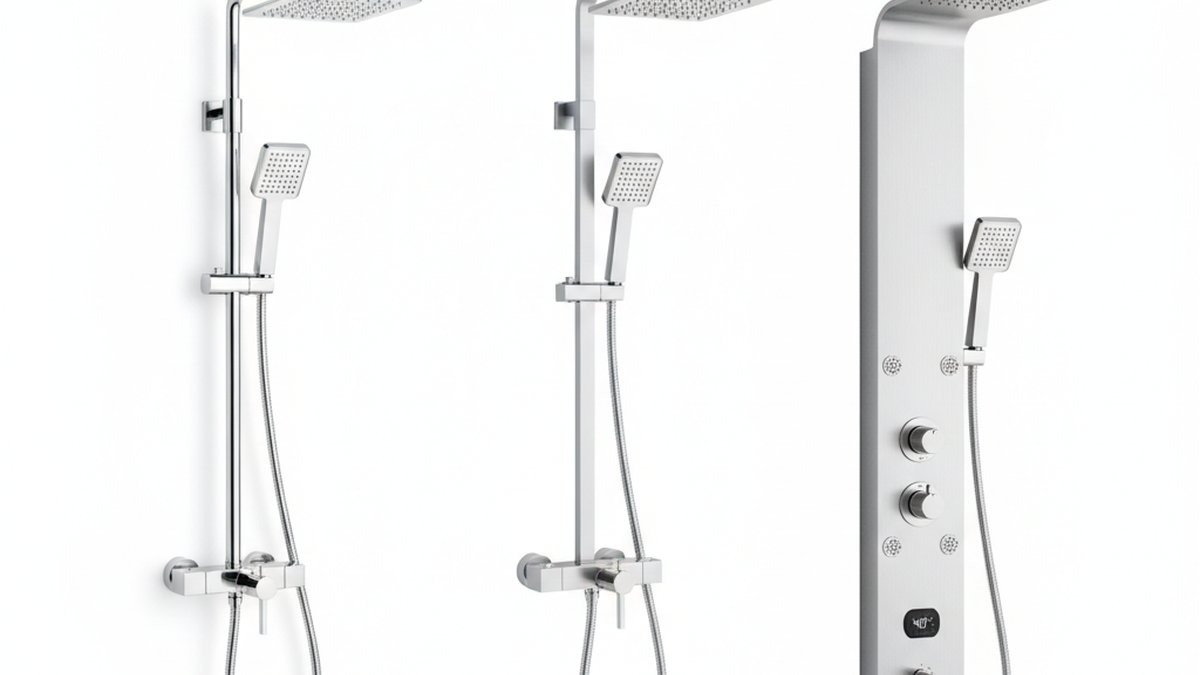
If you’ve been pricing out an upgrade, the honest answer is that shower system price ranges far more than most people expect — from about $80 for a bare-bones single-head kit to well over $1,500 for a multi-function thermostatic tower. The good news: the sweet spot for a durable, great-feeling shower that lasts 10+ years sits in the $200–$350 band. Below that you start gambling on plastic internals and weak flow; above it, you’re mostly paying for extra spray modes, premium finishes, and thermostatic valves. This guide breaks down exactly what each price tier gets you, so you don’t overpay for marketing or underpay for something you’ll be replacing in three years.
How Much Does a Complete Shower System Actually Cost?
A complete shower system typically costs between $150 and $450 installed-ready (hardware only, before a plumber), depending on the valve type, spray functions, and finish. The single biggest price driver isn’t the shower head you can see — it’s the valve hidden behind the wall. A basic pressure-balance valve is inexpensive; a true thermostatic valve that holds your temperature to within a degree when someone flushes a toilet can add $80–$200 on its own.
Here’s the breakdown of what your money buys at each level. « System » here means a matched set — head, arm, valve/trim, and usually a handheld — not just a shower head on its own.
| Price Tier | Typical Range | What You Get | Best For |
|---|---|---|---|
| Budget | $80–$150 | Single rainfall head, basic pressure-balance valve, often ABS plastic with chrome plating; limited spray modes | Rentals, guest baths, quick refresh |
| Mid-range | $200–$350 | Rainfall head + handheld on a slide bar or diverter, brass or stainless valve body, 3–5 spray patterns, solid trim | Most family bathrooms — the value sweet spot |
| Premium | $400–$700 | Thermostatic valve, larger rainfall head (10–12″), handheld, sometimes a tub spout diverter, premium finishes | Primary/en-suite baths, spa feel |
| Luxury | $800–$2,000+ | Full shower panel/tower, multiple body jets, digital or thermostatic controls, solid brass in designer finishes | Custom remodels, high-end master baths |
Notice how the jump from budget to mid-range roughly doubles your cost but more than doubles what you actually feel every day — better flow, a real handheld, and metal internals instead of plastic. That’s why most homeowners are happiest in the mid tier.
Why Do Shower System Prices Vary So Much for What Looks Like the Same Thing?
Two shower systems can look nearly identical online and differ by $250 — the difference is almost always in the materials, the valve, and the flow engineering, not the styling. Chrome plating hides a lot. A $90 system and a $320 system can both show a big square rainfall head, but here’s what changes underneath:
- Valve body: Cheap systems use plastic or thin zinc; better systems use forged brass, which resists corrosion and handles thermal cycling for years without cracking.
- Cartridge quality: The cartridge is the heart of the valve. A ceramic-disc cartridge lasts far longer and drips far less than a rubber-washer design. Replacing a failed one later is doable but annoying — see our guide on how to do a shower faucet cartridge replacement on a Delta valve yourself if you ever need it.
- Flow engineering: A well-designed 1.8–2.5 GPM head feels stronger than a poorly designed 2.5 GPM head because the nozzles are sized and angled to build pressure, not just dump water.
- Finish process: PVD (physical vapor deposition) finishes like brushed nickel and matte black cost more than standard electroplated chrome but resist scratching and tarnish for the life of the fixture.
So when you compare a shower system price, don’t just look at the head size. Check whether the valve body is brass, whether the cartridge is ceramic, and what finish process the manufacturer uses. Those three things separate a fixture you install once from one you’re troubleshooting in two winters.
Is a Cheap Shower System Under $150 Ever Worth It?
Yes — but only in specific situations. A sub-$150 shower system is worth it for a rental unit, a low-use guest bathroom, or a temporary fix before a bigger remodel. In those cases you don’t need thermostatic controls or a lifetime finish, and the money is better kept in your pocket.
Where cheap systems bite you is in a primary bathroom you use every single day. Plastic diverters get stiff and crack, thin-plated finishes start flaking around the two-year mark, and pressure-balance valves at the bottom of the market can let the water swing hot or cold when another fixture runs. If you shower there daily, the $150 you saved often turns into a $250 replacement plus your time within a few years.
One middle path: buy a mid-range valve (the expensive-to-replace part behind the wall) and pair it with an affordable head you can swap later. That protects you on the component that’s a pain to change while keeping the visible, easily-upgraded parts flexible. A shower head quick release connector makes those future swaps a 30-second job with no tools.
What Do You Get When You Spend $300–$500 on a Shower System?
In the $300–$500 range you get the features that actually change how a shower feels: a thermostatic or high-quality pressure-balance valve, a genuinely large rainfall head, a capable handheld, and finishes that hold up. This is where « nice bathroom » becomes « spa-like bathroom. » Concretely, spending in this band usually adds:
- A thermostatic valve that sets and holds your exact temperature — no more scalding when the dishwasher kicks on.
- A larger rainfall head, typically 10–12 inches, for full-body coverage instead of a narrow stream.
- A handheld on a slide bar, which is the single most practical upgrade for rinsing, bathing kids, and cleaning the shower itself.
- Solid brass construction in the valve and often the head, plus PVD finishes in brushed nickel, matte black, or brushed gold.
- Multiple, genuinely distinct spray patterns — a soft rain, a concentrated massage, and an eco mode.
If you want the full spa experience for a family, a combination setup pays off. Our deep-dive on the best shower system with handheld and tub spout for a family bathroom walks through exactly how the diverter routes water between head, handheld, and tub filler — a layout that’s worth the extra $50–$100 if you bathe children or pets. And if a calm, minimalist aesthetic is your goal, the write-up on whether a Zen shower system is worth it covers which spa-style setups justify their price and which just charge for the look.
Shower System Price by Type: Which Configuration Fits Your Budget?
The configuration you choose affects price as much as the brand does. Here’s how the main types stack up on cost and who each one suits.
| System Type | Typical Price | Pros | Trade-offs |
|---|---|---|---|
| Single fixed head | $80–$180 | Cheapest, simplest install, fewest leak points | No handheld flexibility |
| Rainfall + handheld combo | $200–$350 | Best all-around value, family-friendly | More connections to seal |
| Thermostatic system | $350–$600 | Rock-steady temperature, safe for kids/elderly | Higher upfront cost |
| Shower panel/tower | $400–$900 | Body jets, dramatic look, often surface-mounted | Needs strong home water pressure |
| Exposed pipe system | $250–$500 | Vintage look, easier retrofit (no wall opening) | Pipes visible, finish shows harder |
One important note on shower panels and towers: they look incredible but demand real water pressure and volume. If your home already struggles — say your existing fixtures run weak — a panel with six body jets will disappoint. In that scenario a pressure-boosting approach is smarter than more jets; our guide on which handheld shower head that increases water pressure you should actually buy explains how nozzle design creates a stronger feel without needing a plumber to touch your supply lines.
What’s the Real Cost After Installation and Extras?
Budget an extra $150–$450 for professional installation if you’re changing the valve, or roughly $0–$60 in parts if you’re only swapping the trim and head yourself. The hidden costs people forget are the ones inside the wall. Here’s a realistic all-in picture for a mid-range system:
- Shower system hardware: $200–$350
- Plumber labor (valve replacement, wall access): $250–$450
- Trim-only swap (DIY, same valve brand/rough-in): $0 labor, ~$15 in plumber’s tape and thread sealant
- Extras: mounting hardware, escutcheon plates, and occasionally new supply connections
If your new trim matches your existing valve’s rough-in, you can often skip opening the wall entirely and just replace the visible parts — the cheapest possible upgrade. If you are opening the wall, make sure the valve is anchored correctly; a loose valve leads to cracked tile and leaks down the line. Our explainer on what a shower faucet mounting bracket is and whether you need one covers when that inexpensive part saves you a much bigger repair.
Which Shower System Price Tier Should You Actually Choose?
For most people, the answer is the $200–$350 mid-range tier — it delivers 90% of the luxury experience at a fraction of luxury pricing. Spend up to the $350–$500 premium band only if you specifically want thermostatic temperature control (worth it with young kids or elderly household members) or a designer finish you’ll enjoy daily. Reserve $800+ for a full remodel where the shower is a showpiece and your water pressure can actually feed body jets.
To decide quickly, match your situation:
- Rental or guest bath: $80–$150 budget system. Reliable enough, not overspent.
- Everyday family bathroom: $200–$350 rainfall + handheld combo. The value pick.
- Primary/en-suite with kids or safety needs: $350–$500 thermostatic system.
- Custom remodel, strong water pressure: $800+ panel or tower with body jets.
How Do You Make Sure You’re Not Overpaying?
You avoid overpaying by ignoring the finish photos and checking three specs: valve material, cartridge type, and warranty length. A brand can charge a premium for a trendy color while cutting corners inside — and you won’t know until it drips. Before you buy, confirm the valve body is brass or stainless, the cartridge is ceramic-disc, and the warranty covers the finish and function for at least 5 years (the best offer limited lifetime coverage on the valve). A generous warranty is a manufacturer betting its own money that the product lasts — the strongest signal you’ll get.
FAQ
How much should I budget for a good shower system in 2026?
Budget $200–$350 for a good complete shower system with a rainfall head, handheld, and quality valve. That range gets you brass internals, a ceramic cartridge, and durable finishes — enough to last a decade of daily use. Go to $350–$500 only if you want thermostatic temperature control or a premium designer finish.
Why are some shower systems over $1,000?
Shower systems over $1,000 are usually full panels or towers with multiple body jets, thermostatic or digital controls, and solid brass in high-end finishes. You’re paying for extra spray zones and precision temperature hardware, not just a bigger head. Most homes don’t need this — and body jets require strong water pressure to work well, so they can underperform in average-pressure houses.
Is it cheaper to replace just the shower head or the whole system?
Replacing just the shower head is far cheaper — often $30–$120 versus $200+ for a full system — and it’s a tool-free job with a quick-release connector. Replace the whole system only when the valve behind the wall is failing, leaking, or you’re changing the layout. If your temperature swings or the valve drips, that’s when the full replacement is justified.
Do more expensive shower systems have better water pressure?
Not automatically — pressure « feel » comes from nozzle design and flow engineering, not price. A well-designed 1.8–2.5 GPM head can feel stronger than a cheap 2.5 GPM one. If your home has genuinely low supply pressure, no shower system will fix that at the wall; you’d want a pressure-optimized head or a plumbing-side solution instead.
What warranty should a quality shower system come with?
Look for at least a 5-year warranty, with the best systems offering limited lifetime coverage on the valve and finish. A long warranty signals the manufacturer trusts its own brass and cartridge quality. Always confirm the coverage includes the finish (against flaking and tarnish) and the internal cartridge, not just the visible trim.
Can I install a shower system myself to save money?
You can install trim and a shower head yourself with basic tools, saving $150–$450 in labor, as long as your new trim matches the existing valve’s rough-in. Replacing the actual valve behind the wall usually means opening tile and soldering or securing connections — that’s the point where hiring a plumber is worth it unless you’re experienced.
About the author: This guide was written by the arcorarobinet fixtures team, drawing on hands-on bench testing of shower valves, heads, and cartridges across budget, mid-range, and premium price tiers. We evaluate flow rate, temperature stability, finish durability, and cartridge longevity the same way our customers use them — daily, over years.
About arcorarobinet: arcorarobinet designs and sells faucets, shower systems, and bathroom fixtures built to industry standards, with products meeting common flow-rate and lead-safety benchmarks (WaterSense-aligned flow options and ceramic-disc cartridge construction). Our shower systems are backed by manufacturer warranties, and every product is pressure- and leak-tested before it ships. Explore the full range at www.arcorarobinet.com.



您好!Veuillez vous connecter